
How to Optimize for Google’s Featured Snippets
Vincent
12/06/2024
30
Featured snippets are highlighted Google search results that show a direct answer from one webpage before the usual title link. To optimize for featured snippets, target queries that already trigger them, match the format Google displays and place a clear answer near a relevant heading. Google chooses whether a page is featured, so no schema or single tactic can guarantee placement.
Featured snippets can help a page gain more visibility in search results. They can also make a brand more recognisable when users are researching a topic. However, they are not a shortcut to rankings, and they do not replace a broader strategy built on useful SEO content and technical quality.
What are featured snippets?
Featured snippets are special Google result boxes that display a descriptive passage before the normal title link. Google may use a short paragraph, a list, a table or sometimes video content to answer a user’s question quickly.
They often appear for queries that ask for a definition, a comparison or a practical recommendation.
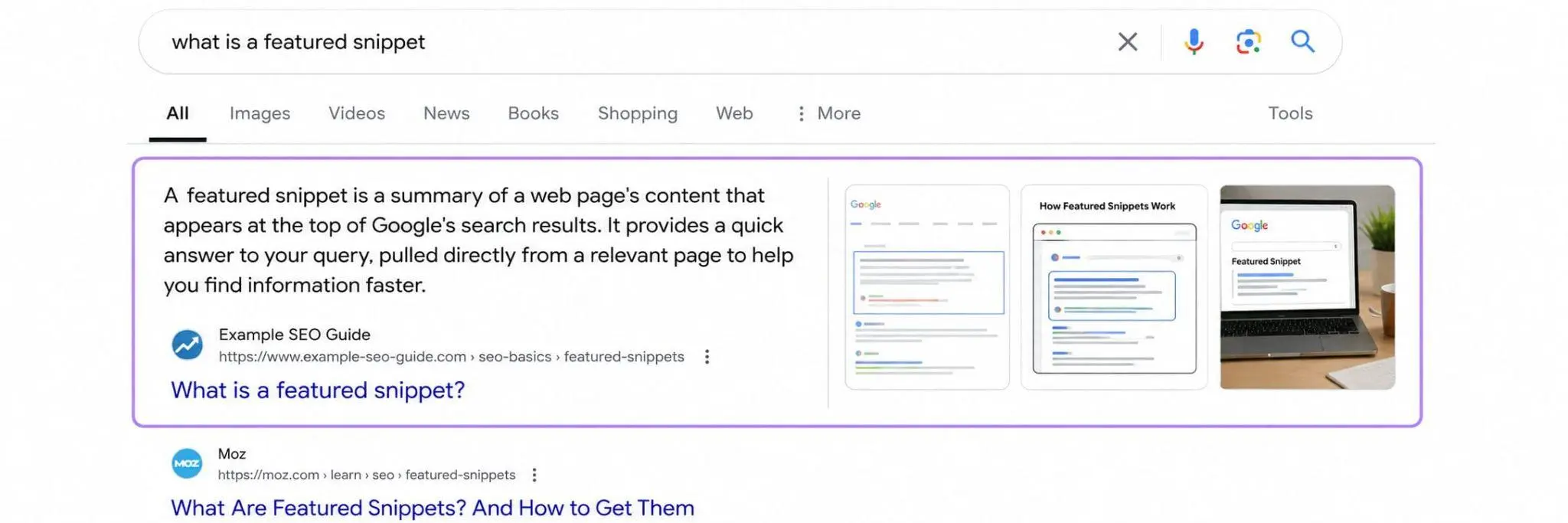
The important point is that featured snippets are selected by Google’s systems. Website owners cannot apply a special tag or schema that marks a page as eligible. The best approach is to make the answer clear, useful and easy to understand within the page.
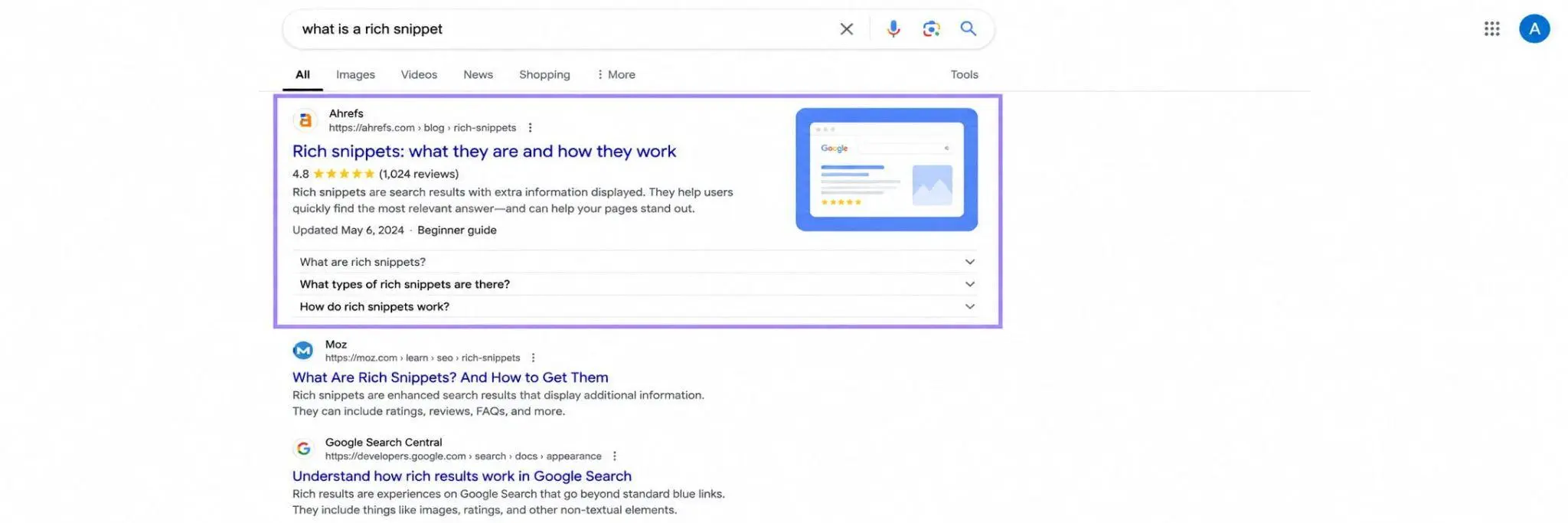
Featured snippets should also not be confused with rich results. Rich results may display ratings, prices, events or other enhanced details when a page uses eligible structured data. Featured snippets are different. They are passages selected from a regular web result.
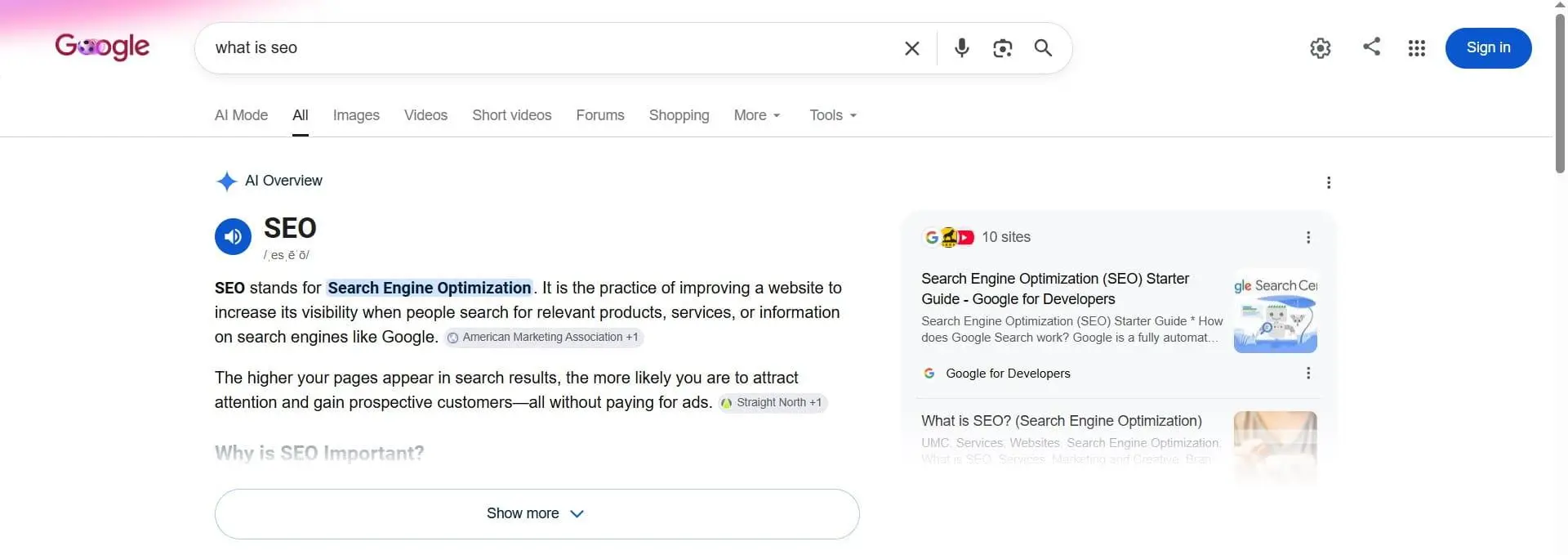
They are also different from AI Overviews. A featured snippet normally highlights content from one page. An AI Overview can combine information from several sources into a generated response. Featured snippet optimization can support answer-focused content, but it is not a complete AI search strategy.
Are featured snippets still worth optimizing for?
Featured snippets are still worth optimizing for when the query supports your expertise and your wider business goal. They can improve visibility because the answer is displayed prominently. They may also encourage users to click when they need more context than the result box can provide.
However, not every featured snippet creates more traffic. Some simple questions can be answered fully within the search result. A user who only needs a quick definition may not visit the source page after reading it. This is sometimes called a zero-click search.
That does not make featured snippets unhelpful. Visibility can still build familiarity with a brand, especially when the snippet comes from a useful guide or service-related article. The key is to choose topics where a reader is likely to need more detail or take a next step.
For example, a snippet for “what is SEO” may answer a basic question but attract limited commercial traffic. A snippet for “how to choose an SEO agency in Vietnam” may lead to more qualified research because the user is closer to making a decision.
Featured snippet optimization should therefore focus on relevance, not vanity.
Which keywords have featured snippet potential?
Not every keyword triggers a featured snippet. Before rewriting a page, check whether Google already shows one for the target query. If the result page does not display a featured snippet, this tactic may not be the highest priority.
Start with search queries that match your content and already show a clear SERP format. You can check manually in Google or use an SEO platform to filter for keywords with featured snippet results.
A useful opportunity usually has several signals:
|
Priority signal |
Why it matters |
|
Google already shows a featured snippet |
The query has an established answer-box format |
|
Your page already ranks or is close to page one |
Your page has an existing relevance foundation |
|
The query matches your expertise |
You can offer real value instead of copying a competitor |
|
The snippet format is obvious |
You can structure the page around a paragraph, list, table or video |
|
The query supports a buyer journey |
Visibility can lead to relevant visits or enquiries |
A page does not need to rank first before it can be selected. However, pages with stronger organic relevance are generally more realistic candidates than pages that have no visibility for the query.
Look beyond exact-match keywords. Searchers often phrase the same need in different ways. A page about SEO audits may target “how to audit a website,” “website SEO audit checklist” and “what to check in a technical SEO audit.” Each query may show a different result format and need a slightly different answer block.
The four main featured snippet types
The right way to optimize for featured snippets depends on the format Google already displays. Do not force a table because you prefer tables. Do not write a paragraph if Google consistently shows a step-by-step list.
Paragraph snippets
Paragraph snippets usually answer definition-based or explanatory questions. They are common for searches that begin with “what is,” “why does,” “when should” or “how does.”
A good paragraph snippet gives the direct answer first. It should define the topic, explain its purpose and give the reader enough context to avoid misunderstanding. The rest of the section can then expand on the answer with examples, limitations or next steps.
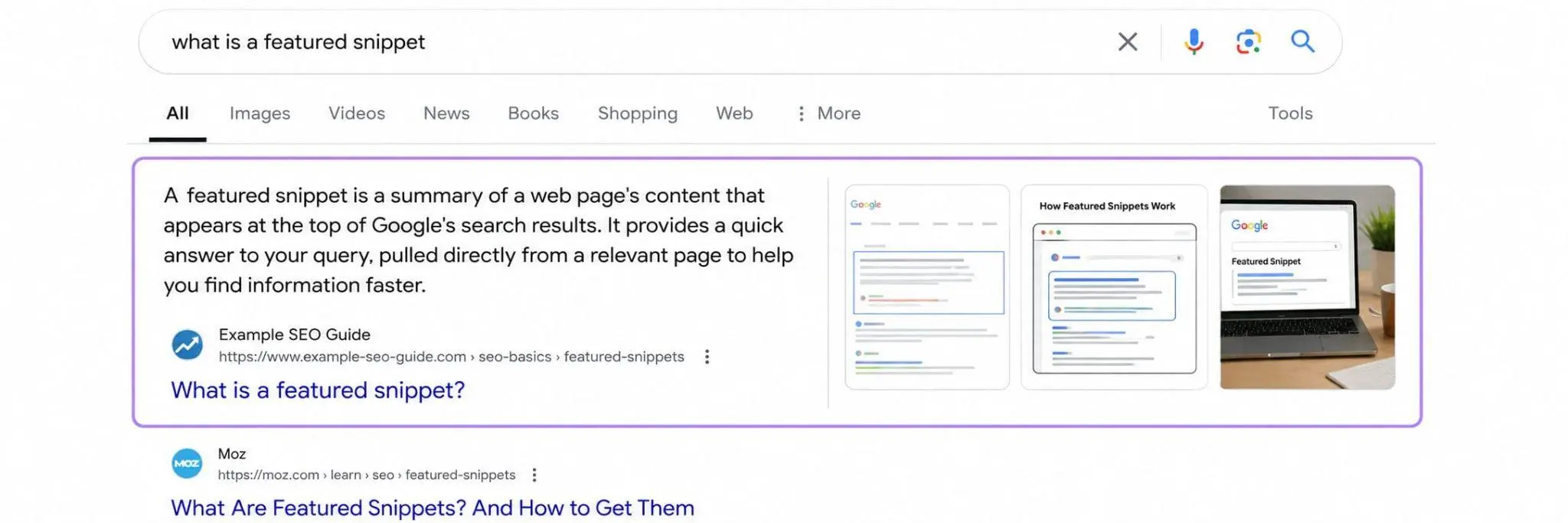
This type of answer is clear because it starts with the topic, explains what it does and states why it matters.
List snippets
List snippets work best when the answer has a clear sequence or several distinct items. Google may show a numbered list for a process and a bulleted list for non-sequential recommendations.
Use numbered lists when order matters. A site migration checklist, for example, should follow a logical sequence from planning to testing and launch review.
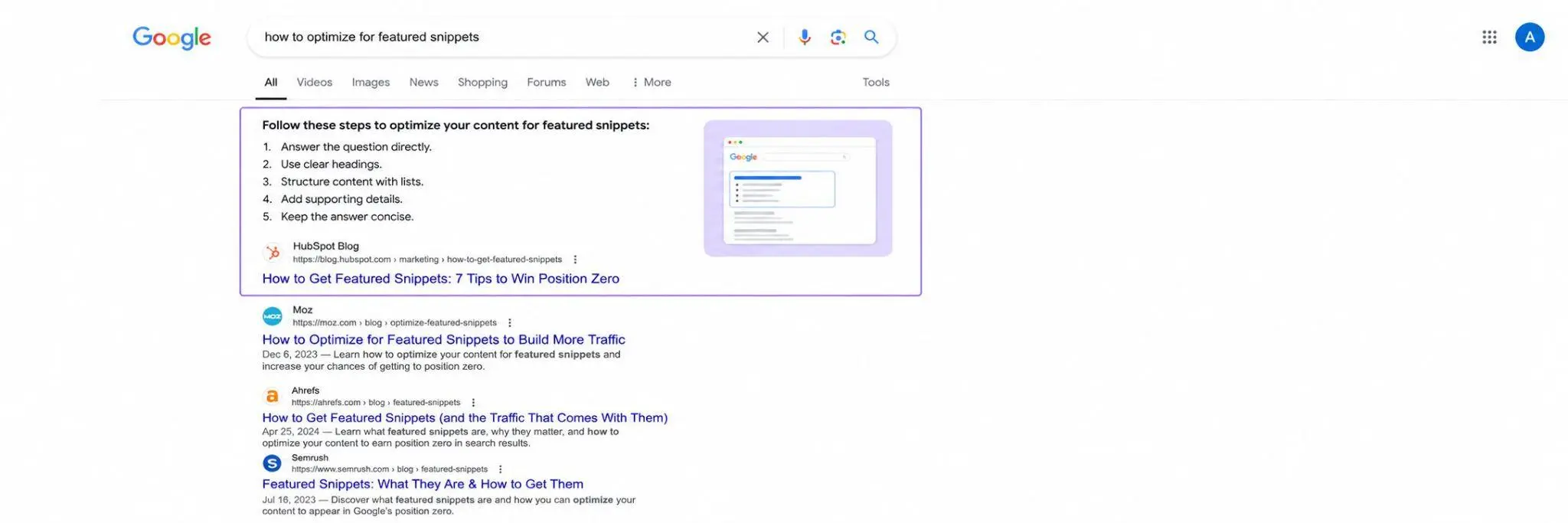
Use bullet lists when the items do not need to happen in a fixed order. A list of trust signals, content audit checks or keyword research tools may work better as bullets.
Each item should be specific enough to stand alone. Avoid vague steps such as “optimize content” or “improve SEO.” Explain what the reader needs to do.
Table snippets
Table snippets are useful for comparison queries. They often appear when users compare costs, features, dimensions, timelines or differences between two options.
A well-structured HTML table can help Google and readers understand the relationship between the items being compared. Keep the headings short and make each cell easy to scan.
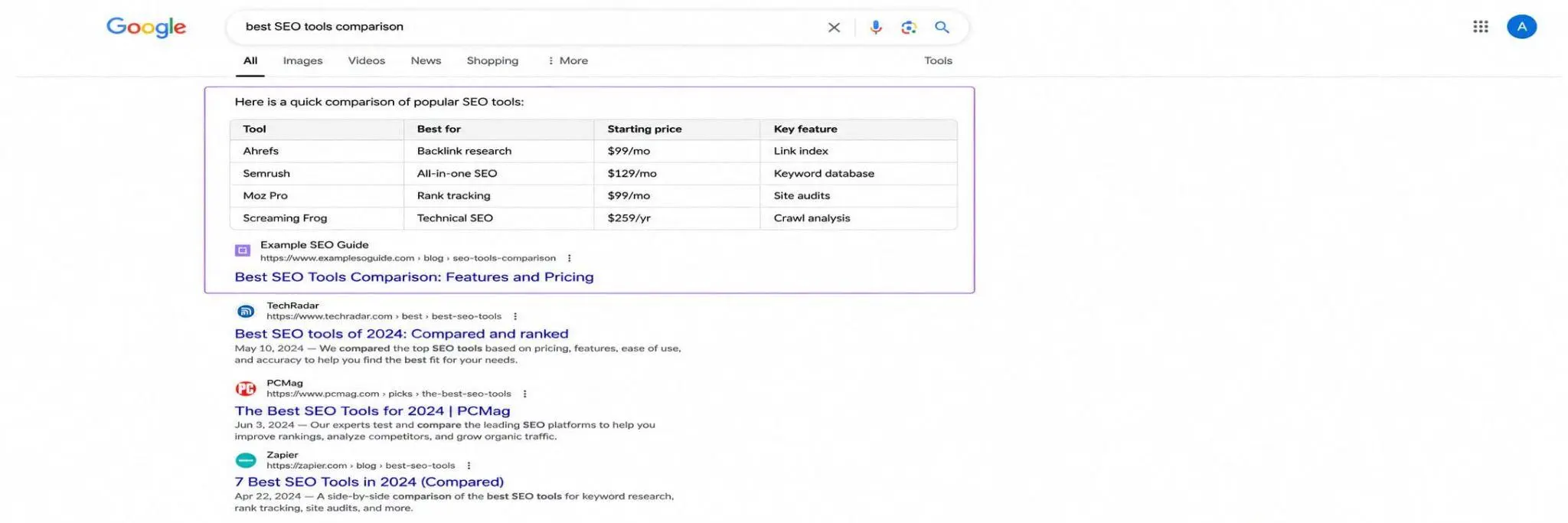
Do not turn comparison information into an image. Important content should remain available as text so search engines and readers can understand it.
Video snippets
Video snippets can appear for tutorial-based or action-focused queries. They are particularly useful when a task is easier to demonstrate than explain in text.
A video should have a descriptive title, useful spoken content and an accurate transcript or captions. Chapters and timestamps can also help users find the relevant part of the tutorial.
Video is not necessary for every featured snippet opportunity. Use it when the visual format genuinely improves the explanation. A screen-recorded walkthrough may help with software setup. A written paragraph is usually better for a simple definition.
How to optimize for paragraph-style featured snippets
To optimize for paragraph-style featured snippets, place the target question in a clear heading and answer it immediately with a concise, factual definition. The first paragraph should explain what the topic is, what it does and when it matters. Add deeper explanation after the answer instead of hiding the main point below a long introduction.
Use a heading that matches the question
Your heading should make the section’s purpose clear. A direct question is often useful when it matches the search intent.
Examples include:
- What is technical SEO?
- How does internal linking help SEO?
- Why is keyword cannibalization a problem?
- When should a business update old blog content?
The heading does not need to repeat a keyword unnaturally. It only needs to reflect the question your section is answering.
Give the answer first
A paragraph snippet is more likely to be useful when the answer appears directly below the heading. Do not begin with a long story about the history of the topic. Do not place an agency introduction before the definition.
A practical template is:
[Topic] is [clear definition]. It helps [audience] achieve [outcome] by improving [important elements]. It matters when [use case or business context].
This is a writing pattern, not a strict Google rule. Google does not publish an exact word count required for featured snippets. Some answers need two sentences. Others need a short paragraph. Clarity matters more than reaching a fixed number.
Keep the answer objective
The opening answer should explain the topic, not advertise your business. Avoid phrases such as “our award-winning method” or “the best solution on the market” inside the definition block.
A reader should be able to understand the answer even if they have never heard of your company. Brand context can appear naturally in later paragraphs, examples or calls to action.
Expand with useful detail
After the direct answer, add the information a reader needs next. This may include an example, a comparison, common mistakes or a simple process.
A strong section follows a useful sequence:
- Answer the question directly.
- Explain why the answer matters.
- Add context, evidence or examples.
- Guide the reader to the next related decision.
This structure supports both SEO and AEO because it gives search engines a clear answer while still helping users who need a deeper explanation.
A seven-step process to optimize for featured snippets
Featured snippet optimization works best as a repeatable process. The goal is to improve the right pages for the right queries.
1. Find a query that already has a featured snippet
Search the target keyword and inspect the result page. Note whether Google displays a paragraph, list, table or video. Also identify the current source page.
This tells you whether the opportunity exists and what Google currently considers useful for that query.
2. Check the user’s real intent
The wording of a query does not always reveal the full need. A search for “SEO audit” may be informational if users want a checklist. It may be commercial if they are comparing providers.
Review the result page, People Also Ask questions and related searches. They can show whether users need a definition, a process, a comparison or a recommendation.
3. Review the current snippet holder
Read the page that currently owns the featured snippet. Do not copy it. Instead, identify what it does well and where it is incomplete.
The current answer may be concise but lack examples. It may be accurate but outdated. It may explain the concept without helping the reader act. Your content should improve the usefulness of the answer, not merely change the wording.
4. Add an answer block near a relevant heading
Place the target question in an H2 or H3, then add the answer directly below it. The answer should match the format Google displays.
For a paragraph snippet, use a concise definition. For a list snippet, use a clean sequence. For a table snippet, use an actual HTML table.
5. Improve the wider page
A featured snippet answer should not sit alone on a thin page. Google still needs to understand that the page is useful overall.
Add relevant context, internal links and practical detail to create a useful topic cluster. For instance, a guide about technical SEO can naturally link to on-page SEO best practices when the discussion moves from technical foundations to page-level content structure.
6. Check technical accessibility
Make sure the important answer is available as selectable text. Avoid hiding it inside images, tabs that do not render properly or a JavaScript element search engines may struggle to access.
Use clear heading hierarchy. Keep page loading and mobile readability in mind. Add structured data only when it accurately reflects visible content and is appropriate for the page type.
Structured data can support eligible rich results, but it does not create a featured snippet.
7. Request recrawl after substantial changes
After a meaningful update, you can use Google Search Console’s URL Inspection tool to request recrawling. This tells Google that the page has changed.
Requesting indexing is not a ranking tactic. Google may take days or weeks to recrawl a page, and repeated requests for the same URL do not make the process faster. Use this step after improving the content, not instead of improving it.
Common featured snippet optimization mistakes
One common mistake is treating featured snippets and rich results as the same thing. Rich results may rely on eligible structured data. Featured snippets are selected by Google from normal web results.
Another mistake is chasing a fixed word count. A concise answer can help, but a 50-word paragraph will not perform if it does not answer the question clearly. The content should be as short as possible without leaving out essential context.
Businesses also make the mistake of targeting queries that do not show a featured snippet. In that situation, the page may still need improvement, but featured snippet optimization should not be the main objective.
Other mistakes include:
- Copying the current snippet holder too closely
- Adding exact-match keywords unnaturally to image alt text
- Creating a thin page around one short answer block
- Using vague headings that do not match a real question
- Treating request indexing as a shortcut to higher rankings
- Ignoring whether snippet traffic supports business goals
- Updating the content once and never reviewing the SERP again
The best content does not simply imitate a result box. It gives users a better reason to continue reading after the answer.
How to track featured snippet performance
Featured snippets can change over time. Google may select a new source page, change the displayed format or remove the feature from the query entirely. Tracking should therefore focus on individual queries, not only the page as a whole.
|
What to monitor |
Why it matters |
|
Target query |
Keeps the effort tied to a specific search opportunity |
|
Country and language |
Search results can differ by market |
|
Current snippet holder |
Shows the page you are competing against |
|
Snippet format |
Tells you whether to use a paragraph, list, table or video |
|
Your organic position |
Helps assess whether you are becoming more competitive |
|
Clicks and CTR |
Shows whether visibility leads to visits |
|
Engagement and conversions |
Shows whether the traffic is relevant |
|
Update date |
Makes it easier to compare before and after performance |
Check the same query under similar conditions. Search results can vary by location, device and user history. A single screenshot is useful for review, but it should not become the only measurement method.
Frequently Asked Questions (FAQs)
Can I add schema to get a featured snippet?
No. Google does not provide featured snippet schema or markup. Structured data can help search engines understand eligible page types and may support rich results, but it does not mark a page for featured snippet placement.
Do I need to rank first to win a featured snippet?
No. A page does not always need to rank first to be selected. However, it usually needs strong relevance and enough organic visibility for the target query. Start with keywords where your page already performs reasonably well or has a realistic opportunity to improve.
What is the ideal length for a paragraph featured snippet?
Google does not publish a fixed word count. A concise answer of roughly two to four sentences can work well for many definition queries. The most important factor is whether the passage answers the question clearly and includes enough context to be useful.
Are featured snippets the same as AI Overviews?
No. A featured snippet usually highlights a direct passage from one webpage. An AI Overview is a generated response that can use several sources. Both can support search visibility, but they use different formats and should not be treated as the same SERP feature.
Does requesting indexing help me get a featured snippet?
Requesting indexing can ask Google to recrawl a substantially updated page. It does not guarantee indexing, rankings or featured snippet placement. The value comes from improving the content first, then allowing Google to discover the update.
Should every article be optimized for featured snippets?
No. Optimize for featured snippets when the target query already triggers one and when the page can provide a genuinely useful answer. Some pages may be better suited to product results, local results, standard organic rankings or AI-assisted search visibility.
Build better answers before chasing featured snippets
Featured snippet optimization is not about finding a hidden markup tag or forcing Google to show your content first. It is about understanding what users ask, how Google formats the answer and how your page can explain the topic more clearly.
Start with queries that already show featured snippets. Match the format, answer the question directly and strengthen the wider page with useful context. Then review performance and improve the content when the search intent or SERP changes.
For a broader strategy that connects content structure and organic visibility, explore on-page SEO services from On Digitals.

NEWEST POSTS
- Advertising Industry In Vietnam: The 2026 Trends, Channels and Market-Entry Strategy
- Best SEO Company in Vietnam: Latest Shortlist For Businesses
- How To Leverage Social Media For Customer Service Like A Pro?
- Social Media Post Tips – 8 Ways To Boost Engagement
- How To Use Social Media for Sales – In-depth Beginner Guide
Read more