
Why Local SEO Is Important? Why Does AI Search Make It Matter More?
Vincent
04/10/2021
46
As a part of search engine optimization, local SEO is important because local buying decisions now happen before a customer reaches your website. People compare map results, reviews, and AI-generated recommendations within seconds. If your business is missing or weakly reviewed, you may lose the customer before they ever act.
What is local SEO?
Local SEO is the process of improving a business’s visibility for location-based searches, especially on Google Search, Google Maps, review platforms, and AI-generated recommendation tools. It helps people nearby find accurate information about your business when they search for products, services, or places in a specific area.
A local search can look like:
- “Italian restaurant near me”
- “SEO agency in Ho Chi Minh City”
- “hotel near Phnom Penh airport”
- “emergency dentist open now”
- “best accounting firm for small business in Singapore”
In Google, local results often appear as a local pack or map pack, showing business profiles, ratings, and map locations. Google states that when customers search near their location, they can find local results on Google Maps and Search, and businesses can use a Business Profile to improve local ranking.
Why local SEO is important?
Local SEO matters because it connects high-intent local demand with the businesses that can serve it. Unlike broad awareness campaigns, local SEO often reaches people who already know what they need, where they need it, and when they want to act.
1. Local SEO improves visibility when customers are ready to choose
When someone searches for a nearby provider, they are usually closer to action than a top-of-funnel reader. Local SEO helps your business appear in Google Maps, organic search, directories, and AI recommendation surfaces when that decision is being made.
This matters because consumers search locally often. SOCi’s Consumer Behavior Index data, cited by BrightLocal, found that 80% of U.S. consumers search online for local businesses weekly, and 32% do so daily.
For a restaurant, clinic, hotel, store, law firm, or local service provider, this is demand with location, timing, and intent attached.
2. Local SEO builds trust through reviews
Reviews now work like public proof of quality. A customer can compare your rating, review count, response style, and recent feedback before opening your website.
BrightLocal’s 2026 Local Consumer Review Survey found that 97% of consumers read reviews for local businesses. It also found that 41% always read reviews when browsing, up from 29% the year before.
The standard is also rising. BrightLocal reported that 92% of consumers care about star ratings, 31% will only use businesses with 4.5 stars or higher, and 68% require at least four stars.
A review strategy is no longer a nice add-on. It affects trust, local ranking, and AI recommendation eligibility.
3. Local SEO helps smaller businesses compete
Local SEO can narrow the gap between a smaller business and a larger competitor. A complete Google Business Profile, accurate categories, strong reviews, and locally relevant pages can help a business appear for searches in its actual service area.
The opportunity is bigger than many owners realize. BrightLocal’s 2026 report notes that only 35% of SMBs have a Google Business Profile, leaving many consumers unable to read or write Google reviews for those businesses.
That gap creates a practical opening. A business that completes its profile, keeps information updated, and earns recent reviews can outperform competitors that are still invisible or inconsistent.
4. Local SEO attracts higher-quality traffic
Local SEO does not only increase traffic. It improves the match between searcher intent and business relevance.
A user searching “family hotel in Phnom Penh near airport” is more valuable to a hotel than a generic user reading “travel tips.” A user searching “B2B SEO agency Vietnam” is more qualified than someone searching “what is marketing.”
That is why local landing pages should match real decision criteria: area served, services offered, opening hours, pricing context, reviews, photos, FAQs, and proof. For service brands, connect this section to SEO Services or a local service page.
5. Local SEO supports conversions
A local search result can produce conversions without the user reading a long article. That makes local SEO a conversion channel as much as a visibility channel.
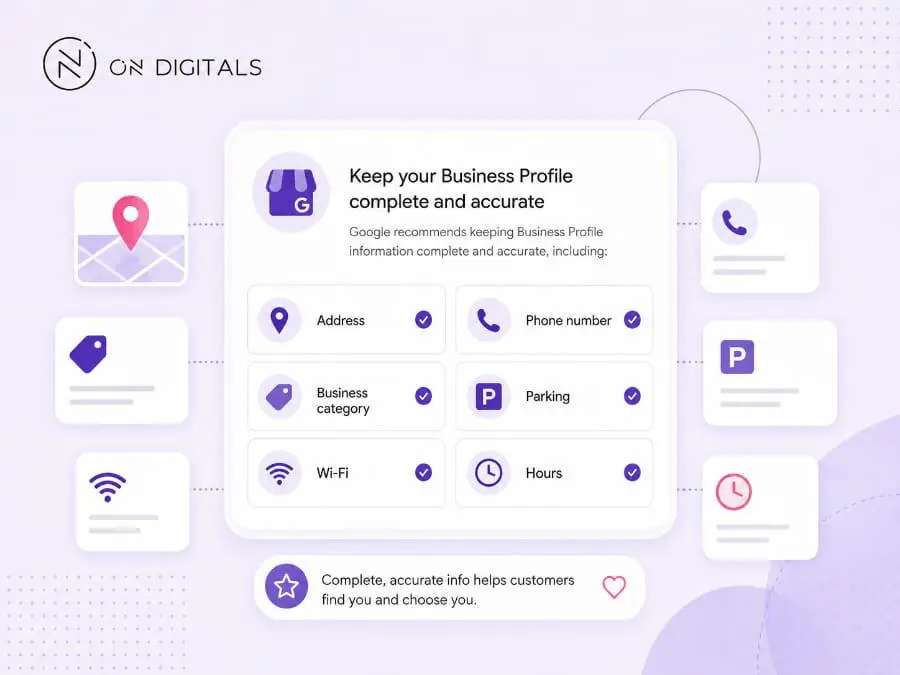
Google also says verified businesses are more likely to show in search results, and responding to reviews can help the business stand out.
In practice, conversion depends on reducing friction. If your hours are wrong, phone number is outdated, or reviews are unanswered, you are asking customers to take a risk.
6. Local SEO is cost-effective over time
Local SEO requires setup, content, review management, citation cleanup, and ongoing updates. But once the foundation is built, it can keep generating discovery without paying for every click.
Paid ads are still useful, especially for launches, seasonal campaigns, and competitive categories. Local SEO works differently. It builds owned and earned visibility across Google Business Profile, website pages, reviews, directories, and local mentions.
The best approach is channel mix. Use paid media to capture immediate demand, then use local SEO to lower dependence on paid traffic over time.
7. Local SEO creates durable local authority
Local authority grows when your business signals are consistent across the web. Google, users, review platforms, and AI assistants all become more confident when your name, address, phone number, services, website, hours, and reviews tell the same story.
This is where many businesses fail. They update the website but forget Apple Maps. They change hours on Facebook but not Google. They collect reviews but never respond. Each mismatch weakens confidence.
Durable local SEO comes from operational discipline.
Local SEO in the AI search era
AI search makes local SEO more important because it compresses the decision journey. Instead of showing ten blue links or several map results, an AI assistant may recommend only a few businesses, summarize their reviews, and explain which one fits the user’s request.
BrightLocal found that ChatGPT and other generative AI tools jumped from 6% to 45% usage for local recommendations in one year, becoming the third most popular source of local business recommendations. Google remains the top review source, but its share fell from 83% in 2025 to 71% in 2026.
Google is also moving further into AI-assisted search. Its Search page describes AI Overviews, AI Mode, conversational follow-ups, and agentic booking capabilities for local experiences and services.
The challenge is that Google visibility and AI visibility are not the same. SOCi’s 2026 Local Visibility Index found that ChatGPT recommends only 1.2% of brand locations, Perplexity 7.4%, and Gemini 11%, while the same brands appear in Google’s local 3-pack 35.9% of the time.
SOCi also reported that fewer than half of brands leading in traditional local search appear in AI recommendations, because AI assistants synthesize signals from Google Maps, Yelp, Facebook, and brand websites rather than relying on one platform.
For local businesses, the takeaway is clear: optimize for Google, but do not stop there.
AI search needs cross-platform consistency, strong reviews, clear service pages, fresh business data, and credible third-party mentions.
How does local SEO work?
Google local SEO works by matching a user’s search intent, location, and available business signals. Google says local results are mainly based on relevance, distance, and prominence. Together, these factors help Google find the best match for a customer’s search.
Relevance
Relevance means how well your Business Profile matches what someone is searching for. Google recommends providing complete and detailed business information so it can better understand your business and match it to relevant searches.
Improve relevance by:
- Choosing accurate primary and secondary categories
- Listing your real services and products
- Writing clear service pages on your website
- Adding FAQs that match local customer questions
- Using natural location and service terms
Distance
Distance means how far your business is from the searcher or the location used in the query. If a customer does not share a location, Google uses what it knows about their location.
You cannot “optimize” your way around geography, but you can make your service areas clear. Use location pages only when they represent real markets you serve.
Prominence
Prominence means how well-known a business is. Google says this can be based on information such as links, articles, review count, and review ratings. More reviews and positive ratings can help local ranking.
Improve prominence through reviews, PR mentions, local backlinks, directory accuracy, community partnerships, and helpful local content.
How to start with local SEO?
A local SEO checklist should start with business data, then move into reviews, citations, content, and authority. The goal is to make your business easy to verify, trust, and recommend.
1. Optimize your Google Business Profile
Start with the basics:
- Business name
- Category
- Address
- Phone number
- Website
- Hours
- Services
- Products
- Photos
- Attributes
- Booking links
Keep special hours updated during holidays, events, or seasonal changes.
Add photos that show the real place, product, or customer experience. You can take a look at local guide programs for further details. For hospitality, retail, clinics, and restaurants, visuals often influence the click before website content does.
Also, for any brand operating across different cities or branches, Google Business for multiple locations is a must-know strategy.
2. Build a review strategy
Ask for reviews after a real customer experience, not randomly. Make the process simple, train your team, and respond to reviews with specific, human replies.
BrightLocal found that 74% of consumers seek reviews written within the last three months, and 32% look for reviews from the last two weeks. Review recency matters because customers want proof that the business is still active and consistent.
3. Clean up local citations and NAP
NAP means name, address, and phone number. Make this data consistent across your website, Google Business Profile, Apple Maps, Bing Places, Facebook, Yelp, Tripadvisor, industry directories, and local listings.
For AI search, this matters even more. SOCi notes that AI assistants cross-reference business information across Google Maps, Yelp, Facebook, and brand websites, and inconsistencies reduce confidence.
4. Create local content that answers real questions
Local content should not be thin city-name duplication. Build pages that help customers decide.
Useful examples include:
- “Best area to stay in Phnom Penh for business travel”
- “How much does dental cleaning cost in District 1?”
- “B2B SEO agency in Vietnam: what international brands should check”
- “Hotel near [landmark]: transport, distance, amenities, and FAQs”
For AI visibility, write short answer blocks, structured FAQs, and clear service descriptions. Link this to AIO/AEO Services if the site has a dedicated service page.
5. Earn local links and mentions
Local links help search engines and AI systems understand that your business is part of a real market. Start with partnerships, local associations, chambers of commerce, suppliers, event pages, sponsorships, media mentions, and relevant directories.
Avoid low-quality link packages. A few credible local mentions are more valuable than dozens of unrelated links.
FAQ
How long does local SEO take?
Local SEO usually needs 3–6 months to show meaningful movement, depending on competition, location, review base, website quality, and citation issues. Profile fixes can improve trust quickly, but ranking, review growth, and local authority need consistent work.
How is local SEO different from traditional SEO?
Traditional SEO focuses on organic visibility across broader search results. Local SEO focuses on location-based discovery through Google Maps, local packs, Google Business Profile, reviews, citations, and service-area relevance. A local SEO strategy must connect ranking signals with real-world business information.
Does AI replace local search?
AI does not replace local search. It changes how local recommendations are selected and summarized. AI assistants still rely on business data, reviews, websites, maps, and third-party sources. Businesses with weak local SEO are less likely to be recommended.
Is Google Business Profile enough for local SEO?
No. Google Business Profile is essential, but it is not enough. You also need accurate citations, strong reviews, local landing pages, relevant website content, local links, and consistency across platforms that AI assistants and customers use.
Why local SEO is important for small businesses?
Local SEO helps small businesses appear when nearby customers are actively searching. It can drive calls, visits, bookings, and qualified leads without relying only on paid ads. In 2026, it also helps businesses become visible in AI-powered local recommendations.
Conclusion
Local SEO is important because customers make local decisions through a mix of Google, maps, reviews, social platforms, directories, and AI assistants. A business that is accurate, visible, well-reviewed, and locally relevant has a better chance of being found and chosen.
The shift is that local SEO no longer stops at Google rankings. AI tools are becoming recommendation engines, and they are far more selective than traditional local search. That means every local signal matters more: your Business Profile, reviews, citations, website pages, local content, and third-party authority.
For businesses that serve specific cities, districts, neighborhoods, or service areas, local SEO is not optional. It is the foundation for being discoverable where customers are ready to act.

NEWEST POSTS
- Advertising Industry In Vietnam: The 2026 Trends, Channels and Market-Entry Strategy
- Best SEO Company in Vietnam: Latest Shortlist For Businesses
- How To Leverage Social Media For Customer Service Like A Pro?
- Social Media Post Tips – 8 Ways To Boost Engagement
- How To Use Social Media for Sales – In-depth Beginner Guide
Read more