
How to Choose a WordPress Performance Plugin
Vincent
20/07/2023
10
A WordPress performance plugin helps improve caching, media delivery, script behavior, database cleanup etc. In 2026, the right choice should start from the site’s weakest Core Web Vital, mobile UX risk, hosting setup, and conversion path. For a safer setup, plugin decisions should also fit into a broader technical website optimization process rather than being treated as a quick speed fix.
What WordPress performance plugin means and when it matters
A WordPress performance plugin is a tool that improves how quickly and smoothly a WordPress site works. It may handle cache rules, image optimization, asset loading, database cleanup etc. It matters when slow pages affect search visibility, mobile experience, or conversion behavior.
The old article listed many plugin options, including WP Rocket, NitroPack, Perfmatters, WP Fastest Cache, Smush, LiteSpeed Cache etc. That list is useful as a starting point, but the updated page should help readers choose based on the problem they need to solve.
| Site issue | Plugin direction | What to check first |
| Slow first load | Caching or CDN support | TTFB and hosting |
| Heavy images | Image optimization | LCP element |
| Slow tap response | Script control | INP and main thread |
| Layout shifts | Media or ad handling | CLS source |
| Bloated database | Cleanup tool | Backup and staging |
A plugin matters most when the team has a diagnosis. If LCP is weak, the plugin should help main content appear earlier. If INP is weak, the plugin should reduce blocking work or control heavy scripts.
Why WordPress performance plugins affect SEO, UX, and conversions
WordPress performance plugins affect SEO because they can support Core Web Vitals. They affect UX because users feel faster pages, smoother taps, and more stable layouts. They affect conversion when key journeys become easier to complete on mobile.
Google describes Core Web Vitals as real-world user experience metrics for loading performance, interactivity, and visual stability. Google also recommends good Core Web Vitals for Search success and better user experience overall.
| Metric | Plugin support | Business impact |
| LCP | Cache, CDN, image optimization | Faster first impression |
| INP | Script control, deferred loading | Smoother forms and menus |
| CLS | Media sizing, font handling | Fewer layout jumps |
| TTFB | Page cache or object cache | Faster server response |
| Page weight | Compression or asset cleanup | Better mobile loading |
A plugin can support these outcomes, while the wrong setup can create conflicts. Two caching plugins may apply overlapping rules. A script optimizer may delay a file that a form or checkout needs. This is why the decision should start with a test, not a plugin list.
For a wider performance plan, review website speed optimization before choosing a plugin. This helps the team separate plugin-level fixes from hosting, code, media, or template issues that may need deeper technical work.
Choose a plugin by the Core Web Vitals issue
The best WordPress performance plugin depends on the weakest metric. A site with slow LCP needs a different fix from a site with poor INP. A site with CLS problems may need layout rules more than cache settings.
Use this decision map before installing anything:
| Weak signal | Likely cause | Plugin category to review |
| LCP above 2.5s | Slow hero image or server response | Cache, CDN, image optimization |
| INP above 200ms | Heavy JavaScript or third-party code | Asset control, script manager |
| CLS above 0.1 | Missing dimensions or late embeds | Media handling, layout control |
| High TTFB | Slow backend response | Page cache, object cache |
| Large transfer size | Heavy media or unused assets | Compression, minification |
The WordPress Performance Lab plugin is worth noting because it comes from the WordPress Performance Team. WordPress.org describes it as a collection of performance-focused features, with many intended to be merged into WordPress core over time.
That makes Performance Lab useful for teams that want to test upcoming performance features carefully. It should still be reviewed on staging before production, especially on sites with complex themes or many plugins.
Evaluate plugin reliability before installation
Plugin reliability matters because performance plugins touch sensitive parts of a WordPress site. They may change cache behavior, script loading, image delivery, or database tasks. A poor setup can break layouts, forms, tracking, or checkout flows.
Use repository and support signals before choosing a plugin. The WordPress Performance GitHub repository describes itself as a monorepo for the WordPress Performance Team, primarily for the Performance Lab plugin and standalone performance-related features.
| Reliability signal | Why it matters |
| Recent updates | Shows active maintenance |
| Support activity | Reveals common conflicts |
| Clear documentation | Reduces setup risk |
| Compatibility notes | Helps with themes and hosting |
| Reversible settings | Makes rollback easier |
| Staging test result | Confirms real site behavior |
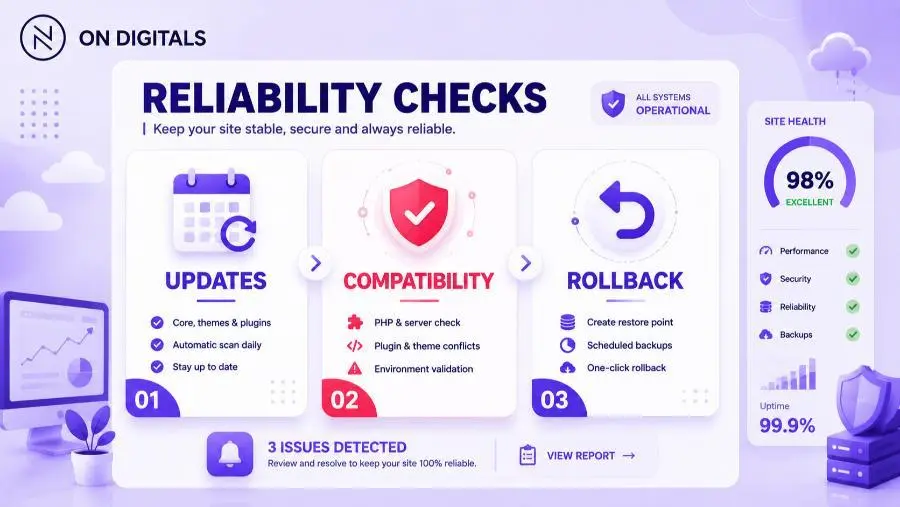 Before installing, verify the plugin’s update frequency, compatibility with your theme, and whether it offers a clean, reversible rollback option if something breaks.
For marketers, this does not mean reading every code change. It means asking the right questions before installation. Is the plugin actively maintained? Does it match the hosting stack? Can the team reverse changes quickly if something breaks?
Is NitroPack worth it for speed and Core Web Vitals?
NitroPack may be worth testing when a team needs an all-in-one performance solution and has limited development capacity. It combines optimization functions such as caching, code optimization, CDN delivery etc. The decision should depend on real test results, site type, and compatibility with business-critical features.
NitroPack’s WordPress.org listing positions the plugin around automated Core Web Vitals optimization, page speed, and cache improvement. NitroPack also publishes vendor-reported Core Web Vitals pass-rate claims, so teams should validate results on their own website before treating those claims as proof.
| NitroPack may fit when | Be careful when |
| Small team needs fast setup | Checkout is custom |
| Site has many media assets | Tracking stack is heavy |
| No developer is available | JavaScript behavior is complex |
| CDN and cache need one setup | Design QA is strict |
A better question than “Is this plugin the best?” is “Does this plugin improve the weakest user experience metric without breaking the site’s key actions?”
Step-by-step implementation framework for marketers and SEO teams
A WordPress performance plugin workflow should start with diagnosis, then move into controlled testing. This prevents teams from installing a plugin because it is popular rather than because it solves the right issue.
Use this framework:
- Choose priority templates
Start with pages tied to leads, product discovery, paid traffic etc. - Check field data first
Use Search Console or PageSpeed Insights to see whether real users have LCP, INP, or CLS issues. Search Console’s Core Web Vitals report is based on real-world usage data. - Identify the likely cause
Check whether the issue comes from images, scripts, server response, layout shifts, or plugin bloat. - Choose one plugin category
Pick the category that matches the issue. Avoid stacking several performance plugins at once. - Test on staging
Compare before-and-after results on the same templates. - Check business functions
Test forms, checkout, search, menus, tracking, consent banners etc. - Deploy with rollback ready
Keep a backup and document changed settings. - Monitor field data after release
Lab scores can change quickly. Field data needs real visits before the trend becomes clear.
This workflow makes performance plugin work safer. It also helps teams explain why a plugin was chosen and which user problem it should solve.
Common mistakes, risks, and quality checks
Most WordPress performance plugin mistakes come from installing too many tools at once. When multiple plugins control cache, scripts, images, or minification, debugging becomes difficult.
Use this QA table before deployment:
| Mistake | Risk | Better action |
| Installing several cache plugins | Rules conflict | Use one primary cache layer |
| Delaying every script | Forms may break | Exclude critical scripts |
| Lazy loading hero image | LCP gets worse | Keep LCP image eager |
| Compressing images blindly | Quality drops | Test key visuals |
| Cleaning database without backup | Data loss | Back up first |
| Trusting lab score only | Real users may still struggle | Check field data |
A strong plugin setup should answer one question: which specific performance issue does this plugin reduce on priority pages?
If the answer is unclear, the team should run another diagnostic check before changing production settings.
Tools and metrics to review before publishing
WordPress performance plugin work should be measured before and after setup. The tool stack does not need to be large. It needs to show whether the plugin improved the right metric without hurting the user journey.
Use PageSpeed Insights as the first before-and-after check for priority URLs. It helps compare mobile field data with lab diagnostics, so the team can see whether the plugin improves the actual user experience instead of only changing a plugin dashboard score.
| Tool | What to review | Best use |
| PageSpeed Insights | URL-level field and lab data | Before-and-after check |
| Search Console CWV report | URL group performance | Template monitoring |
| Chrome DevTools | Script and network behavior | Debugging conflicts |
| WebPageTest | Visual load sequence | LCP and request review |
| WordPress staging | Functional QA | Safe plugin testing |
Useful metrics include:
- LCP on mobile.
- INP on interactive templates.
- CLS near CTA areas.
- TTFB after cache setup.
- JavaScript execution time.
- Image transfer size.
- Plugin conflict errors.
- Conversion form behavior.
The best review combines performance data with functional QA. A faster page is less useful if the contact form, product filter, or checkout path stops working correctly.
FAQ about WordPress performance plugins
Which WordPress performance plugin is best?
There is no single best plugin for every WordPress site. WP Rocket, NitroPack, LiteSpeed Cache, Perfmatters, Performance Lab etc. each fit different needs. Start with the metric that is failing, then choose the plugin category that can fix that problem.
Can performance plugins improve Core Web Vitals?
Yes, performance plugins can improve Core Web Vitals when they target the correct issue. Image optimization and caching can help LCP. Script control can help INP. Layout and media handling can help CLS. Google defines Core Web Vitals around real-world loading, interactivity, and visual stability signals.
Is Performance Lab an official WordPress plugin?
Performance Lab is developed by the WordPress Performance Team. WordPress.org describes it as a collection of features focused on improving site performance, with many features intended for eventual WordPress core integration.
Should I use more than one performance plugin?
Use plugins carefully when features overlap. One cache plugin can work well. Two tools controlling the same cache, minification, or script-loading behavior can create conflicts. Use staging tests before combining performance plugins.
How do I know if a performance plugin is working?
Measure the site before and after activation. Review PageSpeed Insights, Search Console Core Web Vitals, and key user actions. A plugin is working when the target metric improves and important features still work correctly.
Conclusion: choose plugins by the problem they solve
A WordPress performance plugin should be chosen for a specific performance problem, not because it appears on every popular plugin list. Start with the page type that matters most, confirm the weakest Core Web Vital, then test one plugin category in a controlled way.
For On Digitals, plugin selection should be treated as part of a performance review. If your WordPress site feels slow, unstable, or difficult to optimize, On Digitals can help identify which fixes belong in plugin settings, which need developer support, and which performance changes should be tested before they affect live users.

NEWEST POSTS
- Advertising Industry In Vietnam: The 2026 Trends, Channels and Market-Entry Strategy
- Best SEO Company in Vietnam: Latest Shortlist For Businesses
- How To Leverage Social Media For Customer Service Like A Pro?
- Social Media Post Tips – 8 Ways To Boost Engagement
- How To Use Social Media for Sales – In-depth Beginner Guide
Read more