
Best E-commerce Platform for SEO: How to Choose the Right One?
Vincent
22/08/2025
20
The best e-commerce platform for search engine optimization is not the same for every business. A B2C brand may need speed, product schema, and content flexibility, while a B2B company may need account pricing, gated catalogs, ERP integration, and multi-store control. The right platform should support crawlability, Core Web Vitals, structured data, product discovery, international SEO, and AI Search visibility.
Best e-commerce platforms for SEO by use case
The best e-commerce platform for SEO depends on your catalog size, content strategy, B2B needs, technical resources, international roadmap, and integration complexity.
| Use case | Best-fit platform | Why it fits SEO |
| B2C and DTC brands needing speed to market | Shopify | Strong hosted foundation, automatic sitemap, canonical tags, SSL, and scalable app ecosystem |
| B2B or hybrid B2B/B2C commerce | BigCommerce | Native B2B capabilities, multi-storefront, customer-specific pricing, and open API approach |
| Content-led e-commerce SEO | WooCommerce | WordPress flexibility, full content control, plugin ecosystem, and ownership of technical setup |
| Complex enterprise e-commerce | Adobe Commerce | Advanced customization, B2B/B2C support, multi-brand scale, catalog complexity, and deep integrations |
| CRM-led enterprise commerce | Salesforce Commerce Cloud | B2B, B2C, D2C, headless commerce, order management, payments, and CRM integration |
| Composable enterprise commerce | commercetools | API-first composable architecture for teams building custom commerce stacks |
| Developer-first custom commerce | Medusa | Open-source, modular commerce framework for highly customized workflows |
This ranking is not based on affiliate value or generic popularity. It is based on SEO implementation risk, technical control, structured data support, performance potential, content flexibility, B2B readiness, integration depth, and scalability.
Why should SEO influence your e-commerce platform decision?
SEO should influence platform choice because changing platforms later can affect technical items and revenue-generating organic traffic. A platform is not just a checkout system; it shapes how search engines crawl, understand, and rank your store.
E-commerce SEO matters because organic search connects product demand with high-intent shoppers. In the United States, the U.S. Census Bureau estimated that e-commerce represented 16.8% of total retail sales in Q1 2026 on a not-adjusted basis, while e-commerce sales grew 9.7% year over year.
Globally, the opportunity is larger but more complex. DataReportal’s Digital 2026 Global Overview Report reported more than 6 billion internet users worldwide, and the report includes e-commerce activity as a major digital behavior category.
For SEO teams, the platform decision affects:
- How clean product URLs are
- How category pages are structured
- Whether canonical tags are editable
- How sitemaps and robots.txt are handled
- Whether product schema is accurate
- How fast pages respond to user interactions
- Whether filters create crawl bloat
- How easily content hubs can support commercial pages
- Whether B2B catalogs can be crawled or need gated access
- Whether multi-store and international pages can scale cleanly
A strong e-commerce platform should help SEO, developers, merchandisers, and marketing teams work from the same growth system.
How do we evaluate e-commerce platforms for SEO?
A useful e-commerce SEO comparison needs a visible scoring rubric. Without a rubric, “best platform” articles become subjective listicles that summarize features but do not help businesses choose.
This evaluation uses 10 SEO criteria:
| Criteria | What we check | Weight |
| Crawlability and indexation | URL structure, sitemap, robots.txt, canonical control | 15% |
| Core Web Vitals | INP, LCP, CLS, theme weight, front-end control | 15% |
| Product structured data | Product, Offer, Review, ProductGroup, variants | 15% |
| Content flexibility | Blog, guides, category copy, internal links, templates | 10% |
| Technical SEO control | Redirects, canonicals, meta tags, schema, noindex rules | 10% |
| B2B readiness | Companies, price lists, catalogs, payment terms, gated content | 10% |
| Integration readiness | ERP, CRM, PIM, inventory, marketplace, analytics | 10% |
| Multi-store and international SEO | Multiple storefronts, localization, currency, hreflang, markets | 10% |
| AI Search readiness | Crawlable text, entity clarity, structured data, product feeds | 3% |
| Migration risk | URL control, redirect mapping, data export, platform lock-in | 2% |
Performance deserves a high weight because Google’s Core Web Vitals changed materially in 2024. Interaction to Next Paint, or INP, replaced First Input Delay as a Core Web Vital on March 12, 2024, making responsiveness a core performance concern for modern e-commerce sites.
Product structured data also deserves a high weight. Google says product structured data can make product information appear in richer ways across Google Search, including price, availability, review ratings, shipping information, Google Images, and Google Lens.
What makes an e-commerce platform good for SEO?
A good e-commerce platform for SEO gives teams control over crawlable pages, structured data, performance, internal links, product content, faceted navigation, and redirects. It should make common SEO tasks easy without forcing developers to rebuild every basic setting.
The most important SEO capabilities include:
- Editable title tags and meta descriptions
- Clean product and category URLs
- Canonical tag control
- XML sitemap management
- Robots.txt control
- Redirect management
- Product and variant structured data
- Fast mobile performance
- Internal link flexibility
- Indexation controls for filters and search pages
- Blog or content hub functionality
- International URL and language support
- Analytics and conversion tracking integration
For 2026, the platform should also support AI Search visibility. Google’s AI optimization guidance states that SEO best practices remain relevant because AI Overviews and AI Mode are rooted in Google’s core Search ranking and quality systems. Google also notes that AEO and GEO are terms used in the industry, but from Google Search’s perspective, optimizing for generative AI search is still optimizing for Search.
For e-commerce, that means the platform must expose useful product information in crawlable text, support accurate structured data, integrate with product feeds, and avoid hiding key content behind JavaScript or gated interfaces.
E-commerce platform comparison
No single e-commerce platform wins every SEO scenario. Shopify is easier for B2C teams, WooCommerce gives more content control, BigCommerce is strong for B2B and multi-store use cases, and enterprise platforms become valuable when integrations, catalog complexity, and governance matter more than simplicity.
| Platform | SEO fit | Best for | Main SEO risk |
| Shopify | Strong hosted SEO foundation | B2C, DTC, fast-growing brands | Limited deep technical control without apps or dev work |
| BigCommerce | Strong B2B/multi-store flexibility | B2B, B2C, hybrid catalogs | Implementation quality varies by theme and setup |
| WooCommerce | Strong content and control | Content-led brands, WordPress teams | Performance and security depend on hosting and plugins |
| Adobe Commerce | Strong enterprise customization | Complex enterprise B2B/B2C | Requires technical budget and governance |
| Salesforce Commerce Cloud | Strong enterprise ecosystem | CRM-led enterprise commerce | Complexity and cost require mature teams |
| commercetools | Strong composable flexibility | Enterprise custom stacks | Needs experienced developers and SEO architecture planning |
| Medusa | Strong developer-first flexibility | Custom builds, headless workflows | SEO depends heavily on frontend implementation |
This table should not replace a technical audit. It should help teams shortlist platforms before checking requirements such as product count, markets, ERP integration, CMS needs, and migration risk.
Shopify
Shopify is a strong choice for B2C and DTC brands that need a stable hosted platform, fast launch, built-in SEO basics, and manageable operational complexity. It is especially useful when the team wants to focus on merchandising, content, conversion, and growth rather than infrastructure.
Shopify’s official SEO documentation states that it automatically adds canonical tags, automatically generates sitemap.xml and robots.txt files, requires themes to support social sharing, and activates SSL certificates by default.

Shopify also supports international domains, including top-level domains, subdomains, and subfolders. Shopify’s documentation recommends subfolders as a straightforward option with SEO benefits for first-time international setups.
Best fit:
- DTC brands
- B2C e-commerce platform projects
- Small to mid-sized catalogs
- International stores with manageable localization needs
- Teams that want a cloud e-commerce platform with lower infrastructure overhead
SEO strengths:
- Built-in canonical tags
- Automatic sitemap and robots.txt generation
- SSL by default
- App ecosystem for SEO, schema, feeds, and redirects
- Shopify Markets for international selling
- Hydrogen option for headless storefronts
SEO watchouts:
- URL structure has some platform constraints.
- Apps can slow performance if unmanaged.
- Advanced schema often needs theme or app customization.
- Duplicate product URLs through collections should be reviewed.
- International SEO needs careful Shopify Markets setup.
Shopify is often the safest SEO platform for B2C brands that want speed and reliability. It is less ideal when a company needs deep catalog logic, highly customized B2B workflows, or full backend control.
BigCommerce
BigCommerce is a strong option for companies that need both B2C speed and B2B depth. It fits businesses that need multi-storefront management, customer-specific buying experiences, and stronger native commerce capabilities without building everything from scratch.
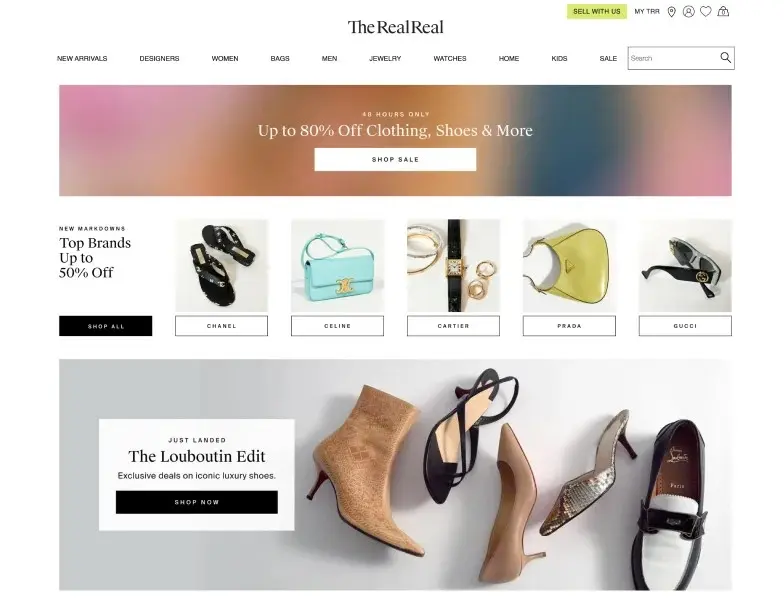
BigCommerce’s own product page highlights multi-storefront management from one dashboard, including multiple brands, customer segments, or regions. Its B2B messaging also includes account-specific pricing, products, terms, payment options, quotes, reorders, invoice payments, buyer roles, permissions, and workflows.
Best fit:
- B2B e-commerce platform projects
- Hybrid B2B and B2C brands
- Multi-store e-commerce platform needs
- Brands with regional storefronts
- Businesses needing native commerce features and integrations
SEO strengths:
- Multi-storefront structure
- B2B catalog and account capabilities
- Open SaaS architecture
- Strong API ecosystem
- Good fit for complex product catalogs
- Better native B2B fit than many simple B2C platforms
SEO watchouts:
- Multi-store SEO needs governance.
- Faceted navigation can create crawl bloat if unmanaged.
- Technical SEO depends on implementation quality.
- Headless builds require SEO planning from the start.
BigCommerce is a strong shortlist option when the business needs B2B complexity, multi-store operations, and SEO scalability without going fully custom.
WooCommerce
WooCommerce is best for brands that rely heavily on SEO content, editorial strategy, and WordPress flexibility. It gives teams high control, but that control comes with responsibility for hosting, plugins, security, performance, and technical maintenance.
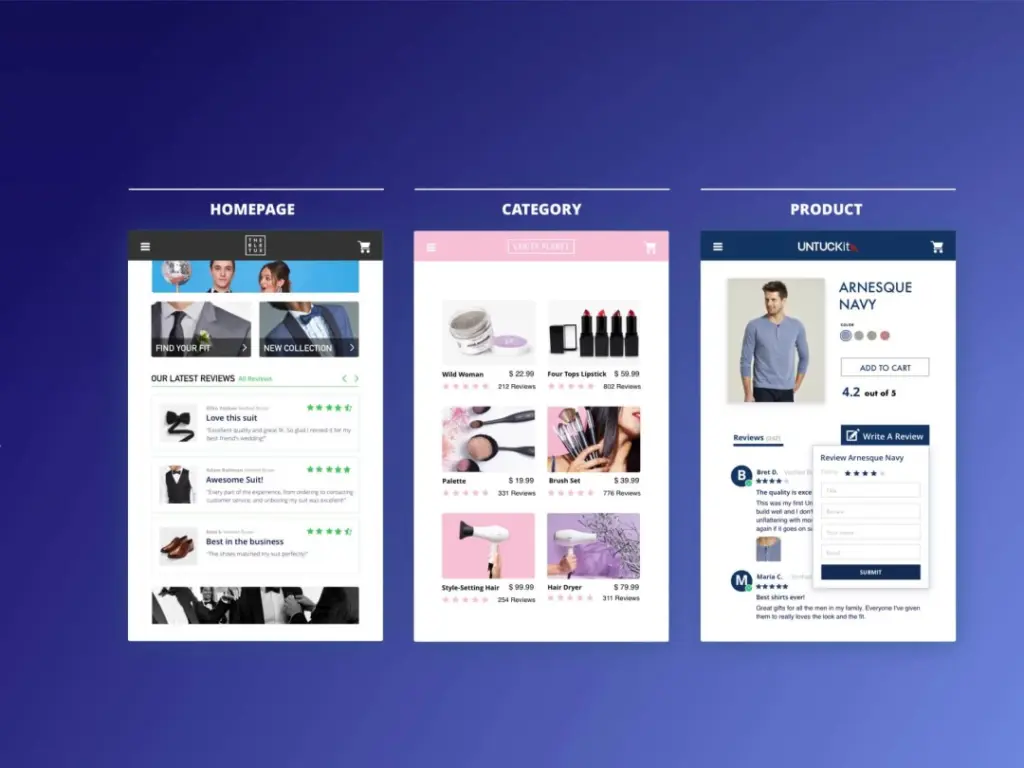
WooCommerce describes itself as an open-source commerce platform for WordPress that gives merchants control over checkout, data, costs, payments, features, and hosting choices.
Best fit:
- Content-led e-commerce brands
- Publishers adding commerce
- Niche stores with strong blog strategy
- Teams already using WordPress
- Brands that need flexible landing pages and content hubs
SEO strengths:
- Strong CMS and blog capabilities through WordPress
- Full control over templates and content structure
- Flexible plugin ecosystem
- Good fit for long-form guides, comparison content, and category SEO
- Easier customization for editorial-led growth
SEO watchouts:
- Site speed depends on hosting, theme, and plugins.
- Too many plugins can create bloat and conflicts.
- Security and maintenance need active ownership.
- Product schema quality depends on theme and plugin setup.
- Enterprise B2B features often need extensions or custom development.
WooCommerce can be excellent for SEO when managed well. It can also become slow and fragile when the stack is built without technical discipline.
Adobe Commerce
Adobe Commerce is best for enterprise companies with complex catalogs, multi-brand operations, B2B/B2C requirements, integrations, and technical resources. It is powerful, but it is not the simplest platform for teams without development capacity.
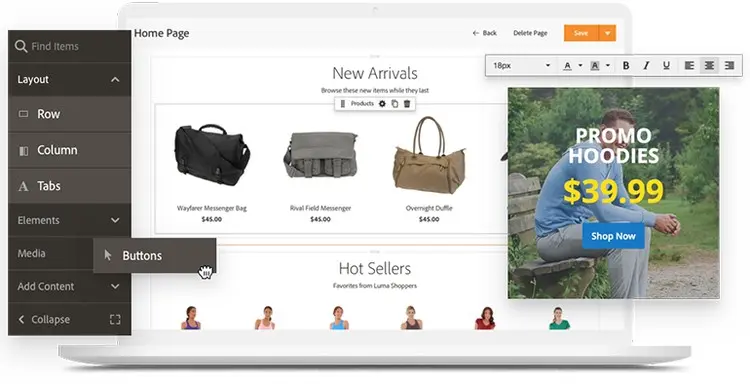
Adobe positions Adobe Commerce as an AI-powered composable e-commerce platform for B2B and B2C at global scale. Adobe also states that the platform supports B2B and B2C commerce, third-party system synchronization, multicloud infrastructure, security features, and monitoring across more than 200 metrics.
Best fit:
- Enterprise e-commerce platforms
- Multi-brand commerce
- Complex B2B and B2C catalogs
- Large SKU counts
- Global operations
- Companies with ERP, PIM, CRM, and custom integration needs
SEO strengths:
- Strong customization potential
- Multi-store and multi-brand flexibility
- Good fit for complex catalog architecture
- Enterprise integration depth
- Scalable technical architecture when implemented well
SEO watchouts:
- Requires experienced developers.
- Implementation cost and timeline can be high.
- Poorly configured faceted navigation can create crawl traps.
- Performance needs active optimization.
- Migration planning is critical.
Adobe Commerce is not the best option for a small store that wants to launch quickly. It becomes valuable when complexity justifies the investment.
Salesforce Commerce Cloud
Salesforce Commerce Cloud is best for enterprise brands that need commerce connected to CRM, personalization, order management, payments, B2B, B2C, and D2C workflows. It fits organizations where commerce is part of a larger Salesforce ecosystem.
Salesforce says Commerce Cloud supports B2B, B2C, and D2C commerce and includes headless commerce, composable commerce, order management, payments, and CRM integration for customer data and personalized shopping experiences.

Best fit:
- Enterprise retail brands
- CRM-led commerce
- Omnichannel organizations
- Companies already using Salesforce
- B2B/B2C brands needing personalization and customer data integration
SEO strengths:
- Strong enterprise ecosystem
- CRM and commerce integration
- Headless and composable options
- Suitable for personalized commerce experiences
- Good fit for complex customer journeys
SEO watchouts:
- SEO quality depends on implementation.
- Headless storefronts need server-side rendering and crawlable content.
- Platform complexity can slow SEO changes.
- Governance is required across marketing, CRM, development, and merchandising.
Salesforce Commerce Cloud is strongest when commerce is tied to customer data and enterprise workflows, not when a team simply needs a lightweight SEO-friendly storefront.
commercetools
commercetools is best for enterprise teams that want a composable commerce platform and have the technical maturity to build a custom stack. It is more architecture choice than plug-and-play storefront.
commercetools describes its Composable Commerce product as a centralized foundation for managing customers, products, pricing, and inventory. Its documentation also notes REST APIs, GraphQL API, Merchant Center tooling, connectors, and extensibility options for B2C commerce.
Best fit:
- Composable enterprise commerce
- Headless builds
- Custom customer journeys
- Complex integration environments
- Businesses with strong engineering teams
SEO strengths:
- API-first flexibility
- Strong integration potential
- Custom frontend freedom
- Good fit for PIM, CMS, DAM, ERP, and CRM ecosystems
- Scalable for complex commerce models
SEO watchouts:
- SEO must be architected, not assumed.
- Frontend rendering affects crawlability.
- Structured data must be implemented manually.
- Content workflows depend on the CMS layer.
- Requires strong technical governance.
commercetools can be excellent for SEO when paired with a high-quality frontend, CMS, and SEO architecture. It is not ideal for teams that need out-of-the-box SEO workflows.
Medusa
Medusa is best for developer-first teams that want an open-source, modular commerce foundation. It is useful when the business model does not fit standard SaaS platform assumptions.
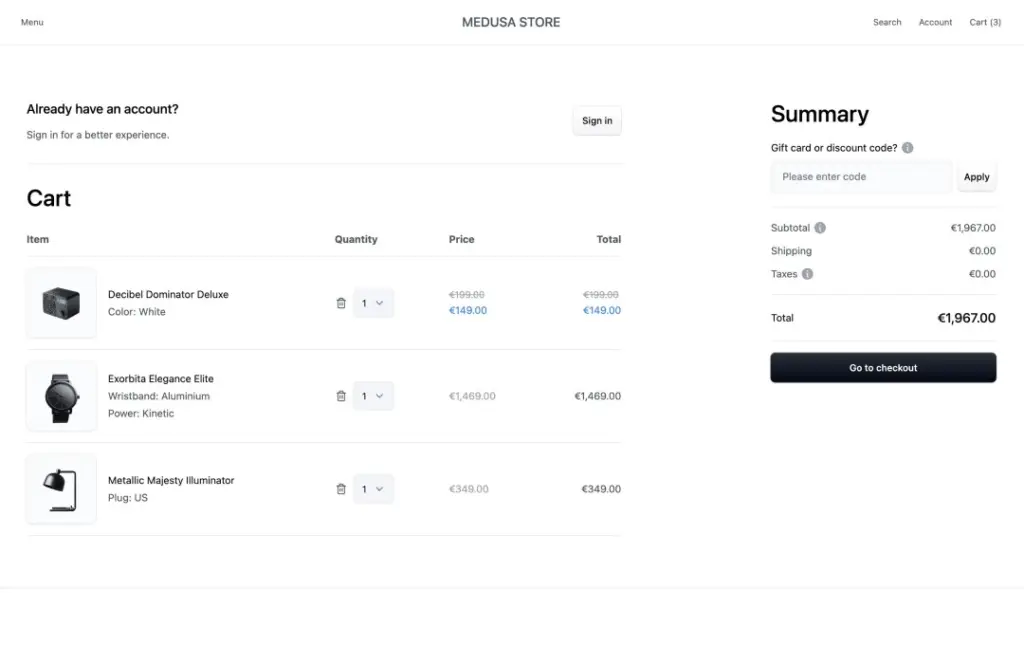
Medusa describes itself as an open-source commerce platform with modules, customizable admin, framework, cloud infrastructure, and developer tools. Its GitHub description says it can support custom commerce applications such as B2B stores, DTC stores, marketplaces, distributor platforms, point-of-sale systems, and service businesses.
Best fit:
- Custom commerce workflows
- Developer-led teams
- Marketplace-style commerce
- Headless storefronts
- Startups with unusual business logic
- Teams wanting open-source control
SEO strengths:
- High customization potential
- Open-source flexibility
- Good fit for custom frontend architecture
- Useful for non-standard commerce models
SEO watchouts:
- SEO depends heavily on frontend implementation.
- Non-technical teams may struggle.
- Product schema, sitemaps, canonicals, and redirects need planning.
- Content workflows may require a separate CMS.
Medusa is not the default choice for a merchant who needs simple admin workflows. It is a strong option when the team wants to build a custom commerce system.
What to look for in a B2B e-commerce platform?
The best B2B e-commerce platform should support account-based buying, custom pricing, payment terms, bulk ordering, gated catalogs, buyer roles, ERP integration, and SEO-friendly public content. B2B SEO is different from B2C SEO because the buyer journey is longer and often involves multiple stakeholders.
When choosing a B2B e-commerce platform, check whether it supports:
- Company accounts
- Multiple buyers per company
- Account-specific catalogs
- Custom price lists
- Payment terms
- Purchase orders
- Quotes
- Bulk ordering
- Reorders
- Approval workflows
- ERP and CRM integration
- Public SEO pages for non-gated discovery
- Gated areas for sensitive pricing or catalogs
For SEO, avoid gating every useful page. A B2B e-commerce site should still have crawlable category pages, product education, use cases, buying guides, comparison pages, and support content. Sensitive pricing can stay behind login, but discovery content should be indexable.
What to look for in a B2C e-commerce platform?
The best B2C e-commerce platform should support fast product discovery, clean category pages, product schema, mobile performance, easy merchandising, conversion tracking, and content that supports buying decisions. B2C SEO depends on both product visibility and customer experience.
When choosing a B2C e-commerce platform, check whether it supports:
- Fast product pages
- Clean product URLs
- Product schema
- Variant handling
- Category page copy
- Reviews and ratings
- Image optimization
- Product feeds
- Promotional landing pages
- Blog and buying guides
- Redirect management
- Analytics and ad tracking
- Marketplace integrations
Shopify is often a strong B2C fit because it handles many SEO basics automatically, while WooCommerce is strong for B2C brands that need deeper editorial control. BigCommerce becomes attractive when B2C teams need multi-store or more native commerce capabilities.
B2C teams should test performance before launch. INP, LCP, and CLS should be checked on product pages, category pages, search pages, cart pages, and high-traffic content pages, not only on the homepage.
Cloud e-commerce platform vs open-source platform
A cloud e-commerce platform is usually easier to maintain, while an open-source platform gives more control. The right choice depends on whether the business values operational simplicity or technical flexibility more.
| Platform model | Best for | SEO advantage | SEO risk |
| Cloud SaaS | Teams needing speed and lower maintenance | Hosting, security, updates, and basic SEO handled | Less backend control |
| Open-source | Teams needing customization and ownership | Deep control over templates, URLs, plugins, and hosting | Requires technical maintenance |
| Headless/composable | Enterprise teams with engineering resources | Custom UX, performance potential, integration flexibility | SEO depends on implementation |
Cloud platforms like Shopify, BigCommerce, Salesforce Commerce Cloud, and Adobe Commerce can reduce infrastructure burden. Open-source and developer-first options like WooCommerce and Medusa can provide more flexibility but need stronger technical ownership.
The wrong choice usually happens when a team chooses flexibility without resources, or simplicity without checking future integration needs.
E-commerce integration platform requirements for SEO
An e-commerce integration platform should connect the store with product data, inventory, CRM, ERP, analytics, feeds, and marketing channels without damaging SEO. Integrations affect SEO because product data quality, availability, pricing, duplication, and tracking all influence search performance.
Important integrations include:
- ERP for inventory and order data
- PIM for product attributes
- CRM for B2B accounts and lead quality
- DAM for product media
- CMS for content hubs and landing pages
- Google Merchant Center feeds
- Marketplace feeds
- GA4 and conversion tracking
- Search Console monitoring
- Reviews platform
- Email and lifecycle marketing tools
Google Merchant Center documentation states that accurate and correctly formatted product data is essential for ads and free listings, and Google uses product data to match products to relevant queries.
For SEO, the integration question is not only “Can these systems connect?” It is “Will product data remain accurate, indexable, structured, and measurable after the systems connect?”
Multi-store e-commerce platform requirements
A multi-store e-commerce platform should let businesses manage different storefronts, regions, brands, languages, products, and customer segments without creating duplicate content or reporting chaos. Multi-store SEO needs governance as much as technology.
A good multi-store setup should support:
- Separate storefronts or markets
- Country or brand-specific URLs
- Store-level metadata
- Store-level product availability
- Localized content
- Currency and language settings
- Hreflang where needed
- Store-specific analytics
- Redirects and canonical rules
- Shared product data with localized fields
BigCommerce supports creating and managing multiple storefronts from one dashboard, including unique categories, products available on one or multiple storefronts, customers, orders, storefront analytics, and data insights.
Shopify also supports international domains and subfolders for specific markets, including different languages and currencies when configured through Markets.
Multi-store SEO fails when every store copies the same content. Each storefront should have a reason to exist: region, language, brand, audience, customer segment, pricing model, or catalog difference.
Headless and composable commerce: Good or bad for SEO?
Headless and composable commerce can be excellent for SEO when implemented with server-side rendering, clean URLs, structured data, crawlable content, fast performance, and strong CMS workflows. They can hurt SEO when product content is rendered poorly, metadata is inconsistent, or developers treat SEO as a post-launch task.
Headless is not automatically faster. It gives teams more control, but the final performance depends on frontend architecture, hosting, JavaScript weight, image handling, caching, and data fetching.
Shopify’s Hydrogen SEO documentation says Hydrogen SEO configuration includes meta tags and descriptions, sitemap.xml, and robots.txt setup.
Salesforce also positions Commerce Cloud headless APIs as a way for B2C and B2B businesses to meet customers across touchpoints and control the frontend.
Before choosing headless, ask:
- Can the frontend render crawlable product content?
- Can marketers edit metadata and content without developers?
- Can product schema be generated correctly?
- Can pages load fast on mobile?
- Can sitemaps update automatically?
- Can redirects be managed at scale?
- Can GA4, feeds, and Search Console data be maintained cleanly?
Headless commerce is a good SEO choice for teams with engineering maturity. It is a risky choice for teams that need simple content and SEO operations.
E-commerce SEO in the AI search era
E-commerce SEO in 2026 must support AI Search because shoppers may discover products through AI Overviews, AI Mode, product listings, answer engines, and conversational search. The platform should make product information clear, crawlable, structured, and connected to reliable feeds.
Google’s AI optimization guide says generative AI features rely on content from Google’s Search index, and pages need to meet Search technical requirements to be eligible for generative AI features. The same guide notes that Merchant Center feeds and product data can help products appear in AI responses and other Google Search results.
For e-commerce platforms, AI Search readiness means:
- Product pages have unique, useful descriptions.
- Product schema includes accurate price, availability, reviews, and shipping where relevant.
- Variant information is clear.
- Category pages answer buying intent.
- Comparison and buying guides are crawlable.
- Product feeds match on-site data.
- Reviews and FAQs are visible in text.
- Pages are indexable and eligible for snippets.
- Internal links connect guides, categories, and products.

This does not mean adding random “GEO hacks.” It means building a platform setup that helps search engines and AI systems understand products, merchants, and buying context.
Migration SEO: How to change e-commerce platforms without losing rankings?
E-commerce platform migration can damage rankings if URLs, redirects, metadata, canonicals, structured data, internal links, and product feeds are not managed carefully. Migration should be treated as an SEO project, not only a development project.
A safe migration workflow includes:
- Crawl the current site.
- Export all indexable URLs.
- Map old URLs to new URLs.
- Preserve priority category and product URLs where possible.
- Rebuild metadata and structured data.
- Audit canonical rules.
- Review faceted navigation and filters.
- Recreate XML sitemaps.
- Implement 301 redirects.
- Test redirects before launch.
- Validate schema with Google’s Rich Results Test.
- Submit updated sitemaps.
- Monitor Search Console after launch.
- Compare organic traffic, rankings, and revenue by page group.
Do not migrate during peak sales periods unless there is a business-critical reason. E-commerce SEO recovery depends on clean redirect mapping, crawlability, and fast issue response after launch.
Common SEO mistakes when choosing an e-commerce platform
Most e-commerce platform mistakes happen when teams choose based on design, price, or app ecosystem without checking SEO operations. The platform may look good during demo but create crawl, performance, content, or reporting problems after launch.
Avoid these mistakes:
- Choosing a platform before mapping SEO requirements.
- Ignoring Core Web Vitals on product and category pages.
- Assuming product schema works correctly by default.
- Letting filter URLs create crawl bloat.
- Hiding all B2B catalog content behind login.
- Using duplicate manufacturer descriptions.
- Migrating without redirect mapping.
- Choosing headless without SEO governance.
- Installing too many apps or plugins.
- Ignoring product feed quality.
- Treating multi-store as copy-paste localization.
- Measuring revenue without tracking organic landing pages.
The best e-commerce platform for SEO is the one your team can maintain. A technically powerful platform with weak governance can perform worse than a simpler platform managed well.
Key Takeaways
Choose Shopify if you need a reliable B2C platform with strong hosted basics. Choose BigCommerce if you need B2B, B2C, and multi-store flexibility. Choose WooCommerce if SEO content and WordPress control are central to your growth. Choose Adobe Commerce or Salesforce Commerce Cloud if enterprise integration and governance justify the investment. Choose commercetools or Medusa when your team needs composable or custom commerce architecture. A practical decision table:
| Business type | Recommended shortlist |
| DTC brand launching or scaling quickly | Shopify, BigCommerce |
| Content-led niche store | WooCommerce, Shopify |
| B2B company with custom pricing | BigCommerce, Shopify Plus, Adobe Commerce |
| Enterprise B2B/B2C commerce | Adobe Commerce, Salesforce Commerce Cloud, BigCommerce Enterprise |
| Multi-brand or multi-region commerce | BigCommerce, Adobe Commerce, Shopify Plus |
| Composable commerce team | commercetools, Salesforce Commerce Cloud, Medusa |
| Developer-first custom workflow | Medusa, WooCommerce, commercetools |
The right platform should match business model, SEO ambition, technical resources, and integration needs. For On Digitals clients, the best approach is to evaluate the platform together with SEO strategy, website development, analytics, content, and conversion planning before committing to a build.
Frequently Asked Questions (FAQs)
What is the best e-commerce platform for SEO?
The best e-commerce platform for SEO depends on the business model. Shopify is strong for B2C brands that need a reliable hosted setup. BigCommerce is strong for B2B, B2C, and multi-store needs. WooCommerce is strong for content-led SEO. Adobe Commerce, Salesforce Commerce Cloud, and commercetools are better for enterprise complexity.
Is Shopify good for e-commerce SEO?
Yes, Shopify is good for many e-commerce SEO projects because it includes automatic canonical tags, sitemap.xml, robots.txt generation, SSL, and international domain options. However, advanced SEO may still need theme edits, apps, schema customization, performance optimization, and careful handling of product URLs.
Is WooCommerce better than Shopify for SEO?
WooCommerce can be better than Shopify for content-led SEO because it runs on WordPress and offers deep editorial flexibility. Shopify is usually easier to maintain for hosted B2C commerce. WooCommerce gives more control, but SEO performance depends on hosting, theme quality, plugins, and technical maintenance.
How do I choose a B2B e-commerce platform?
Choose a B2B e-commerce platform by checking company accounts, buyer roles, custom pricing, catalogs, payment terms, quotes, reorders, ERP integration, CRM integration, and SEO-friendly public pages. A good B2B platform should support complex buying workflows without hiding all useful content from search engines.
What is the best B2C e-commerce platform?
The best B2C e-commerce platform depends on catalog size, budget, content needs, and team skill. Shopify is often strong for DTC and B2C brands that need speed and reliability. WooCommerce fits content-heavy stores. BigCommerce fits B2C brands that also need multi-store, B2B, or more native commerce features.
What should enterprise e-commerce platforms support?
Enterprise e-commerce platforms should support large catalogs, multi-storefronts, international SEO, complex pricing, product data integration, ERP, CRM, PIM, analytics, security, governance, and performance monitoring. Adobe Commerce, Salesforce Commerce Cloud, BigCommerce Enterprise, and commercetools are common enterprise shortlists depending on architecture needs.
Is headless commerce better for SEO?
Headless commerce can be better for SEO when implemented with server-side rendering, clean metadata, structured data, crawlable content, fast performance, and strong CMS workflows. It can hurt SEO when JavaScript hides content, marketers cannot edit SEO fields, or redirects and sitemaps are not managed properly.

NEWEST POSTS
- Advertising Industry In Vietnam: The 2026 Trends, Channels and Market-Entry Strategy
- Best SEO Company in Vietnam: Latest Shortlist For Businesses
- How To Leverage Social Media For Customer Service Like A Pro?
- Social Media Post Tips – 8 Ways To Boost Engagement
- How To Use Social Media for Sales – In-depth Beginner Guide
Read more