
TikTok Ads in 2026: What has changed and what brands should do
Vincent
14/08/2025
35
TikTok Ads in 2026 can support more than awareness. Businesses use the platform to introduce new products, drive ecommerce sales and promote apps. However, performance does not come from reach alone. Brands need a clear offer, native-feeling creative, a conversion-ready destination and reliable tracking before they expect TikTok to contribute to growth.
Are TikTok Ads still worth it in 2026?
TikTok Ads are worth testing when the platform matches the way customers discover and evaluate your offer. This is often true for products that are easy to demonstrate, services that can be explained through short stories or useful tips, and brands with a steady pipeline of creative ideas.
The platform is no longer only a place for entertainment or broad reach. TikTok now supports campaigns across branding, creative, commerce, measurement and performance. One campaign may introduce a product. Another can generate a lead, retarget a visitor or support a purchase.
Still, TikTok is not automatically the right first channel. A business that relies on urgent local demand, such as emergency repair or immediate appointments, will often find search advertising more direct. A business with no clear offer, slow lead follow-up or an untested landing page should fix those gaps before spending heavily on social traffic.
TikTok Ads news updated in 2026?
The biggest shift is that TikTok has become more structured as an advertising platform without losing its discovery-led nature. Brands still need to earn attention in the feed, but they now have more tools for campaign automation, search discovery, creator collaboration and commerce.
Smart+ makes automation more flexible
TikTok expanded Smart+ in 2026 as a set of automation tools for performance campaigns. It can help manage parts of targeting, placement, catalog use and budget delivery. Advertisers can keep manual control over selected modules rather than handing every decision to automation.
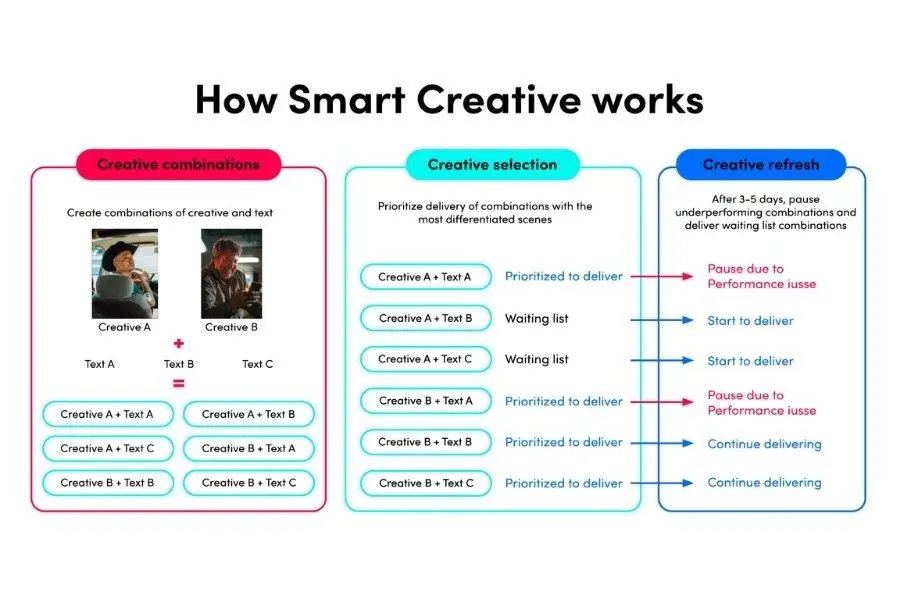
This can reduce repetitive campaign work, but it does not replace strategy. Smart+ cannot decide whether your offer is competitive, whether your landing page answers customer questions or whether a creator message feels credible. It works best after the business has chosen the right conversion event and supplied enough reliable data.
Search matters more on TikTok
TikTok remains a discovery platform, but users also search for reviews, tutorials, product comparisons and solutions inside the app. Search Ads Campaign gives advertisers a keyword-based way to appear on TikTok search results pages for Traffic and Web Conversion objectives, where available.
This does not make TikTok a replacement for Google Search. The two platforms begin from different user behaviours. Google is built around explicit search demand. TikTok search often combines research with visual discovery, creator opinions and short-form demonstrations. Brands should plan content and ads for both contexts instead of treating them as identical.
Commerce is closer to the content experience
TikTok Shop, catalog-based formats and shopping ads give ecommerce brands more ways to connect content with purchase paths. A viewer can watch a product demonstration, inspect an item and move toward a transaction with fewer steps than a traditional social campaign.
The opportunity is real, but the same ecommerce fundamentals still apply. Product information must be accurate. Pricing needs to be competitive. Delivery and returns must be clear. A campaign may earn attention, but poor product pages or weak fulfilment can still stop the sale.
Who should use TikTok Ads in 2026?
TikTok Ads are most suitable when a business can show value quickly and continue testing new creative messages. Demographics matter, but they are not enough to decide channel fit. A better assessment looks at the offer, the buying journey and the team’s ability to create and measure campaigns.
|
Business situation |
TikTok Ads fit |
Why |
|
Visual ecommerce product |
Strong |
Demonstrations, reviews and creator content can make the benefit easy to understand. |
|
New consumer product |
Strong |
Video can create interest before people know what to search for. |
|
App promotion |
Strong |
Short-form video can show the app in use and support install campaigns. |
|
B2B service with a long sales cycle |
Selective |
TikTok can build familiarity, but search, content and CRM follow-up often carry more of the conversion path. |
|
Urgent local service |
Usually secondary |
Customers often search when they need an immediate answer or appointment. |
|
Weak landing page or no tracking |
Not ready |
More traffic will not solve a broken conversion path. |
TikTok can also help lead-generation brands, but lead volume is not enough. A form fill must be connected to a qualification process. Sales teams should report whether those leads become booked calls, sales-qualified opportunities or revenue.
What can TikTok Ads help a business achieve?
TikTok Ads can support different objectives, but each objective needs its own message and measurement plan.
For awareness, TikTok can make a new category or message more visible. For consideration, it can show proof through demonstrations, reviews or creator stories. For performance, it can drive users to a product page, lead form or app store. The strongest campaigns connect these stages instead of assuming one video must do every job.
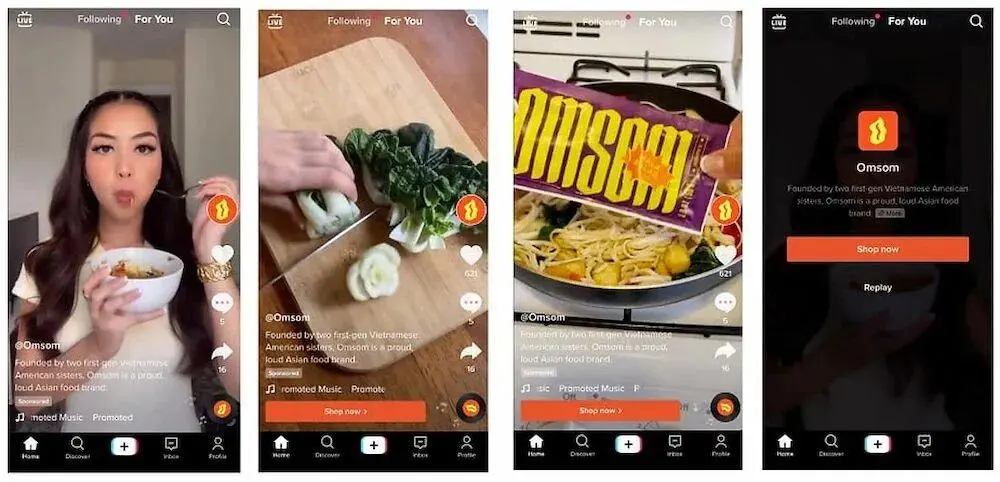
Businesses should choose one primary outcome for a test. Trying to optimise one small budget for reach, engagement, purchases and leads at the same time usually produces unclear learning.
Which TikTok ad formats matter most?
The right format depends on the campaign role, the available creative and the action a business wants users to take. Features and availability can vary by market, so advertisers should confirm the current options inside TikTok Ads Manager before launch.
|
Format or solution |
Best use |
What to evaluate |
|
In-Feed Ads |
Broad reach, traffic and conversion testing |
Whether the video feels natural in the For You feed and leads to qualified action. |
|
Spark Ads |
Amplifying organic posts or creator content |
Engagement, social proof and the quality of traffic from proven content. |
|
Search Ads Campaign |
Reaching TikTok users who are actively researching |
Keyword relevance, search intent and conversion quality. |
|
TopView and premium reach formats |
Major launches or high-visibility moments |
Incremental reach and whether the budget fits the campaign goal. |
|
Shop and catalog-based ads |
Ecommerce and product discovery |
Product-feed accuracy, purchase data and the end-to-end shopping experience. |
|
Lead generation solutions |
Capturing prospects without a long form |
Lead quality, response time and sales acceptance. |
|
App promotion solutions |
Installs and in-app action |
Cost per install, activation and downstream user value. |
Do not select a format because it is fashionable. A creator-led Spark Ad may be more useful than a premium placement when the goal is to build trust. Search Ads may be more useful than a broad In-Feed campaign when people already research the product category on TikTok.
What creative works on TikTok in 2026?
TikTok creative needs to give people a reason to stop, understand and act. It does not need expensive production, but it does need a clear idea. The opening should quickly show a problem, a surprising benefit, a relevant question or a situation the audience recognises.
Lead with the customer tension
A good ad starts with the issue that makes the product relevant. A skincare product may begin with a common concern. A software tool may show a frustrating manual task. A service can begin with the cost of leaving a problem unresolved. The point is to make the audience understand why they should keep watching.
Show proof before making large claims
People respond better when they can see how something works. Product demonstrations, customer stories, side-by-side comparisons and expert explanations can make a message easier to trust. Claims should stay accurate, especially in regulated areas such as finance, health or personal care.
Test different creative angles, not just edits
Creative testing should compare genuinely different messages. One video may lead with a product demo. Another can answer a common objection. A third may use a creator review or show a customer outcome. This helps the team learn why a campaign performs, not only which video earns the most clicks.
A practical testing cycle may include:
- A problem-first angle
- A product demonstration
- A creator or customer proof point
- A comparison with an old method
- An offer-led message
- A short FAQ response
Refresh before fatigue becomes expensive
The same creative can lose impact once the audience has seen it repeatedly. Watch for weaker engagement, higher costs or falling conversion rates. Refreshing creative does not always mean starting from zero. A strong message can be retold with a new hook, creator, proof point or product use case.
How much do TikTok Ads cost in 2026?
TikTok Ads do not have one reliable “average cost” that applies to every business. Costs change with the market, campaign objective, audience size, competition, seasonality, creative relevance and conversion rate. A cheap CPM or CPC can still be expensive if visitors do not become customers.
For web conversion campaigns, TikTok currently recommends a minimum daily ad group budget of US$20 for APAC brands and US$30 for North America and EMEA brands. This is a starting guideline, not a promise that the amount will generate enough learning for every product or market.
The better question is whether the campaign can acquire customers at an acceptable cost. A simple way to assess this is:
- Start with your gross margin or acceptable cost per qualified lead.
- Define the conversion event that has commercial value.
- Track the path from ad click to sale, not only the first form or add-to-cart event.
- Compare customer acquisition cost with expected revenue and repeat value.
- Scale only when the campaign produces consistent quality, not one short-lived spike.
How should businesses measure TikTok Ads?
TikTok Ads Manager shows delivery and platform performance, but it should not be the only source of truth. A business needs a measurement setup that connects campaign activity with website behaviour, lead quality and revenue.
TikTok Pixel records key actions on a website, such as product views, form submissions or purchases. Events API sends event data from a server or other connected system. Using both can make event tracking more reliable and give TikTok stronger optimisation signals.
A practical measurement stack usually includes:
- TikTok Pixel and Events API for campaign optimisation
- Clear UTM naming for channel reporting
- Google Analytics 4 for website journeys and assisted activity
- CRM stages for lead qualification and sales status
- Ecommerce or finance data for revenue and margin
For a B2B campaign, a submitted form is not the final outcome. Track whether the person is qualified, whether a meeting happens and whether the opportunity progresses. For ecommerce, measure purchase value, refund patterns and repeat purchase behaviour where possible.
TikTok Ads vs Google Ads: where does each channel fit?
TikTok Ads and Google Ads can work together because they answer different parts of the customer journey. TikTok is often strong at creating discovery through visual, creator-led content. Google Ads is usually stronger at capturing people who are already searching for a solution.
A brand launching an unfamiliar product may use TikTok to explain why the product matters, then use Google Ads to appear when people search for the brand or category later. A local service business may start with Google because active searches are closer to the moment of need.
Read our full comparison of TikTok Ads vs Google Ads to assess channel fit, demand type and budget priorities in more detail.
Common TikTok Ads challenges
Creative fatigue is the challenge most advertisers notice first. The solution is not to post more random videos. Build a small but repeatable creative system around customer questions, product proof and distinct messages.
Weak measurement is another common problem. When TikTok data, Google Analytics 4 and CRM records disagree, teams can either over-credit or under-credit the platform. Use consistent tracking and review results at a business level.
Finally, policy and brand safety need attention. Advertising claims, audience restrictions, music rights and product rules can affect ad approval. Check current TikTok advertising policies before publishing new creative, particularly for regulated industries.
Frequently asked questions (FAQs)
Are TikTok Ads only for younger audiences?
No. TikTok reaches people across many interests and age groups, but audience age alone should not determine whether a brand advertises there. TikTok is most useful when people can understand the value through video, creator content or short demonstrations. Brands should validate their actual audience behaviour before committing a budget.
Can TikTok Ads generate qualified leads?
TikTok Ads can generate leads, but quality depends on the offer, the form, the landing page and the speed of follow-up. A short form can increase lead volume, but the sales team should define what counts as a qualified lead. Track booked meetings, sales-qualified opportunities or revenue instead of form submissions alone.
How long should a TikTok Ads test run?
A test should run long enough to collect useful conversion data, but the correct duration depends on budget, traffic volume and the event being optimised. Avoid judging a campaign after a few impressions or one good day. Review creative performance, conversion quality and sales signals before deciding whether to scale or change direction.
Is TikTok Ads suitable for B2B companies?
TikTok can help B2B brands build familiarity, explain complex problems and reach decision-makers through useful content. It is not always the fastest source of high-intent leads. For many B2B businesses, TikTok works best alongside search advertising, SEO, landing pages and CRM processes that capture and nurture demand.
What should a small business do before launching TikTok Ads?
Start with one clear offer, a conversion-ready page and a small group of creative angles. Set up tracking before launch, then choose one outcome to measure. Small businesses should avoid spreading a limited budget across too many audiences or campaign objectives. A focused test usually produces clearer learning.
Build a TikTok Ads strategy around business outcomes
TikTok Ads in 2026 can help brands create discovery, support ecommerce and generate demand that other channels later capture. But the platform rewards businesses that connect creative with a clear commercial purpose.
Before you launch, decide what the campaign should achieve, what proof the audience needs and how you will recognise a valuable result. Then create enough distinct creative to learn from the market, not just chase a low CPM.
On Digitals’ TikTok advertising services help businesses connect creative testing, campaign structure, landing-page relevance and measurement into one paid media plan.

NEWEST POSTS
- Advertising Industry In Vietnam: The 2026 Trends, Channels and Market-Entry Strategy
- Best SEO Company in Vietnam: Latest Shortlist For Businesses
- How To Leverage Social Media For Customer Service Like A Pro?
- Social Media Post Tips – 8 Ways To Boost Engagement
- How To Use Social Media for Sales – In-depth Beginner Guide
Read more