
How to Grow Blog Traffic With SEO, Data, and AI Search?
Vincent
13/07/2023
21
Blog traffic is the volume and quality of visits that a blog earns from organic search, AI-assisted, and other channels. For business teams in the AI Search era, growth needs three controls: Google Search Console diagnosis, Google Analytics 4 channel tracking, and content built from real expertise. A useful blog traffic plan starts with one question: Which audience and business outcome should this content influence?
Google’s guidance asks creators to focus on people-first content, while E-E-A-T helps systems assess experience, expertise, authority, and trust. Google also moved helpfulness assessment deeper into core ranking systems after the March 2024 update. A list of tips is no longer enough, now a blog needs proof, a named expert, a diagnostic workflow, and a distribution plan.
What is blog traffic?
Blog traffic is a SEO performance metric that shows the total number of sessions or users reaching blog URLs during a defined period. The useful version separates channel, audience segment, and conversion action. That shows whether content attracts qualified readers.
|
Source |
What it shows |
What to check |
|
Organic search |
Demand from Google and other search engines |
Queries, landing pages, CTR, position |
|
|
Returning audience and nurture quality |
Click rate, engaged sessions, leads |
|
Referral |
Third-party mentions and backlinks |
Source domain, landing page, conversion |
|
Social |
Distribution reach and community interest |
Post format, audience, assisted conversions |
|
Direct |
Brand recall and returning users |
New vs returning users |
|
Paid |
Controlled traffic from campaigns |
Cost, landing page quality, lead quality |
|
AI Assistant |
Visits from tools such as ChatGPT, Gemini, and Claude |
Source, medium, assisted discovery |
Google Analytics classifies traffic through default channel groups, and Google has added AI Assistant measurement for visits from recognized AI tools.
Diagnose why your blog traffic is low or dropping
A traffic drop needs diagnosis before production. Check technical access, demand, intent match, content decay, SERP changes, and AI search exposure in that order. This prevents teams from publishing more articles when the real issue is indexing, outdated content, or lower click-through from richer search results.
Start with Google Search Console. The Performance report shows clicks, impressions, CTR, and average position, with filters for query, page, country, and device. Google defines these metrics specifically for Search results reporting.
Use this decision tree:
1. Impressions dropped, clicks dropped: Check indexing, crawl access, lost rankings, and demand changes.
2. Impressions stable, clicks dropped: Review title tags, meta descriptions, SERP features, and AI Overview presence.
3. Position stable, conversions dropped: Check intent mismatch, lead quality, CTA placement, and landing-page speed.
4. Traffic grew, leads did not: Separate informational traffic from commercial traffic. Then build BOFU content.
5. AI tools refer traffic, but organic search is flat: Review pages that answer questions clearly. Add quotable definitions, author proof, and structured data.
A good diagnosis ends with a page list, not a vague strategy. Label each URL as keep, refresh, merge, redirect, or expand.
Build a blog traffic strategy around intent
A strong blog traffic strategy begins with intent mapping. Keyword volume tells you demand size, but intent tells you why someone searches and what content format can satisfy them. For B2B blogs, the best plan balances educational reach with pages that support evaluation and purchase decisions.
A better B2B map includes four layers:
- Problem-aware: “why website traffic dropped”
- Solution-aware: “SEO traffic strategy”
- Comparison: “SEO vs paid search for B2B leads”
- Implementation: “GSC content decay audit template”
Each layer needs a different proof type. Problem-aware content needs diagnosis. Comparison content needs criteria. Implementation content needs screenshots and steps.
This is where On Digitals can beat generic listicles. A personal blogger can show one site journey. An agency can show patterns across several client sites, industries, and markets, as long as data is approved.
Refresh old content before producing more
Content refresh is often the fastest route to blog traffic growth. Pages with impressions already have market proof. Improving their angle, answer quality, internal links, author signals, and screenshots can lift performance faster than waiting for a new URL to earn trust.
Run a refresh audit every quarter. Pull the last 16 months of GSC data so you can compare similar seasons.
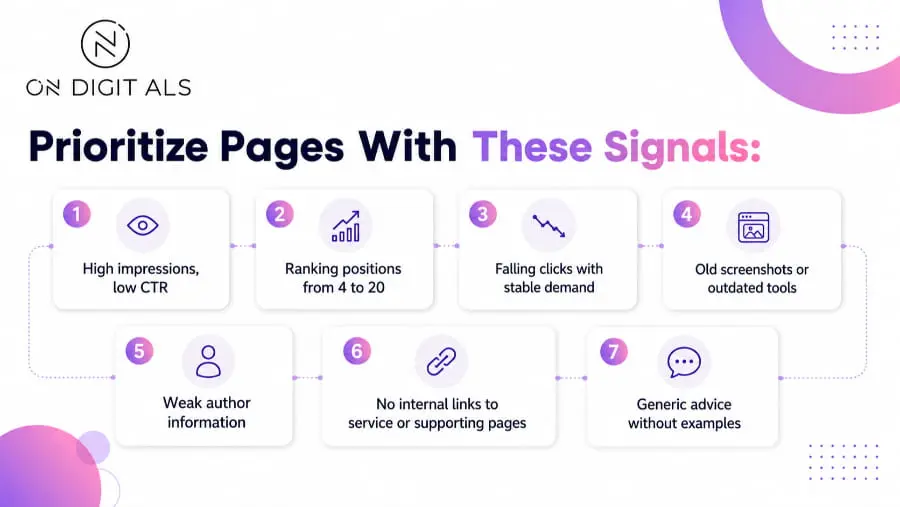
The refresh should change the page, not just the year in the title. Add a stronger intro, update screenshots, cut filler sections, and answer the main query faster.
Google recommends datePublished and dateModified fields in Article structured data when accurate date information is useful. For a blog refresh, that supports trust when the visible update date is also honest.
Create content that can earn citations in AI Search
AI Search changes the value of blog traffic. Some users get answers without clicking, while others discover brands through AI tools and visit later. The job is to make content easy to quote, verify, and trust when search engines or assistants summarize a topic.
For blog traffic, this means every priority article needs citation-ready passages.
Use this structure:
- A 40-60 word answer after the H1
- A 40-80 word direct answer after each H2
- Named tools, years, channels, and metrics
- Screenshots from GA4, GSC, CRM, or dashboards
- Author bio with relevant SEO or content experience
- FAQ answers that stand alone
- Article, BreadcrumbList, and FAQPage schema where appropriate
Structured data does not replace content quality. Google says structured data helps its systems understand page content and eligibility for rich results. Treat schema as a clarity layer, not a shortcut.
This is also where first-hand experience matters. “Refresh old content” is generic. “We refreshed 14 comparison articles after GSC showed stable impressions but falling CTR” is evidence.
Distribute every blog post like a campaign asset
Publishing is not distribution. A blog post should leave the CMS with a channel plan, because organic search may take weeks or months to compound. Email, Linkedin, sales enablement, and outreach can bring early readers while the page builds search visibility.
For each article, prepare four assets:
- Search asset: title, meta description, internal links, schema.
- Email asset: one newsletter angle for existing subscribers.
- Social asset: one Linkedin post or carousel from the main framework.
- Outreach asset: three sources, partners, or communities that would value the article.
Measure blog traffic by business value
A blog traffic dashboard should show more than sessions. Track organic clicks, engaged sessions, returning readers, assisted conversions, form fills, booked calls, and CRM-qualified leads. Pageviews matter only when they help explain whether the blog attracts the right audience and supports pipeline quality.
Build the dashboard in three layers.
- Layer one is visibility. Use GSC clicks, impressions, CTR, average position, and top queries.
- Layer two is engagement. Use GA4 sessions, engaged sessions, channel group, landing page, and returning users.
- Layer three is business value. Connect form submissions, demo requests, newsletter signups, calls, and CRM status.
For B2B teams, the third layer changes the conversation. A post with 300 qualified visits can outperform a glossary page with 10,000 low-intent visits.
FAQs
How long does it take to grow blog traffic?
Most B2B blogs need three to six months to see clear movement from new content. Refreshes can move faster when pages already have impressions. The timeline depends on technical health, competition, publishing quality, backlinks, and whether the content matches search intent.
What is a good blog traffic number?
A good number depends on the market and business model. For a B2B company, 2,000 monthly visits from decision-makers can be stronger than 50,000 visits from low-intent readers. Track traffic with conversion events and CRM quality before judging success.
Should I focus on organic traffic or email traffic?
Use both. Organic traffic brings new demand, while email turns existing attention into repeat visits and sales conversations. A strong blog strategy uses search for discovery, then email and remarketing for nurture. For B2B teams, email also helps prove whether blog readers match the sales audience.
Why is my blog traffic dropping after publishing more?
Publishing more can fail when the new articles target the wrong intent. Traffic can also drop from technical issues, content decay, stronger competitors, weaker titles, or SERP changes. Check GSC before writing more posts, then separate pages that need refresh from pages that need consolidation.
Can AI Search reduce blog traffic?
Yes, some queries may get fewer clicks when AI answers satisfy the user on the results page. The response is not to abandon SEO. Build content with original data, clear authorship, quotable answers, and tracking for AI Assistant referrals. Then report AI visibility beside organic search performance.
Key Takeaways
If you only change one thing, stop treating blog traffic as a pageview target. Treat it as a system that connects search demand, expert content, distribution, and business measurement. That shift makes the blog easier to prioritize, report, and defend in commercial planning.
The playbook is practical. Diagnose before producing, then refresh pages with proof, thus, build clusters around B2B intent, format sections for AI citation, and finally measure qualified traffic.

NEWEST POSTS
- Advertising Industry In Vietnam: The 2026 Trends, Channels and Market-Entry Strategy
- Best SEO Company in Vietnam: Latest Shortlist For Businesses
- How To Leverage Social Media For Customer Service Like A Pro?
- Social Media Post Tips – 8 Ways To Boost Engagement
- How To Use Social Media for Sales – In-depth Beginner Guide
Read more