
Most Visited Websites In The World And What Marketers Can Learn
Vincent
30/04/2023
21
The most visited websites in the world show how people search, watch videos, use social platforms, communicate, shop, and interact with AI tools. For SEO and digital marketing teams, these rankings reveal user demand, engagement patterns, and platform behavior. Analyzing these global leaders is essential for developing the best SEO strategies, providing competitive lessons to build stronger organic visibility and long-term digital growth.
What are the most visited websites?
The most visited websites are domains with the highest estimated web traffic within a defined period, country, or category. These rankings usually come from digital intelligence platforms such as Similarweb, Semrush, or Cloudflare Radar, but each source uses a different methodology.
For this reason, “most visited websites” should not be treated as an exact universal truth. Similarweb’s ranking page uses web traffic and engagement indicators such as average visit duration, pages per visit, and bounce rate. Its April 2026 global ranking lists Google, YouTube, Facebook, Instagram, and ChatGPT as the top five websites worldwide.
Cloudflare Radar provides another view by ranking domains and internet services based on DNS resolver traffic from 1.1.1.1. It also notes that its top domain and trending domain lists may include normal organic activity as well as domains with emerging malicious behavior, so marketers should understand the data source before drawing conclusions.
For business readers, the value is not only the ranking. The value is understanding why these websites attract repeat visits, how they keep users engaged, and what SEO teams can learn from their visibility.
Top most visited websites in the world
According to Similarweb’s global top websites ranking for April 2026, the leading websites are dominated by search engines, video platforms, social networks, AI tools, and communication platforms. Google ranks first, followed by YouTube, Facebook, Instagram, and ChatGPT.
| Rank | Website | Main category |
| 1 | google.com | Search engine |
| 2 | youtube.com | Video / streaming |
| 3 | facebook.com | Social media |
| 4 | instagram.com | Social media |
| 5 | chatgpt.com | AI chatbot and tools |
| 6 | reddit.com | Social media / community |
| 7 | x.com | Social media |
| 8 | whatsapp.com | Communication / social |
| 9 | tiktok.com | Social media / video |
| 10 | bing.com | Search engine |
| 11 | wikipedia.org | Reference / encyclopedia |
| 12 | yahoo.co.jp | News and media |
| 13 | yahoo.com | News and media |
| 14 | yandex.ru | Search engine |
| 15 | gemini.google.com | AI chatbot and tools |
This list has changed from older versions of the web. The presence of ChatGPT and Gemini in the top 15 shows how AI tools have become part of everyday web behavior. Search engines still dominate, but users now move between search, social discovery, video, community discussion, and AI-assisted answers.
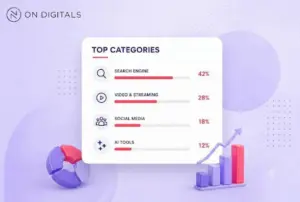
The world’s most visited websites are dominated by four major categories: Search Engines, Video Platforms, Social Media Networks, and AI Chatbots.
For SEO teams, this matters because organic visibility is no longer only about ranking in traditional search results. Brands also need clear, useful, entity-rich content that can be discovered, cited, summarized, and reused across search and AI-assisted environments.
What do the top websites reveal about user behavior?
The top websites reveal that users return to platforms that solve repeat needs quickly. Search, video, social connection, messaging, AI assistance, shopping, and reference content all appear because they serve recurring user intent.
The largest websites usually have at least one of these strengths:
- High-frequency use cases
- Strong brand recall
- Personalized feeds or recommendations
- Large content libraries
- Fast search or discovery experience
- Cross-device accessibility
- Community or network effects
Google and Bing serve search intent. YouTube and TikTok serve video discovery. Facebook, Instagram, Reddit, X, and WhatsApp serve social interaction, messaging, and community behavior. ChatGPT and Gemini serve AI-assisted research, writing, coding, and productivity.
This gives smaller websites an important lesson. They do not need to become global platforms, but they do need to serve a clear recurring need. For SEO, that means content should answer real search intent, connect related topics, and guide users to the next useful page.
Why do search engines still dominate the list?
Search engines remain dominant because users continue to rely on them to find information, brands, products, services, maps, videos, news, and answers. Google remains the most visited website globally in Similarweb’s April 2026 ranking, while Bing and Yandex also appear in the top 15.
This confirms why search engine optimization is still relevant. Even as AI tools grow, search engines remain one of the main entry points to the web. A business that improves its organic visibility can reach users during research, comparison, and decision-making moments.
However, search behavior has changed. A user may start with Google, watch a YouTube review, check Reddit discussions, ask ChatGPT for a summary, and return to Google before making a decision. This means SEO should not be treated as isolated keyword ranking only.
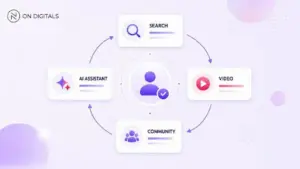
Modern search behavior is no longer linear. Users constantly move between Search, Video, Communities, and AI platforms before making a final decision.
The best SEO strategy should consider:
- Search intent
- Content depth
- Entity clarity
- Technical indexation
- Internal links
- SERP features
- AI citation potential
- Branded and non-branded demand
The rise of AI websites in global traffic
AI websites are now part of the most visited website rankings. ChatGPT ranks fifth and Gemini ranks fifteenth in Similarweb’s April 2026 global ranking, showing that AI tools have moved from niche productivity tools to mainstream web destinations.
For marketers, this changes how content should be planned. Users may not only search for a direct answer on Google. They may ask AI tools to compare vendors, summarize a topic, explain a technical term, or suggest next steps.
This does not remove the need for SEO. It raises the standard for SEO content. Content needs to be clear, factual, structured, and easy for both search engines and AI systems to understand.
For On Digitals, this means:
- Define the topic directly near the top.
- Use standalone H2 answers.
- Include concrete entities, tools, and examples.
- Avoid vague claims.
- Add FAQs for answer extraction.
- Link related articles into a clear topic cluster.
The rise of AI websites also supports GEO and AEO optimization. A page should not only aim for clicks. It should also aim to become a reliable source that answer engines can understand and cite.
Social platforms and community sites still drive attention
Social and community platforms dominate the list because users return to them for entertainment, updates, conversations, creators, and peer opinions. Facebook, Instagram, Reddit, X, WhatsApp, and TikTok all appear in Similarweb’s top 10 global websites for April 2026.
This matters for SEO because users do not evaluate brands through search results alone. They often compare information across communities, videos, comments, and social proof. A product review, Reddit thread, TikTok explanation, or Linkedin post can influence how users interpret search results.
For businesses, the lesson is not to copy social platforms. The lesson is to understand the role of trust and engagement. Content that ranks but feels generic may not persuade users. Content that includes clear examples, honest explanations, original insights, and practical next steps is more likely to earn attention.
SEO and social can also support each other. SEO identifies search demand. Social content tests angles, pain points, and messaging. Together, they help brands understand what users care about before they convert.
What marketers can learn from the most visited websites?
Marketers can learn from the most visited websites by studying how they reduce friction, satisfy repeat intent, and keep users moving through content or actions. The lesson is not that every business needs massive traffic. The lesson is that successful websites make value easy to access.
| Pattern from top websites | Marketing lesson |
| Google answers high-frequency queries | Build content around real search demand |
| YouTube keeps users engaged with video | Use visual content for complex explanations |
| Reddit captures community discussion | Address real questions and objections |
| ChatGPT supports task completion | Write direct, structured, answer-ready content |
| Amazon supports transactional intent | Make product and service pages easy to evaluate |
| Wikipedia organizes knowledge clearly | Build internal links and topic depth |
| Linkedin serves professional discovery | Align content with business decision-makers |
A B2B website does not need to compete with Google or YouTube. It needs to compete within its own search landscape. If buyers search for “SEO audit checklist,” “digital marketing agency Vietnam,” or “website design and development services,” the website should provide the best possible answer for those specific intents.
The takeaway is practical: Top websites win because they understand user behavior. Smaller websites can win by understanding niche intent better than broader competitors.
How to use most visited website data for SEO research?
Most visited website data can support SEO research by showing broader digital behavior, but it should not replace keyword research, Google Search Console, GA4, or competitor analysis. Use it as market context, not as the only source for SEO decisions.
SEO teams can use this SEO data in five ways:
- Identify dominant content formats in each category.
- Compare engagement signals across platform types.
- Study how users move between search, social, video, and AI.
- Monitor rising categories such as AI tools or community platforms.
- Find inspiration for content structure, navigation, and internal linking.
For example, the rise of AI tools suggests that definition articles, comparison guides, FAQs, and structured explainers should become clearer and more quotable. The strength of Reddit shows that users want authentic discussions and practical answers, not only polished brand claims.
This page should not become a website design guide. Its SEO value comes from analyzing the most visited websites as digital behavior data and connecting that behavior back to SEO, content strategy, and user intent.
How to interpret website ranking data correctly?
Website ranking data should be interpreted with caution because each provider measures traffic differently. Similarweb, Semrush, and Cloudflare Radar may produce different rankings because they use different data sources, models, definitions, and update periods.
Before using a ranking table, check:
- Data source
- Date range
- Country or global scope
- Desktop, mobile web, or app inclusion
- Traffic type
- Category filters
- Engagement metrics
- Methodology limitations
Similarweb’s global top websites page for April 2026 includes engagement metrics such as average visit duration, pages per visit, and bounce rate. These metrics help explain not only how often users visit, but how users behave after arriving.
Cloudflare Radar’s domain rankings are based on DNS resolver traffic, which is useful for internet-level popularity but not the same as visit-based web analytics.
For marketing teams, the best approach is to use multiple sources and look for patterns. If search, social, AI, ecommerce, and community platforms consistently appear near the top, those patterns are more useful than arguing over one rank difference.
Should businesses care about the most visited websites?
Businesses should care about the most visited websites because they reveal how users spend attention online. However, businesses should not measure success against global platforms. They should use these rankings to understand user expectations and improve their own digital strategy.
A small or mid-sized business can learn from large websites in practical ways:
- Make navigation simple.
- Answer important questions directly.
- Improve website speed optimization and mobile usability.
- Use internal links to guide discovery.
- Create content for different intent stages.
- Combine SEO with social and paid channels.
- Measure engagement, not only traffic.
The main difference is scope. Google, YouTube, Facebook, and ChatGPT serve billions of repeated use cases. A business website serves a narrower audience. That narrower focus can be an advantage if the content is specific, credible, and aligned with the buyer journey.
Frequently Asked Questions (FAQs)
What is the most visited website in the world?
Google is the most visited website in the world according to Similarweb’s April 2026 global ranking. YouTube, Facebook, Instagram, and ChatGPT follow in the top five. Rankings can change by source, country, category, and date range, so the data should be updated regularly.
Why do most visited website rankings differ by source?
Rankings differ because each data provider uses different methodologies. Similarweb estimates traffic and engagement, while Cloudflare Radar uses DNS resolver traffic from 1.1.1.1. App traffic, country filters, category filters, bot filtering, and update periods can also affect the final ranking.
What can SEO teams learn from the most visited websites?
SEO teams can learn how major platforms satisfy repeat intent, organize content, reduce friction, and keep users engaged. Search engines show the value of intent matching, YouTube shows the power of video, Reddit shows community demand, and AI tools show the need for clear, structured answers.
Are AI websites becoming some of the most visited websites?
Yes. ChatGPT ranks fifth and Gemini ranks fifteenth in Similarweb’s April 2026 global top websites list. This shows that AI tools have become mainstream destinations for research, writing, productivity, and information tasks, which affects how brands should structure SEO and AEO content.
How often should a most visited websites article be updated?
A most visited websites article should be reviewed at least quarterly or whenever the ranking source publishes a major update. Because traffic rankings change often, the article should include the data month, source, methodology note, and a clear “last updated” date.
Conclusion
The most visited websites in the world show where user attention goes: search engines, video platforms, social networks, messaging tools, ecommerce sites, reference platforms, and AI assistants. For marketers, these rankings are not just trivia. They reveal how users discover, compare, consume, and trust information online.

NEWEST POSTS
- Advertising Industry In Vietnam: The 2026 Trends, Channels and Market-Entry Strategy
- Best SEO Company in Vietnam: Latest Shortlist For Businesses
- How To Leverage Social Media For Customer Service Like A Pro?
- Social Media Post Tips – 8 Ways To Boost Engagement
- How To Use Social Media for Sales – In-depth Beginner Guide
Read more