
Advertising Industry In Vietnam: The 2026 Trends, Channels and Market-Entry Strategy
Vincent
25/06/2026
47
Vietnam’s advertising industry is becoming more mobile-led and commerce-connected. However, the strongest results don’t come from being present on every platform. Brands need to match channel choice with local customer behaviour and a clear conversion path. Search, social video, marketplace media and selected offline formats each play different roles in converting demand and retaining customers.
Advertising industry in Vietnam in 60 seconds
The paid advertising in Vietnam combines:
- traditional media
- digital platforms
- commerce media
- direct customer channels
Digital now shapes more of the customer journey because people discover products on social platforms, research options through search and complete purchases through websites, marketplaces or messaging.
That shift doesn’t make traditional media irrelevant. OOH, TV, audio and retail media can still create broad visibility when they are used for the right purpose. The difference is that digital advertising gives brands more ways to connect awareness with a measurable next step.
For a business entering Vietnam, the priority is to understand how local audiences discover the category, which proof they need before acting and how sales teams will respond after a click or enquiry.
| Market signal | What it means for brands |
| High internet and social adoption | Digital channels can support both reach and measurable acquisition. |
| Mobile-first behaviour | Landing pages, forms, video and checkout need to work well on smartphones. |
| Social discovery | Short video and creator content can build interest before a customer searches. |
| Active search behaviour | SEO and paid search can capture demand when buyers are already evaluating options. |
| Growing ecommerce | Marketplace media and social commerce need stronger product and fulfilment operations. |
What current data says about the Vietnam market
Vietnam’s digital environment is large enough to support both broad-reach campaigns and focused performance activity.
At the end of 2025, according to the National Statistics Office, Vietnam had a population of roughly 102 million. Around 85.6 million people used the internet, while 79 million social media user identities were recorded. There were also 137 million cellular mobile connections, which reflects the common use of multiple SIMs or devices rather than 137 million unique people.
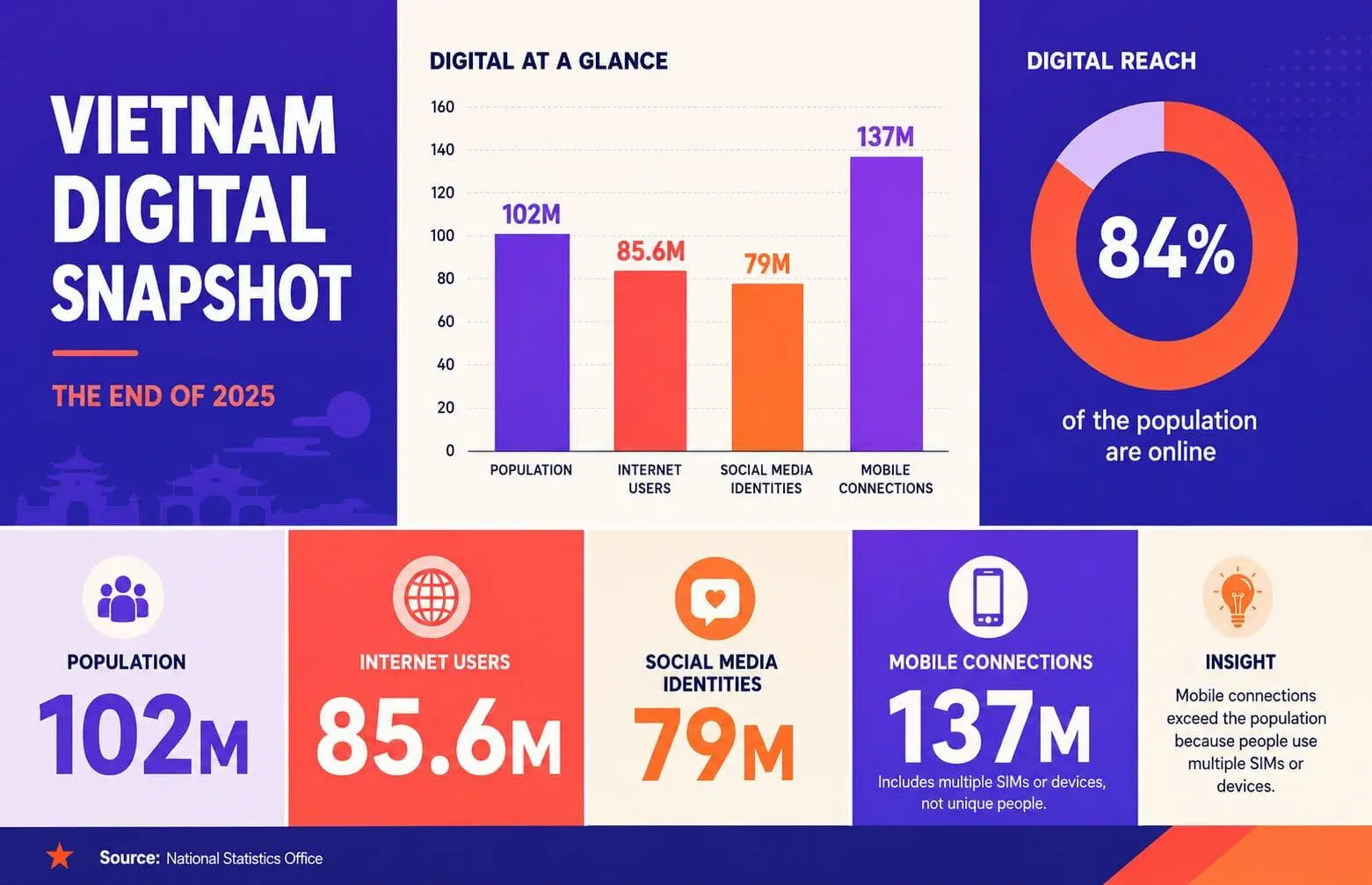
These figures explain why digital marketing in Vietnam is central to market entry and growth planning. They don’t, however, guarantee campaign results. Internet access doesn’t tell you whether a specific customer trusts the offer or can afford it.
The most useful interpretation is operational. A large connected audience means platform-native creative and fast follow-up matter more. It doesn’t mean every business should invest in the same platforms or expect low acquisition costs.
Platform reach figures need the same caution. Ad-reach data is helpful for planning potential distribution, but it’s not the same as monthly active users or qualified audience size. A media plan should therefore be validated through real campaign results and website behaviour.
How to read advertising market numbers in Vietnam
Published market reports often use different definitions. This is why two reputable reports can show very different numbers for the “Vietnam advertising market” without either being wrong.
The total advertising market can include:
- Television
- Out-of-home media
- Radio
- Digital advertising
- Other formats
Digital advertising usually refers to paid media such as:
- Search
- Social
- Video
- Display
- Mobile campaigns
Digital marketing services are still wider compared to digital ads. They may include:
- SEO
- Content
- Influencer work
- Analytics
- Ecommerce operations
- Agency support
This distinction matters when setting budgets. A market-size forecast can show that demand for advertising is growing, but it cannot tell a business which channel will create profitable leads.
Brands should use market reports to understand context, then use research, testing and sales data to decide where to spend.
What is changing in digital advertising in Vietnam?
Digital advertising in Vietnam is changing because discovery and conversion now happen across several connected touchpoints.
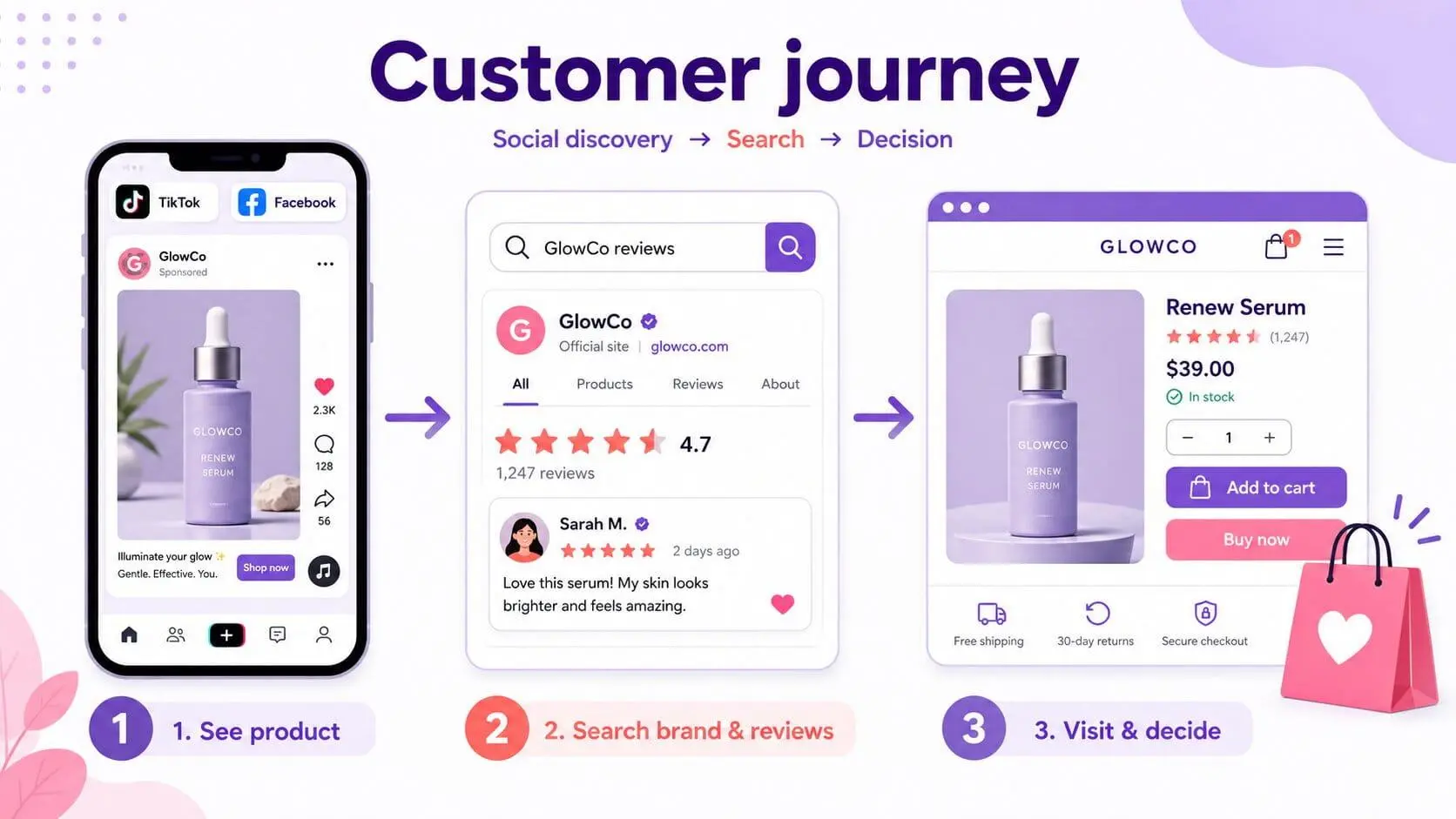
In fact, a consumer may see a creator video, search Google for comparisons, read online reviews, visit a marketplace and return through a remarketing ad.
Mobile experience is now part of the media strategy
Mobile now shapes whether paid traffic can convert. A slow page and confusing checkout can waste an otherwise effective campaign. Brands should test the full journey on a phone before increasing spend.
For ecommerce, that means clear product information, visible delivery terms and a simple checkout.
For lead generation, it means a concise form, a clear value proposition and a realistic expectation for follow-up.
For B2B, it means the visitor can quickly understand the offer, proof and next action.
Social video has become a discovery channel
Short-form video and creator-led content have changed how many customers first encounter products. This is especially relevant for visual consumer categories, but the principle also applies to services.
A useful explanation or product demonstration can make an unfamiliar offer easier to understand.
The objective isn’t to chase every trend. A video should give the audience a reason to care. That could be a problem, a use case, a comparison or a credible proof point. Brands that rely on paid social need a repeatable creative process, not one video that runs unchanged for months.
Search still captures high-intent demand
Search remains important because it reaches people who are actively looking for information, providers or products. This makes SEO and Google Ads particularly useful for services, B2B solutions, local needs and categories where customers already know what they want.
Search is also valuable after social activity creates interest. A person may see a product on TikTok or Facebook, then search for the brand or reviews later. This is why a channel plan should not treat paid social and search as competing silos. They often work at different stages of the same journey.
Commerce media is closer to the transaction
Vietnam’s ecommerce market continues to expand, while short video and livestreaming make it easier for content to lead directly to product pages. This creates opportunities for consumer brands, but it also raises the importance of operational readiness.
A brand cannot rely on advertising alone. Product availability, catalogue accuracy, pricing, delivery, returns and customer support all influence whether social or marketplace traffic becomes profitable revenue.
Strong media performance can disappear quickly when fulfilment or product-page quality is weak.
AI is changing workflow, not replacing strategy
AI can help teams create variations, analyse data and speed up routine production. It does not decide the market position, customer insight or offer that should lead a campaign.
Businesses should use automation to improve execution, not to avoid strategic choices. The team still needs to define the commercial goal, select the right conversion event, review claims and decide how channels should work together.
Which advertising channels matter most in Vietnam?
The strongest channel mix depends on the business model, offer and buying journey. Each channel has a different role, so it should be evaluated against the outcome it is expected to support.
| Channel | Main role | Often suitable for | Common risk |
| SEO and content | Build long-term search visibility | B2B, high-consideration services, market education | Slow progress without technical quality and useful content |
| Paid search | Capture existing demand | Local services, B2B, product categories with active search | Weak keyword and landing-page match |
| Paid social and video | Create demand and test messages | Consumer brands, ecommerce, launches | Generic creative and unclear attribution |
| Creator and KOL/KOC activity | Add local proof and social relevance | Beauty, lifestyle, FMCG and commerce-led products | Poor creator fit or vanity-only reporting |
| Marketplace advertising | Reach product-ready shoppers | Retail, ecommerce and consumer goods | Margin pressure and weak fulfilment |
| Messaging and CRM | Nurture leads and repeat customers | Service businesses, B2B and retention programmes | Slow response and poor data hygiene |
| OOH and DOOH | Build broad local visibility | Retail launches, property, events and brand campaigns | Weak link to a measurable conversion path |
Traditional formats still have a place in Vietnam. OOH can create visibility near retail locations or event venues. Television and audio can support mass reach for brands with the budget and creative resources to use them well. Print may still serve narrow professional or local audiences.
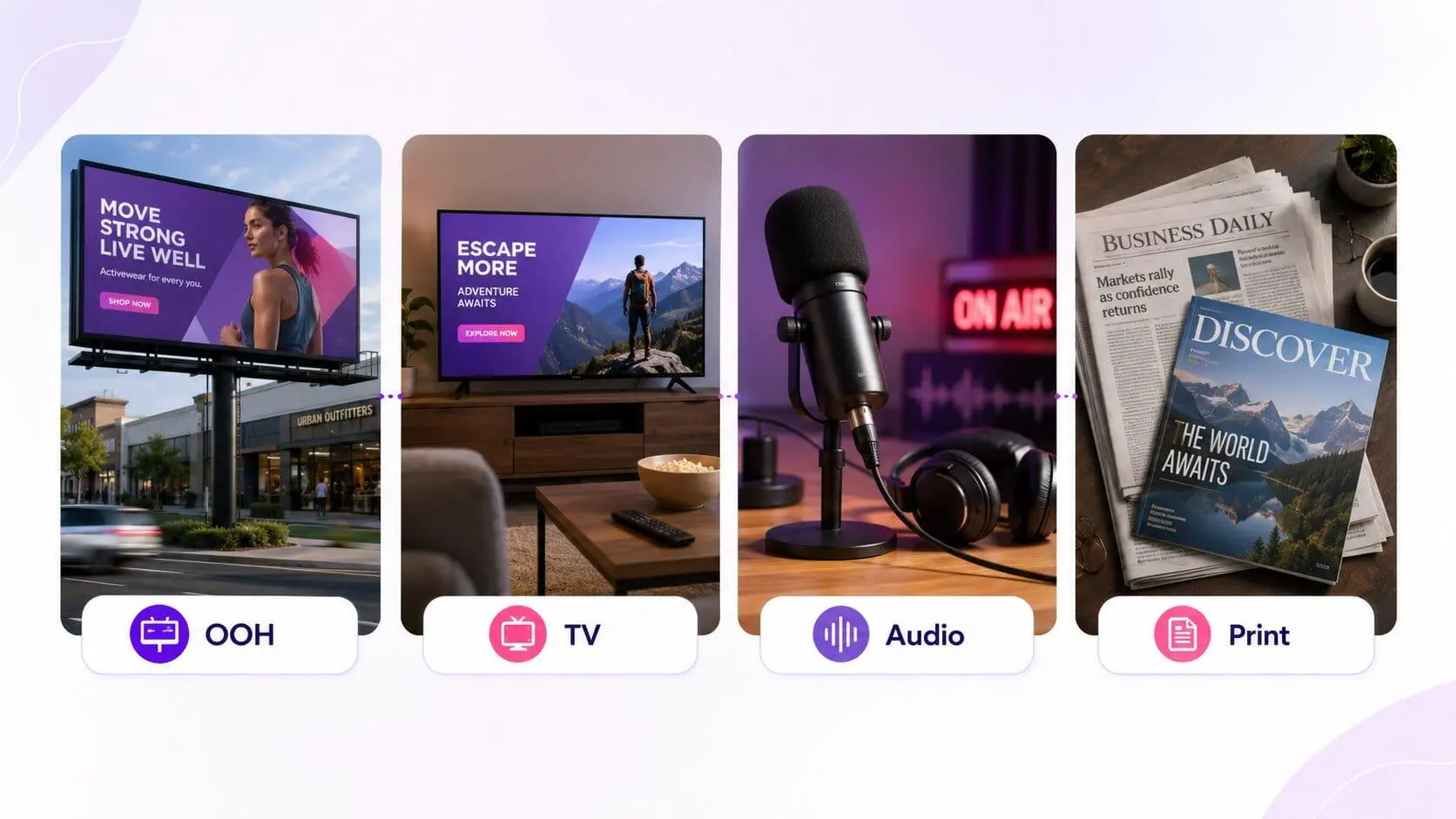
The question brands should answer is whether it has a clear role in the customer journey and whether the brand can measure its contribution.
What digital marketing in Vietnam requires from brands
Digital marketing in Vietnam works best when localisation and channel planning are treated as one system.
Localise the message
Translation alone is rarely enough. A campaign also needs to reflect:
- how local customers describe their problem
- which benefits they value
- what creates trust in the category
This may affect the headline, visual proof, creator choice, pricing explanation, payment options and customer-support flow.
Foreign brands should avoid assuming that a successful message from another market will work unchanged in Vietnam. Start with:
- local keyword research
- competitor review
- customer interviews
- sales-call themes
- social listening
These inputs can reveal the language people use before they become customers.
A focused SERP analysis for Vietnam market entry can help identify which questions, competitors and content formats appear when buyers search locally.
Give every channel one job
A strong plan doesn’t expect every platform to deliver the same result. Social video may introduce the product. Search may capture a high-intent query. SEO can build durable visibility. Remarketing can bring interested visitors back. CRM and messaging can help the sales team continue the conversation.
This approach makes reporting clearer. Instead of asking which platform “won”, the business can ask whether each channel performed the job it was assigned.
Connect advertising with the conversion path
Paid media cannot compensate for a vague website, slow sales response or unclear offer. Before scaling spend, review the landing page, conversion event, CRM status and follow-up workflow.
For example, a B2B campaign should not stop at form submissions. It should track whether the lead is qualified, whether a meeting is booked and whether the opportunity progresses. An ecommerce campaign should look beyond platform-reported sales to new-customer acquisition cost, contribution margin and returns.
Channel strategy by business model
Different businesses need different starting points.
| Business type | Practical starting mix | What to measure |
| Foreign brand entering Vietnam | Localised content, paid search, paid social testing and conversion-ready landing pages | Qualified demand, branded search growth and cost per meaningful enquiry |
| B2B or industrial company | SEO, search advertising, technical content and CRM follow-up | Qualified leads, opportunity value and sales-cycle progression |
| Ecommerce brand | Social video, creators, marketplace media and remarketing | Customer acquisition cost, margin, repeat purchase and return rate |
| Local service business | Search, Maps visibility, retargeting and fast messaging follow-up | Calls, bookings and qualified enquiries |
| Consumer brand launch | Video, creators, paid social and selected OOH or retail activity | Reach quality, brand search, product trials and assisted conversions |
The table isn’t a fixed formula. A visual ecommerce product may also have strong search demand. A B2B company may use creator-style video to explain a complex idea. The starting point should be a business hypothesis, not a platform trend.
A practical 90-day plan for digital advertising in Vietnam
The first 90 days should focus on learning what creates qualified demand, not on launching every channel at once.
Days 1–30: Understand the market and prepare the foundation
Review:
- Local search behaviour
- Category competitors
- Customer language
- Buying barriers
Then, define the primary conversion for each channel, and build landing pages that explain the offer clearly in the right language and on mobile. After that, set up UTM rules, analytics events and CRM stages before traffic arrives.
This gives the team a way to connect platform activity with commercial outcomes.
Days 31–60: Test a focused channel mix
Run a small number of tests with distinct roles. For instance, a B2B brand might combine high-intent search with educational content, or an ecommerce brand might test creator-led social creative alongside product-retargeting campaigns.
Avoid dividing the budget into too many audiences or objectives. Each test should answer a clear question, such as whether a customer segment or creative angle can create qualified results.
Days 61–90: Refine and scale with evidence
Review lead quality, purchase quality, conversion rate and sales feedback.
Keeping the channels that create a commercially useful outcome, while improving or pausing areas where landing page, creative or tracking is weak.
Scaling should be gradual. Remember that a campaign that produces cheap clicks but poor leads doesn’t deserve more budget.
Brands that need support across search, social, and ecommerce media can explore On Digitals’ PPC management services.
Advertising regulations, data and trust
Advertising in Vietnam remains regulated, and businesses should review category-specific requirements before launch. This is particularly important for categories such as alcohol, pharmaceuticals, cosmetics, agrichemicals and other regulated products. Advertising rules can also affect claims, approvals, disclosure and local execution.

Data handling matters as well.
Consent-aware tracking, clear privacy communication and responsible use of customer information are now part of advertising operations. Brands using remarketing, lead forms, creator content or customer-list audiences should make sure their internal process matches applicable requirements.
This is not legal advice. Foreign and local businesses should verify current obligations with qualified local counsel or relevant authorities before running campaigns in regulated categories.
Advertising industry news: What to monitor in 2026
Advertising industry news is most useful when it changes a real business decision. In 2026, brands should monitor a small number of update areas rather than chase every platform announcement.
| Update area | Why it matters |
| Privacy and customer-data rules | Changes how tracking, CRM and remarketing should be managed |
| Platform automation | Changes campaign setup, targeting controls and creative workflow |
| Marketplace policies and fees | Changes ecommerce margin and media economics |
| Short video and creator behaviour | Changes the type of content that creates discovery and trust |
| Online-ad regulation | Changes disclosure, category requirements and landing-page compliance |
Because rules and platform features change, readers should check the article’s updated date and the primary source before relying on time-sensitive advertising industry news.
Frequently asked questions (FAQs)
How large is the advertising industry in Vietnam?
The advertising industry in Vietnam includes traditional media, digital advertising, commerce media and related marketing services. Published market estimates differ because each report may include different formats and revenue categories. For planning, it is more useful to assess the connected audience, customer demand, channel economics and competitive intensity in your specific category.
What is the difference between digital advertising and digital marketing in Vietnam?
Digital advertising refers to paid media such as search ads, social ads, video, display and marketplace placements. Digital marketing is broader. It can also include SEO, content, email, influencer activity, analytics, CRM and conversion optimisation. Advertising buys distribution, while digital marketing connects that distribution with strategy, content and customer experience.
Which digital advertising channels are most effective in Vietnam?
There is no single best channel. Search works well when customers are actively looking for a solution. Paid social and creator content can build interest for products that need to be seen or explained. Marketplace media can reach product-ready shoppers. The best mix depends on the offer, sales cycle, audience and conversion path.
Is Vietnam a mobile-first advertising market?
Yes. Vietnam has a highly connected mobile environment, so most advertising journeys need to be designed for smartphones. A campaign should be tested on mobile from the ad click through to the form, product page, payment flow or consultation request.
Why is localisation important for advertising in Vietnam?
Localisation affects more than language. It helps a brand match the terms customers search, the concerns they have and the proof they need before acting. It can also influence creator selection, product messaging, price presentation, payment expectations and customer support. A campaign that feels locally relevant is easier for audiences to understand and trust.
What should foreign brands prepare before launching digital campaigns in Vietnam?
Foreign brands should prepare local customer research, channel roles, Vietnamese or bilingual landing pages, clear tracking, CRM follow-up and category compliance checks. The aim is to avoid spending on reach before the business can convert and measure the demand it creates.
Build an advertising strategy for Vietnam around real customer decisions
The advertising industry in Vietnam offers strong digital reach, growing commerce opportunities and many ways to create demand. The challenge is not to use every channel. It is to assign each channel a clear role, localise the customer experience and measure whether the activity creates qualified commercial outcomes.
On Digitals helps brands plan digital marketing in Vietnam across search, paid media, content, social outreach, websites and measurement. Talk to our team about a market-entry or growth plan that connects channel investment with the results your business needs.

NEWEST POSTS
- Advertising Industry In Vietnam: The 2026 Trends, Channels and Market-Entry Strategy
- Best SEO Company in Vietnam: Latest Shortlist For Businesses
- How To Leverage Social Media For Customer Service Like A Pro?
- Social Media Post Tips – 8 Ways To Boost Engagement
- How To Use Social Media for Sales – In-depth Beginner Guide
Read more