
Insights
Affiliate Marketing Vs Influencer Marketing For Brands in Vietnam
On Digitals
03/03/2026
40
Affiliate marketing vs influencer marketing is one of the most common comparisons for brands choosing a scalable growth channel. It helps businesses understand differences in cost, performance, and long-term ROI. We’ll explore how each model works, when to use them, and which approach fits your business goals best!
Overview of the affiliate marketing vs influencer marketing
Brands today must balance measurable revenue with authentic audience trust when choosing a growth channel. This comparison helps clarify which approach delivers faster sales, stronger brand impact, and better long-term scalability.
Affiliate marketing
Affiliate marketing is a performance-based promotion model where a merchant partners with third-party publishers to drive traffic and sales. Instead of paying for exposure, brands only pay when a defined action such as a click, lead, or purchase is completed. This makes the channel highly measurable and easier to optimize around real revenue outcomes.
Affiliate marketing vs influencer marketing highlights how the affiliate model is built around tracking links and direct performance attribution. In a typical setup, a brand launches an affiliate program, approves partners, and provides unique tracking links for every affiliate. Those partners then place the links inside content, websites, or paid placements to generate qualified conversions.
Most affiliate programs fall into three main categories: unattached, related, and involved, depending on how closely the partner is connected to the product. In addition, many brands also run high-ticket affiliate programs that offer higher payouts for premium or high-value products. This structure allows companies to scale partnerships while keeping cost and performance under tight control.
Influencer marketing
Influencer marketing is a strategy where brands collaborate with social media creators to increase product awareness and brand visibility. In practice, campaigns are most commonly run on platforms such as Instagram, Facebook, TikTok, YouTube, and Twitter to reach targeted audiences. The influencer produces original posts or videos and distributes them directly to their own followers.
With the rapid growth of this channel, marketing teams now classify influencers based mainly on follower size. The most common groups include mega, macro, micro, and nano influencers, each offering different levels of reach and audience intimacy. These classifications are often used when planning budgets and selecting partners for affiliate marketing vs influencer marketing.
Although the structure looks simple, these tiers can strongly affect campaign performance and cost efficiency. Micro-influencers usually deliver lower reach but higher engagement and more affordable pricing compared with larger creators. When combined within a single campaign, multiple smaller creators can still generate meaningful visibility and sustained brand exposure.

A high-level overview of how both growth models compare in practice
Core differences between affiliate and influencer marketing
At their core, both strategies rely on other people’s voices to promote your product to a wider audience. However, the way they operate and the business outcomes they target are fundamentally different. Understanding these mechanics is the first step to choosing the right growth approach for a SaaS brand.
Influencer marketing is built around long-term relationships with creators and community trust. When comparing affiliate marketing vs influencer marketing, the influencer model focuses more on authentic storytelling, social proof, and brand perception. The main objective is not always immediate sales, but awareness, credibility, and reusable user-generated content.
Affiliate marketing, by contrast, is designed as a performance-driven acquisition channel. Partners use unique tracking links and earn commissions only when real conversions or leads are generated. This structure makes results easy to measure, financially low risk, and highly scalable for growth-focused teams.
Key operational gaps shape results, risk, and long-term impact
Influencer vs affiliate marketing: Side-by-side view
To make the comparison easier to digest, here is a quick side-by-side overview of how both models work. The snapshot below highlights what each channel is actually designed to deliver:
| Attribute | Influencer marketing | Affiliate marketing |
| Primary goal | Brand exposure and audience credibility | Sales and lead acquisition |
| Payment model | Fixed fees, free products, or mixed deals | Commission per confirmed result |
| Core focus | Creative quality and message credibility | User traffic and conversion effectiveness |
| Financial risk | Higher upfront spending | Lower upfront cost and risk |
| Typical partners | Social media creators | Bloggers, media sites, and publishers |
Neither approach is universally better, because each supports a different stage of growth. In practice, affiliate marketing vs influencer marketing comes down to whether your priority is brand impact or revenue efficiency. Smart teams often combine both to balance storytelling with predictable performance.
Goals and funnel placement for affiliate vs influencer marketing
The real difference comes down to intent and timing inside your customer journey. Each model supports a different moment in the decision process.
| Attribute | Influencer marketing | Affiliate marketing |
| When to choose | When your goal is to build trust, visibility, and early interest | When your goal is to drive measurable sign-up, leads, or sales |
| Main funnel position | Upper funnel for awareness and early consideration | Storytelling and credibility with new audiencesBottom of funnel (conversion and revenue) |
| Core objective | Storytelling and credibility with new audiences | Performance-driven response and customer acquisition |
| Primary success metric | Audience reach, interaction, and content effectiveness | Conversions, lead cost, and return on investment |
In practice, influencer activity helps shape perception long before a buyer is ready to act. It introduces your product through voices people already trust, which feels more like a recommendation than a promotion. This early exposure quietly builds confidence and shortens the path to purchase later on.
Conversion vs credibility: What truly separates both approaches?
Affiliate marketing operates as a bottom-funnel growth engine designed to turn demand into measurable revenue. When teams compare affiliate marketing vs influencer marketing, the difference becomes clear in how each channel is built to move buyers from intent to action. Affiliates focus almost entirely on clicks, sign-ups, and subscriptions that can be directly tied to commissions.
Influencer marketing, on the other hand, thrives on personal connection and audience trust. Creators translate brand messages into relatable stories that feel natural inside their content. This emotional layer helps brands spark interest and engagement long before a buying decision is made.
In the end, the right choice depends on your short-term and long-term business priorities. If immediate pipeline and predictable conversions matter most, performance channels should lead your strategy. If brand recognition and trust are the priority, creator partnerships become the stronger starting point.
Cost and compensation models compared
Pricing structure plays a major role in how brands evaluate each channel. The way you pay directly affects risk, scalability, and expected return.
| Attribute | Influencer marketing | Affiliate marketing |
| Typical payment timing | Paid upfront before results | Paid only after results happen |
| Common pricing formats | Flat fee, free products, or hybrid deals | Commission per sale or lead |
| Cost drivers | Follower size, engagement rate, content scope | Conversion volume and commission rate |
| Financial risk | Higher risk due to fixed costs | Lower risk due to performance-based payouts |
| Budget predictability | Less predictable | More predictable and scalable |
From a budgeting perspective, affiliate marketing vs influencer marketing mainly differs in how risk is distributed between the brand and its partners. Influencer campaigns require brands to invest first and hope performance follows. Affiliate programs, in contrast, protect cash flow by linking spend directly to real outcomes.
Payment structures determine risk, scale, and budget efficiency
Evaluating success and return on investment in detail
Measuring success looks very different depending on which channel you use. Influencer campaigns usually rely on upper-funnel signals such as reach, impressions, and engagement. These indicators help evaluate visibility and brand sentiment, but they rarely show a direct sales impact.
With influencer marketing, performance is often linked to awareness and audience response rather than immediate revenue. Brands look at likes, comments, shares, and overall content traction to judge effectiveness. This makes attribution more complex, especially when multiple touchpoints influence the final decision.
Affiliate marketing, by contrast, is built around precise tracking and clear attribution. Teams focus on metrics such as clicks, conversion rate, cost per acquisition, and generated revenue. As a result, ROI can be calculated with far greater confidence in affiliate marketing vs influencer marketing.
Key performance metrics: Influencer and affiliate comparison
The metrics that define success change depending on the channel and campaign objective. This comparison highlights how performance is evaluated across both models:
| Metric category | Influencer marketing KPIs | Affiliate marketing KPIs |
| Overall tracking focus (affiliate marketing vs influencer marketing) | Awareness, engagement signals, and content impact | Revenue, leads, and conversion efficiency |
| Audience reach | Impressions, audience reach, and follower increase | User clicks and engagement rate (CTR) |
| Engagement | Likes, comments, shares, saves, and engagement metrics | Conversion rate, new vs. returning customers |
| Conversions | Coupon code usage, link clicks, branded search lift | Total sales or leads, average order value (AOV) |
| Cost & ROI | Cost per engagement and earned media value metrics | Acquisition cost and ROAS measurement |
| Brand impact | Brand mentions, sentiment, website traffic uplift | Affiliate contribution, top-performing partners |
This side-by-side view helps teams quickly align metrics with real campaign goals. It also prevents mixing awareness indicators with revenue performance in the same report. By choosing the right KPI set, marketers can evaluate each channel on what it is actually designed to deliver.
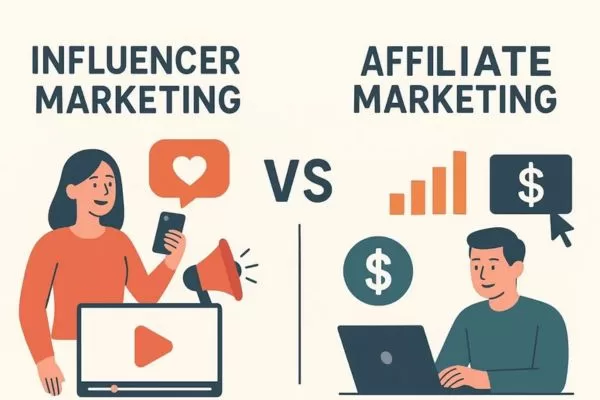
Metrics clarify visibility, conversions, and partner contribution value
How to select the right strategy for your brand
Choosing the right approach is less about trends and more about what your business actually needs right now. Your brand stage, budget flexibility, and short-term objectives should guide the decision. The goal is to align your marketing channel with the outcomes you must deliver in the next one or two quarters.
If you are launching a new SaaS product that few people recognize, your biggest challenge is credibility and visibility. Partnering with trusted creators can quickly introduce your solution to a relevant audience and build early trust. The upfront spend should be viewed as an investment in awareness, education, and long-term brand positioning.
Affiliate marketing vs influencer marketing becomes a very different decision when you are running a mature ecommerce brand focused on predictable growth. In this case, performance-driven partnerships allow you to scale traffic and revenue without heavy upfront risk. You only pay when real sales or qualified leads are generated.
In practice, many successful brands do not treat this as a permanent, one-time choice. They shift emphasis as the business evolves from awareness to acquisition. The smartest strategy is the one that supports your current growth bottleneck while leaving room to expand later.
Smart ways to combine affiliate and influencer marketing
When done correctly, creators can drive both awareness and real conversions at the same time.
The key is to structure partnerships for performance, not just visibility.
- Prioritize expanding your partner pool with niche and micro-creators who can operate under affiliate marketing vs influencer marketing programs
- Set clear content rules and posting expectations to avoid constant follow-ups
- Use a standardized contract with transparent and firm performance terms
- Agree on commission structure and payout rules before onboarding any creator
The most effective approach is to treat this model as a scalable affiliate program, not a traditional influencer campaign. Focus on selecting creators with proven audience relevance and consistent content quality. This reduces ongoing management and keeps your team focused on predictable growth targets.
FAQs about the affiliate marketing vs influencer marketing
Here are the questions brands most often ask when deciding between these two growth approaches. Each answer is designed to highlight real commercial impact and guide smarter, results-driven decisions.
Which approach brings faster revenue growth?
For teams focused on short-term revenue, affiliate marketing vs influencer marketing usually highlights a clear advantage for performance-based channels. Affiliate programs only pay when a conversion happens, which makes results faster and easier to predict. This structure is especially useful when sales targets and cash flow matter in the same quarter.
Which marketing model fits early-stage companies?
Early-stage brands usually need awareness, trust, and credibility before they can scale paid acquisition. Influencer partnerships help introduce a new product through trusted voices and real use cases. This early exposure shortens the learning curve for future performance channels.
Is it possible to run both models at once?
Many brands successfully combine both approaches instead of choosing one. In practice, affiliate marketing vs influencer marketing works best when influencers drive awareness and affiliatWhich option protects marketing budgets better?es capture demand later in the funnel. This builds a clearer journey from discovery to final purchase.
Which channel is easier to measure results from?
Affiliate programs are easier to track because every click and conversion is tied to a unique partner link. Marketers can quickly see which partners generate real revenue and scale what works. Influencer campaigns rely more on engagement, reach, and indirect attribution, which requires additional tracking tools and analysis.
Which option protects marketing budgets better?
Brands with tight budgets usually prefer performance-based spending models. From a cost-risk perspective, affiliate marketing vs influencer marketing clearly shows that affiliate programs reduce upfront investment. You only pay commissions after a result is delivered, which protects cash flow during growth.
Common questions address risks, results, and operational challenges
Conclusion
Affiliate marketing vs influencer marketing each serves a different role in building sustainable growth, from brand visibility to direct revenue performance. The smartest strategy is choosing the right mix based on your current goals, budget structure, and growth stage. If you want expert support to design the right approach for your business, talk to On Digitals today and start building a results-driven growth strategy!
Read more