
Insights
Google Search Ads vs Display Ads – 5 Differences Explained
On Digitals
16/03/2026
13
Google Search Ads vs Display Ads are two widely used advertising formats in digital marketing, each designed for different goals and audience behaviors. Search ads capture users who are actively looking for information, while display ads focus on visual exposure and brand awareness across websites. Let’s explore the key differences to understand when and how to use each effectively!
An overview of display ads in modern digital marketing
When browsing websites or mobile apps, users often encounter visual advertisements known as display ads. Their main purpose is to catch attention quickly using images, graphics, or short videos while people browse online content. Common formats include banner ads, animated visuals, video ads, and interactive placements.
Unlike search advertising, display ads usually target users who are not actively looking for a specific product or service, which is one of the key distinctions often discussed in Search vs Display Ads Google comparisons. Instead, these ads appear naturally during activities such as reading articles, watching videos, or scrolling through websites. For example, someone reading a cooking blog may encounter an ad promoting kitchen tools or cookware.
Most display ads are delivered through advertising networks such as the Google Display Network or the LinkedIn Audience Network. In comparisons like Google Search Ads vs Display Ads, these networks enable businesses to place visual ads across thousands of partner websites and mobile apps. Because of this wide distribution, display advertising is often used to increase brand visibility and reach audiences who may not yet be familiar with a brand.
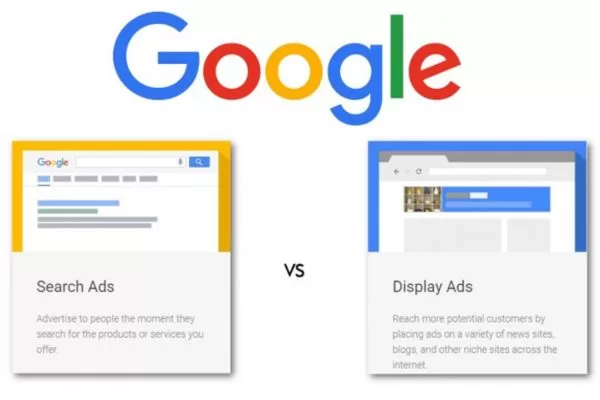
Fundamental insights into display advertising in digital marketing
A beginner’s guide to Search Ads in online advertising
Google Search Ads are text-based advertisements that appear on search engine results pages when users enter queries related to a business’s products or services. These ads typically appear at the top or bottom of the results page and are labeled as sponsored listings. For instance, when someone searches for “best smartwatches,” several paid ads from different brands may appear before the organic search results.
One key advantage of search advertising is that it reaches users exactly when they are actively searching for information. Users who see these ads are already interested in a specific topic, product, or service based on their search query. This intent-driven advantage is one of the key differences often highlighted in comparisons of Google Search Ads vs Display Ads, especially when businesses want to attract ready-to-convert audiences.
Search advertising also operates through a real-time auction system where advertisers bid on keywords relevant to their business. Platforms such as Google Ads consider multiple factors during this process, including the advertiser’s bid amount, the relevance of the ad to the search query, and the ad’s quality score. This system helps ensure that the ads displayed to users are not only competitive but also useful and relevant to what they are searching for.
Google Search Ads vs Display Ads: Key advantages explained
When businesses understand how each format works, they can select a marketing approach that fits their goals better. This section highlights the main benefits of Google Search Ads vs Display Ads.
Search ads
Search advertising has become one of the most effective ways for businesses to connect with potential customers online, especially when evaluating paid search vs display ads performance in digital marketing campaigns. When used strategically, it helps brands appear at the exact moment people are searching for relevant products or services.
Target high-intent users through search queries
A key advantage of Google Search Ads is that they reach users who are already searching for a specific product or solution. By bidding on carefully selected keywords or phrases, businesses can ensure their ads appear when potential customers perform relevant searches. This targeting method helps companies reach audiences who are more likely to be interested in their products or services.
Strengthen traffic growth and conversion performance
Search advertising can significantly increase website traffic and lead generation. Since users who see these ads are actively searching for related information, they are often more likely to click and explore the offer. When combined with a well-optimized landing page, this additional traffic can result in higher conversions and increased revenue. According to industry reports, search ads can deliver an average conversion rate of around 4 – 6%, which is significantly higher than many other digital advertising formats.
A scalable and budget-controlled ad strategy
Another major benefit is that campaigns using search ads often remain budget-friendly compared with many other digital advertising formats. Advertisers typically pay only when someone clicks on their ad, making it easier to control overall spending. This cost-control advantage is frequently highlighted when businesses evaluate Google Search Ads vs Display Ads and consider which format fits their budget and performance goals.
Display ads
Display advertising is commonly used by businesses that want to expose their brand to a larger online audience. While it may not always focus on immediate conversions, it can support several long-term marketing objectives.
Grow overall brand awareness
One major advantage of display ads is their ability to increase brand visibility across a wide range of websites and online platforms. By appearing on multiple sites, businesses can expose their brand to a much larger audience. This consistent visibility helps strengthen recognition and makes it easier for potential customers to remember the brand.
User segmentation and retargeting strategies
Display advertising also allows marketers to reach specific audience segments through detailed targeting options. Advertisers can target users based on demographics, interests, browsing behavior, and other online activities. This targeting flexibility is one reason marketers often compare display campaigns with search campaigns when evaluating Google Search Ads vs Display Ads strategies.
A measurable digital advertising approach
Another benefit is that campaigns using Display Ads can remain relatively cost-efficient compared with some other advertising formats. Many platforms allow advertisers to control spending through flexible budgeting and performance tracking. Advertising networks such as the Google Display Network also make it easier to scale campaigns while keeping costs manageable.
Major advantages of search and display advertising strategies
5 important differences between Display Ads vs Google Search Ads
The main difference between these advertising formats lies in how they reach users and when they appear during the customer journey. Search ads target people who are actively looking for information, while display ads focus on reaching audiences as they browse different websites or apps. Understanding these differences helps marketers choose the right strategy when comparing Google Search Ads vs Display Ads.
User intent
Search ads target users with clear and high intent when they actively search for specific information, products, or services online. These users already have a defined need and are looking for solutions through their search queries. Because of this strong intent, they are generally more likely to click on an ad and complete actions such as making a purchase or signing up.
Display ads, on the other hand, reach users who are not actively searching for anything at that moment but are simply browsing websites, watching videos, or using mobile apps. In the comparison of Google Search Ads vs Display Ads, this approach focuses more on targeting audiences based on interests, browsing behavior, demographics, or previous visits to a website. As a result, display advertising is particularly useful for increasing brand awareness and re-engaging potential customers who may have interacted with a brand before.
Targeting
Search engine advertising relies on specific keywords and match types to determine when an advertisement appears in search results. Advertisers choose keywords related to their products or services so the ads can be shown when users enter relevant queries. This keyword-based system is one of the key targeting methods that differentiates Google Search Ads vs Display Ads.
Display advertising focuses more on audience-based targeting rather than search queries. Ads are delivered based on demographics, interests, browsing behavior, custom intent audiences, and remarketing lists. This allows businesses to reach people who match certain profiles even when they are not actively searching for a product or service.
Ad format
Search ads are primarily text-based and appear directly on search engine results pages. They often include additional elements such as callouts, sitelinks, or other extensions that provide extra information to users. Although they resemble organic search results in structure, they are clearly marked as advertisements.
Display ads rely on visual formats designed to capture attention while users browse online content within the Google Ads Search network vs Display network advertising environment. These ads can appear as static banners, animated graphics, interactive creatives, or video advertisements. They are commonly shown across websites, mobile apps, and platforms such as YouTube.
Pricing model
Search ads typically follow a PPC (pay-per-click) pricing model. Advertisers are charged only when a user clicks on the ad and visits the website or landing page. This approach helps businesses focus their budget on actual engagement rather than simple exposure.
Display ads can operate using either a PPC model or a CPM (cost per thousand impressions) model depending on campaign objectives. Some advertisers prefer paying for clicks, while others choose to pay for views to increase visibility and brand reach. This pricing flexibility is another factor businesses often consider when deciding between Google Search Ads vs Display Ads for their advertising strategy.
Campaign goal
Search ad campaigns are typically designed to drive immediate actions from users. Since these ads appear when people are actively searching for solutions, they are well suited for goals such as purchases, sign-ups, or lead generation. Businesses often use them to capture demand and convert high-intent traffic quickly.
Display campaigns focus more on long-term marketing goals rather than instant conversions. They help brands increase visibility, nurture potential leads, and stay visible to audiences across different websites and apps. Display advertising is also commonly used for retargeting users who previously visited a site but did not complete a conversion.
Quick comparison of Google Search Ads vs Display Ads
Understanding the practical differences between these two ad formats helps businesses decide when to use each one. The comparison below highlights how they vary in format, targeting method, user behavior, and overall marketing purpose:
| Comparison | Search ads | Display ads |
| Ad format | Mainly text-based ads appearing directly on search engine results pages | Visual ads such as banners, images, or videos placed across websites and mobile apps |
| How ads appear | Activated when users enter specific keywords into a search engine | Delivered to audiences based on interests, browsing patterns, or previous website visits |
| User intent | Targets users with strong intent who are already looking for a solution | Reaches audiences earlier in the journey who may not yet be searching |
| Primary goal | Focused on generating leads, inquiries, or direct purchases | Designed to increase visibility and keep the brand memorable |
| Speed of results | Can produce quick performance when campaigns target the right keywords | Often works gradually by strengthening awareness over time, which is an important distinction when comparing Google Search Ads vs Display Ads in long-term marketing strategies. |
| Example use case | Someone searches for “company website development” and sees a sponsored listing | A user browsing marketing blogs later sees related banner advertising |
| Best for | Businesses that need fast conversions or immediate customer inquiries | Companies aiming to expand brand presence or introduce new products |
| Role in marketing strategy | Captures demand when users are ready to take action | Supports earlier stages by introducing and reminding users about the brand |
Which works better for your business: Google Search Ads vs Display Ads?
Choosing the right advertising format depends on your business goals, audience behavior, and where potential customers are in the buying journey. Some campaigns focus on generating immediate inquiries or sales, while others aim to build awareness and long-term brand recognition. Understanding these objectives helps businesses determine which advertising approach will deliver the most meaningful results.
If your main priority is to attract users who are already looking for specific products or services, search advertising is often the most direct option. When considering Google Search Ads vs Display Ads, search campaigns typically perform better for businesses that want to capture existing demand and drive quick conversions. These ads appear at the exact moment people search for relevant solutions, which increases the chances of generating inquiries or purchases.
However, businesses that want to build visibility and stay present in front of potential customers may benefit more from display advertising. Visual ads placed across websites and apps allow brands to reach audiences even when they are not actively searching. By combining both strategies, companies can build awareness early and capture conversions later, creating a more balanced and effective advertising strategy.
Choosing the most suitable advertising strategy for businesses
When should you use Display Ads or Search Ads?
Choosing between display advertising and search advertising depends on your campaign goals, budget, and audience behavior. Understanding when each format works best helps businesses create a more balanced and effective paid advertising strategy.
Display ads
Display advertising is often most effective when businesses want to expand visibility and introduce their brand to new audiences. It also works well for campaigns that focus on engagement, visual storytelling, or reconnecting with previous visitors.
- When brand awareness is still low: Display ads allow your brand to appear across many websites, apps, and platforms, helping more people recognize your business. Visual formats such as images or videos can quickly capture attention and create a memorable first impression.
- When running remarketing campaigns: Display ads can reconnect with users who previously interacted with your website, content, or products but did not convert. In discussions about Google Search Ads vs Display Ads, remarketing is one area where display campaigns often perform strongly because they keep your brand visible to interested users.
- When your campaign relies on visual content: If your marketing message is supported by graphics, videos, product images, or downloadable resources, display advertising provides the space to present them effectively. This makes it suitable for products, creative campaigns, or promotions that benefit from strong visual presentation.
- When targeting audiences with niche interests: Display networks allow advertisers to target users based on interests, affinities, and browsing behavior. This makes it easier to reach smaller but highly relevant audience groups who are more likely to be interested in specialized products or services.
Search ads
Search advertising is often the right choice when businesses want to reach users who are actively looking for specific solutions. Because these ads appear during real search queries, they can connect brands with potential customers at the exact moment of intent.
- When you want higher-quality leads: Search ads focus on users who are already searching for related products or services, which often means stronger buying intent. These audiences are more likely to click and take action because they are already exploring solutions. This makes search campaigns particularly effective for generating qualified leads.
- When you need to support organic search visibility: If your website does not yet rank well for important keywords, search ads can help improve visibility quickly. Ads allow your business to appear at the top of search results while you continue working on long-term SEO efforts. In discussions about Google Search Ads vs Display Ads, this advantage often makes search campaigns useful for short-term traffic growth.
- When you are working with a focused budget: Although the cost per click can be higher, search ads often produce stronger conversion rates. Because advertisers only pay when someone clicks, it is easier to measure performance and return on investment. This makes search advertising a practical option for campaigns with limited but targeted budgets.
- When promoting services rather than physical products: People usually search online when they need specific services such as consulting, healthcare, or technical support. Search ads help businesses appear exactly when potential customers are looking for those services. In some seasonal situations, display advertising can still support awareness, but search campaigns usually capture the strongest demand.
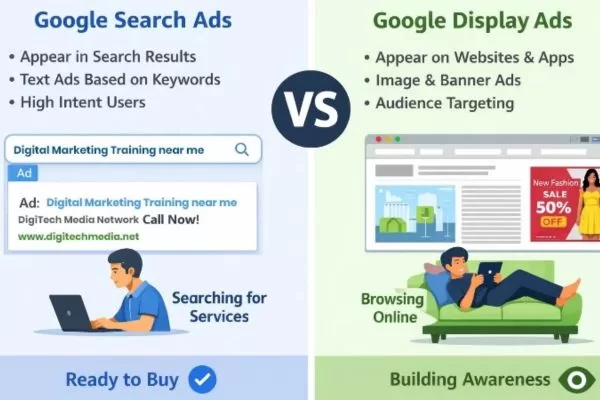
Situations where different advertising formats deliver better results
Tips for selecting the right ad type for your business
To choose the right ad format, businesses need to consider both their marketing goals and how their audience behaves online. A clear strategy helps businesses allocate budget wisely and achieve better campaign performance.
Determine your core marketing objective
Before launching a campaign, businesses should clearly define whether their main objective is generating immediate conversions or building broader brand visibility. When comparing Google Search Ads vs Display Ads, search campaigns are typically more effective for capturing direct demand from users who are actively looking for a solution. Display advertising, on the other hand, is often better suited for expanding awareness and introducing a brand to a wider audience.
Identify your audience’s decision behavior
Different audiences behave differently when researching products or services online. Some customers actively search on engines when they need a solution, while others spend more time browsing websites, watching videos, or reading content before making a decision. Understanding how your audience gathers information helps determine whether search-driven or visibility-driven advertising will perform better.
Plan budget based on expected results
Budget planning also plays an important role when deciding between advertising formats. In the comparison of Google Search Ads vs Display Ads, search campaigns often have higher cost per click but tend to attract users with stronger purchase intent. Display campaigns usually provide broader reach at a lower cost, which can be useful for maintaining visibility and introducing the brand to new audiences.
Strengthen your overall advertising mix
Focusing on only one advertising format can limit the overall impact of your marketing strategy. Many successful campaigns combine multiple approaches to guide customers through different stages of the decision process. By using display advertising to build recognition and search advertising to capture ready-to-buy users, businesses can create a more balanced and effective digital marketing strategy.

Practical considerations when selecting advertising formats for businesses
FAQs about Google Search Ads vs Display Ads
Businesses often have questions when deciding which advertising format will deliver better results. The answers below explain common concerns and help clarify how each ad type works in different marketing situations:
Are search ads better for quick sale?
If your main goal is to generate immediate sales or inquiries, search advertising is usually the more effective option. When evaluating different paid strategies, Google Search Ads vs Display Ads comparisons often show that search campaigns convert better because they target users actively looking for specific products or services. Since the audience already has a clear intent, the chances of clicks and conversions are typically higher.
Do display ads help with more than visibility?
Display advertising is widely used for brand awareness, but it can support other marketing goals as well. Many businesses use display campaigns for remarketing to reconnect with visitors who previously explored their website. With the right targeting and creative design, display ads can also contribute to traffic and lead generation.
Can companies run search and display ads at the same time?
Yes, combining both formats is a common strategy in digital marketing. When comparing Google Search Ads vs Display Ads, many marketers find that each format supports a different stage of the customer journey. Display campaigns introduce the brand and keep it visible, while search ads capture demand when users begin actively searching.
Which is more affordable: Google Search Ads vs Display Ads?
Display advertising often offers lower cost per click or cost per impression compared with search advertising. This is because display campaigns focus more on reach and visibility rather than immediate conversions. However, the actual cost will depend on targeting settings, competition, and campaign objectives.
Which ads help new businesses grow faster?
For new businesses, the best strategy often depends on brand recognition and marketing goals. In discussions about Google Search Ads vs Display Ads, many marketers recommend starting with display campaigns to increase visibility and familiarity. Once people become aware of the brand, search ads can then capture potential customers who begin searching for related products or services.

Common questions about two popular online advertising formats
Conclusion
Google Search Ads vs Display Ads each serve different roles in a successful digital advertising strategy. Search ads help capture high-intent users ready to take action, while display ads build brand awareness and keep your business visible to potential customers. If you want to choose the right strategy for your campaigns, consider working with On Digitals to develop a more effective advertising plan.
NEWEST POSTS
Read more