
Insights
Social Commerce Trends: Can It Shorten The Buyer Journey?
On Digitals
23/12/2025
47
Social commerce trends are reshaping how social media and e-commerce merge into one seamless buying experience. Brands can now sell, engage, and build trust directly on the platforms customers use daily.
This guide reveals practical strategies to boost sales and win in 2025’s digital marketplace.
What does social commerce mean in detail?
Before exploring today’s leading social commerce trends, it’s important to understand the concept itself. Social commerce combines social media interaction with online shopping, turning platforms like Instagram, TikTok, and Facebook into fully functioning storefronts where discovery, engagement, and purchasing happen in one place.
Unlike traditional ads that redirect users to external websites, social commerce creates a seamless, interactive buying journey. Shoppable posts, in-app checkout, and built-in marketplace features allow shoppers to browse reviews, compare products, and make purchases without ever leaving their favorite social channels. This integrated experience is exactly what fuels the fast rise of social media commerce trends.
Understanding social commerce and its role in online shopping
List of several current social commercial trends in 2025
The market for social commerce is now being shaped by a number of significant trends:
Influencer-hosted streams convert viewers into buyers quickly
One of the most influential social shopping trends today is the rapid growth of live shopping experiences. Instead of browsing static product pages, consumers can now watch real-time demonstrations hosted by brands or creators on platforms like TikTok, Facebook, and Instagram. Viewers can ask questions, explore features, and purchase instantly – all without leaving the livestream.
The interactive nature of live shopping builds confidence by showcasing products in action, reducing buyer hesitation, and increasing conversion rates. Businesses are partnering with influencers to launch limited offers, run exclusive live sales, and conduct engaging Q&A sessions that turn real-time engagement into immediate revenue.
Instant-buy micro videos
Another standout among today’s social commerce trends is the surge of short-form shoppable videos. As TikTok, Instagram Reels, and YouTube Shorts dominate online viewing, these platforms are transforming quick content into instant purchase opportunities. Users can watch a clip, tap a product tag, and buy within seconds – no extra browsing required.
Short videos grab attention fast and generate stronger engagement, making them ideal for showcasing products in real-world use and boosting purchase confidence. Businesses are producing bite-size tutorials, creative product demos, and influencer collaborations that inspire spontaneous buying and highlight product value in an engaging, authentic way.
Influencer-built membership commerce
Among the emerging social commerce trends, influencer partnerships are evolving from simple product endorsements to subscription-driven offerings. Instead of promoting one-off items, creators and brands are introducing monthly curated boxes, exclusive product drops, and premium membership clubs that deliver ongoing value to loyal followers.
Influencers have built deep trust with their audiences, turning subscriptions into a consistent, long-term revenue channel rather than sporadic sales. Companies are co-creating limited collections and premium content with influencers, encouraging repeat purchases while rewarding loyal customers with exclusive access and perks.
Conscious commerce choices
A growing wave within social commerce trends is the push toward ethical and sustainability-driven buying behavior. Consumers are gravitating toward brands that reflect their values, and social platforms are boosting this shift by spotlighting eco-certified products and ethical practices directly within shoppable content.
Shoppers increasingly reward brands that openly communicate how they reduce waste, source responsibly, or operate transparently. Companies are embracing recyclable packaging, carbon-neutral delivery, and fair sourcing policies to win the loyalty of socially conscious customers and strengthen long-term brand trust.
AI-based product matching
A defining shift within today’s social commerce trends is the rise of AI-driven shopping experiences. By analyzing browsing behavior, purchase history, and real-time interactions, AI recommends products that feel tailor-made for each user and even offers instant assistance through smart chat features.
Personalized suggestions boost conversions by making product discovery faster, more relevant, and more intuitive. Companies are deploying AI assistants across Instagram DMs, TikTok Shopping, and Messenger chats to answer questions, guide choices, and streamline buying on the spot.
AR product testing
Another breakthrough within modern social commerce trends is the use of augmented reality to simulate real product try-ons. Shoppers can preview makeup shades, outfits, or eyewear directly on their faces or bodies through social apps, turning virtual browsing into a realistic decision-making experience.
AR try-ons boost confidence and dramatically reduce product returns by letting customers “test” before buying. Businesses are launching interactive AR filters that allow users to see how items look in real time, encouraging faster and more accurate purchase choices.
Consumer insight–led products
One of the more strategic social commerce trends is the use of social listening to shape new products. By monitoring conversations, reviews, and community feedback, brands can uncover customer frustrations and turn real-time insights into data-driven product decisions.
Real feedback leads to products that align more closely with what customers actually want and expect. Tools like Brandwatch, Sprout Social, and Hootsuite help businesses track consumer chatter, refine offerings, and adjust campaigns based on audience needs – not guesswork.
Trust-based buying signals
A major factor behind today’s social commerce trends is the growing reliance on social proof as a deciding factor in purchases. Instead of trusting polished brand ads, consumers look to authentic voices – real buyers, content creators, and everyday users – whose experiences feel more credible and relatable.
User-generated content heavily influences buying decisions, often outperforming traditional advertising in trust and impact. Companies are inviting customers to share reviews, testimonials, and hashtag campaigns to spotlight real product usage, strengthen brand credibility, and inspire confident purchases.

Key social commerce trends shaping 2025’s digital marketplace
Why should retail brands embrace social commerce?
For retail businesses looking to capitalize on social commerce trends, the opportunity is substantial. Beyond driving e-commerce sales, social commerce offers a range of additional advantages that can strengthen customer engagement, brand visibility, and overall growth:
Increase visibility among new prospective buyers
With over 94% of global internet users active on social media, social commerce trends offer unprecedented opportunities to connect with audiences worldwide. More users are now shopping directly on social platforms, making it easier than ever to convert engagement into sales. If your target market is aged 18 – 34, they’re already scrolling, interacting, and ready to make purchases online.
Harness influencer reach to amplify marketing results
Influencer marketing thrives because people trust recommendations from creators they follow. When admired influencers showcase and endorse products, followers are far more likely to make a purchase – 74% of shoppers base buying decisions on influencer suggestions.
Social commerce trends amplify this effect by allowing influencers to tag products directly in their posts, enabling followers to shop instantly without leaving the app. This seamless experience turns casual scrolling into immediate purchases. Brands like Lalo have seen remarkable results, tripling sales in just six months by leveraging Shopify Collabs to streamline collaborations with creators.
Enable in-app purchases
Social commerce trends enable brands to sell products directly where their customers already engage. Most platforms now offer built-in shopping features, turning casual browsing into instant purchases without redirecting users to external websites.
Brands like Kylie Cosmetics and JUNO & Co. have achieved impressive results by allowing customers to shop within social platforms. JUNO & Co. discovered that TikTok sales were ten times higher than those from Instagram and Facebook, highlighting the power of social commerce when leveraging the right platform for your audience.
Drive growth and acquire new audiences
Social commerce trends make it easier for people to discover products through built-in search features on social platforms. By tagging products accurately and using relevant keywords, brands can appear in searches for similar items, increasing visibility and engagement.
Many businesses have seen remarkable results: Shopify users leveraging Shop Campaigns gained up to 24% more new customers, often securing their first orders within 48 hours. Selling on social media also simplifies reaching international audiences – backpack brand WOLFpak grew global sales by 433% in just 18 months. By engaging customers where billions spend their time daily, social commerce opens growth opportunities beyond what a website alone can achieve.
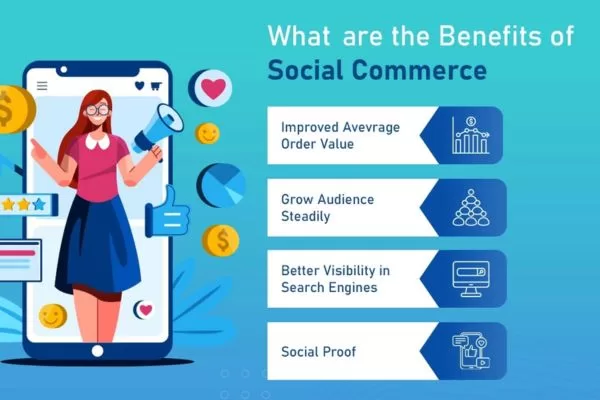
Retailers gain growth by adopting social commerce strategies
Platforms powering the social commerce shift
Different social channels offer distinct e-commerce advantages. Here’s how they’re transforming the shopping journey.
| Platform | Commerce tools & Shopping features | Best use cases |
| Product tagging, native checkout, and Reels-enabled shopping | Suited for content focused on style, beauty, and living. | |
| Storefront pages, Marketplace selling, live product demos | Broad product catalogs, community-based sales | |
| Product discovery boards, shoppable pins, visual search | DIY, home styling, curated fashion ideas | |
| Tiktok | TikTok Shop, creator storefronts, trend-driven shopping | Trend-first items, youth brands, viral buys |
| Twitter (X) | Product drop alerts, integrated shop modules | Limited editions, merch, tech, and entertainment |
The right platform isn’t about popularity – it’s about matching your audience’s habits and using the features that highlight your products most effectively.
Facebook marketplace
One of the most dominant social commerce trends is Facebook’s continued lead in buyer adoption. Forecasts from Ondigitals predict that Facebook will host roughly 64.6 million social commerce buyers in 2024. Its vast global community gives brands access to diverse audiences, while robust storefront tools and data-driven shopping insights strengthen its position as a competitive e-commerce ecosystem.
Facebook’s social commerce growth is heavily driven by Facebook Marketplace, which thrives on local and secondhand buying behavior. Its community-focused model delivers strong engagement and purchase intent beyond standard ads and product listings. Ondigital’s 2023 forecast shows Instagram would lead in social buyers without Marketplace, highlighting how integrated marketplaces are redefining social commerce.
Facebook shops
Facebook Shops has quickly become a standout feature in today’s social commerce trends, giving brands a storefront experience that feels native to the platform. Unlike Facebook Marketplace, which focuses on peer-to-peer selling, Shops lets businesses build a complete online store where customers can browse and buy without leaving Facebook.
With the ability to showcase extensive product collections, high-impact visuals, and detailed descriptions, brands can curate immersive shopping journeys. Seasonal launches, exclusive bundles, and highlighted best-sellers can be displayed in a more personalized way, turning Facebook Shops into a powerful, customizable retail channel within the social ecosystem.
Instagram shopping
Instagram Shopping remains a major force shaping social commerce trends, thanks to its ability to turn posts and stories into instant storefronts. With one tap on a tagged product, users can view details, pricing, and proceed directly to purchase, reducing the gap between discovery and checkout.
In 2024, Meta is requiring U.S retailers to use its in-app Checkout across both Instagram and Facebook, a shift designed to keep transactions on-platform and strengthen data-driven commerce. Although the change removes the option to complete purchases on external websites, it highlights a broader trend: social platforms are prioritizing seamless, native buying journeys to increase conversions and deepen control over the shopping ecosystem.
TikTok shop
TikTok’s strong appeal among Gen Z has turned its massive U.S. audience – already surpassing 100 million users in 2024 – into one of the most influential forces driving social commerce trends. The platform isn’t just growing in users; it’s rapidly converting them into active shoppers, adding more social buyers than other major platforms combined over the past year.
As TikTok continues to expand its shopping capabilities, its user base is expected to climb even higher in 2025, alongside a surge in in-app purchasing behavior. This swift rise in social buyers places TikTok far ahead of competitors like Instagram and Facebook, signaling a clear shift in where the next wave of social commerce growth will take root.
TikTok Shop is shaping new social commerce trends by allowing creators and brands to sell products directly through videos and livestreams, guiding users from discovery to checkout without leaving the app. One of its most notable capabilities is a unified shopping cart that lets consumers purchase items from multiple sellers in a single transaction – an approach designed to keep the entire buying journey within TikTok.
Still, the platform’s commerce ambitions face hurdles, including slow merchant adoption in the US, limited enthusiasm for live shopping, and the possibility of a nationwide ban. While most brands could redirect sales to alternative marketplaces if TikTok were restricted, the biggest impact would fall on TikTok’s own social commerce push, particularly its heavy investments in livestream-driven shopping.

Different social platforms uniquely enhance online shopping journeys
Top 6 social commercial strategies for businesses to pursue in 2025
Data-driven tactics, AI-enhanced personalization, UGC-based credibility, and interactive shopping features are reshaping the trends in social commerce today, turning every touchpoint into a more personal, trustworthy, and purchase-ready experience. Below is a strategic roadmap to help your brand implement and optimize social commerce with maximum impact:
Create seamless customer purchase paths
To capitalize on the latest social commerce trends, brands must craft customer journeys that flow effortlessly from discovery to repeat purchase. Strategies to effectively enhance engagement and conversions at every stage of the customer journey:
- Awareness: Capture attention by sparking interest and engagement with your brand. Leveraging targeted social media ads, compelling content, and visually striking influencer collaborations can amplify brand visibility and the noise.
- Consideration: Encourage deeper exploration by sharing product tutorials, comparison guides, user-generated content, and other engaging branded materials. These touchpoints help consumers evaluate options and form a connection with your brand.
- Purchase: Convert interest into action by building trust and creating a sense of urgency. Highlight social proof through testimonials, reviews, and influencer endorsements, while offering limited-time promotions and shoppable posts to drive conversions.
- Retention: Strengthen long-term relationships by offering attentive social customer service, powered by AI chatbots for instant query resolution, usage guidance, and product support. Additionally, retargeting campaigns can re-engage lapsed customers and boost repeat sales, reflecting the evolving dynamics of social commerce trends.
Hold real-time social shopping sessions
Live shopping has emerged as a cornerstone of modern social commerce trends, transforming the traditional window-shopping experience into an interactive, real-time event. By streaming on social media, brands allow customers to ask questions, interact, and make purchases instantly, creating urgency and driving higher sales compared to static posts.
Here are some expert tips to maximize your live shopping events:
- Collaborate with influencers, celebrities, or industry experts to boost credibility and generate excitement.
- Keep viewers engaged by responding to comments, running polls, and encouraging interaction throughout the stream.
- Add clickable links so customers can shop directly without leaving the live event.
For example, Rihanna’s Fenty Beauty demonstrates the power of social commerce trends with live events that blend product demonstrations and expert insights, offering a dynamic, hands-on shopping experience that converts viewers into buyers in real time.
Convert online interactions into data-driven decisions
In today’s social commerce trends, customer interactions on social platforms reveal rich insights into buying behaviours and preferences. By analyzing social media conversations, brands can uncover patterns, segment audiences, and deliver highly targeted campaigns that resonate with the right customers.
Expert tip: Apply sentiment analysis to uncover the emotions driving customer purchases, allowing you to refine advertising, adjust product positioning, and shape the tone of engagement for stronger, more meaningful connections.
Enable instant shopping from your posts
In line with current social commerce trends, your content should do more than inspire – it should enable instant purchases. Design posts and stories that allow users to shop directly from their feeds, minimizing friction and maximizing convenience. Platforms like Instagram and Pinterest have proven highly effective, with brands such as H&M leveraging shoppable posts to drive impulse buying.
Expert tips:
- Enhance visuals and ensure accurate product tagging to capture attention and boost conversions.
- Save Instagram or Facebook Stories as Highlights so customers can easily revisit and shop older content.
Capitalize on social proof and customer content
As social commerce trends continue to evolve, user-generated content (UGC) has emerged as a key driver of trust and engagement. Authentic posts from real customers showcase your products in action, encouraging potential buyers to explore your brand, follow your page, or save your content – actions that strengthen social signals and boost visibility.
Pro tips:
Encourage customers to use branded hashtags and strategically leverage them to extend your reach. Cosmetics brand Glossier, for example, excels at turning hashtag-driven UGC into a powerful marketing engine that fuels social commerce.
Partner with influencers to increase campaign exposure
In line with today’s social commerce trends, influencer recommendations are a major driver of purchasing decisions, with 81% of consumers influenced by suggestions from influencers, friends, or family. By partnering with influencers who truly understand their audiences, brands can craft authentic stories, create FOMO, and boost sales. Selecting influencers whose values align with your brand ensures endorsements feel genuine and resonate with potential buyers.
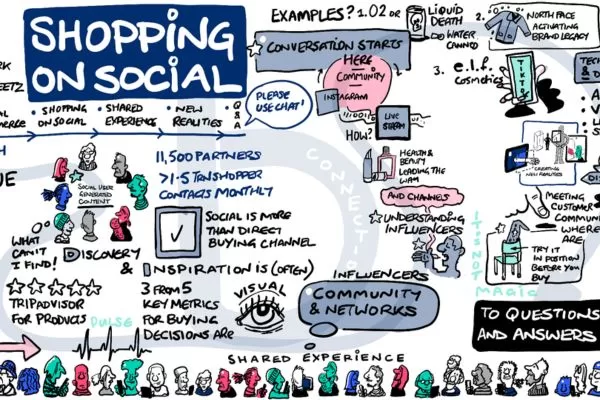
Six essential strategies optimize social commerce success in 2025
Notable social commerce success stories
Leading brands are raising the bar by fully embracing the latest social commerce trends. To capture a share of this rapidly growing market, take a look at these top three examples, each offering valuable lessons and strategies you can adapt for your own brand.
Lululemon makes fitness wear fashionable
For inspiration on making healthy living stylish, Lululemon sets the benchmark. The premium Canadian athleisure brand engages its 5 million Instagram followers through dynamic campaigns, user-generated content, and innovative product launches. Its #TheSweatLife campaign, for example, has cultivated a community of over 1.5 million followers passionate about fitness and wellness.
Lululemon’s social media strategy exemplifies current social commerce trends by combining authentic storytelling with interactive shopping experiences. The brand leverages carousel ads and shoppable Instagram posts to showcase “fit check” looks across activities like running, yoga, and weightlifting, highlighting both the performance and versatility of its apparel while driving engagement and sales.
Slack challenges common B2B social commerce myths
Slack’s social commerce strategy revolves around platform-specific content and a consistent brand voice. The company showcases product features, customer stories, and educational material using interactive, relevant approaches across multiple social channels.
For example, Slack leverages Instagram for limited-time offers, driving immediate user engagement – an approach many B2B companies overlook despite the platform’s vast audience. On X (formerly Twitter), Slack boosts interaction with polls, shares website links, and promotes blog content to increase referral traffic, demonstrating how B2B brands can harness social commerce trends to engage audiences and drive measurable results.
boAt drives sales through social conversations
Indian audio brand boAt turned WhatsApp into a high-impact social commerce channel, converting real-time interactions into measurable sales when email and SMS campaigns underperformed. Using Sprinklr’s Conversational Commerce with native integration, boAt proactively engaged customers with order updates and cart recovery messages. This strategy recovered over 185,000 abandoned carts, generating more than $18,000 in additional revenue.
By meeting customers on a platform they already use, boAT strengthened its direct-to-customer approach and boosted brand loyalty through personalized conversations. The brand also enhanced integrations with Shopify, Nectar, and CleverTap for targeted outreach and tailored re-engagements. This example highlights how social media commerce trends can drive meaningful, revenue-generating interactions.

Examples of brands excelling through social commerce strategies
Future of social commerce trends: Predictions and Prospects
Social commerce is no longer just a trend – it’s shaping the future of online shopping. By leveraging social commerce platforms, influencer partnerships, and user-generated content, businesses can deliver seamless, engaging shopping experiences. Emerging technologies like AI-driven personalization, AR try-ons, and live shopping are transforming how consumers interact with brands, giving early adopters a clear competitive advantage.
Now is the moment to sharpen your social commerce strategy and reach the rapidly growing community of social shoppers. From small businesses to global brands, integrating social media retail into your operations can boost engagement, strengthen brand loyalty, and drive sales. Stay ahead of social commerce trends and position your business for success in this evolving digital marketplace.

Emerging trends are shaping the future of social commerce
FAQs about the social media commerce trends
Curious about how social commerce trends can impact your business? Here are the key questions and answers to help you understand the latest strategies and opportunities:
What advantages does social commerce offer to small businesses?
Small businesses can use social commerce to reach broader audiences, engage directly with customers, and streamline purchases with in-app checkout options. It also offers cost-effective marketing opportunities through user-generated content and influencer partnerships.
What social commerce trends are shaping 2025?
In 2025, social commerce will continue to evolve with AI-driven product recommendations, immersive AR/VR shopping experiences, blockchain-enabled payments, and community-driven commerce through private groups and micro-influencer collaborations.
What are the projected growth trends for social commerce?
The social commerce market is set for significant growth as platforms like Instagram, TikTok, and Facebook expand in-app shopping features. Experts predict that social commerce will account for an increasing share of total e-commerce revenue, fueled by frictionless transactions and hyper-personalized shopping journeys.
What are trends in social commerce?
Social commerce trends revolve around integrating shopping directly into social media platforms. Key developments include live shopping events, influencer-driven promotions, AI-powered personalization, and AR try-ons, all designed to make the shopping experience more interactive and seamless.
What are common mistakes to avoid in social commerce trends?
Frequent pitfalls include failing to engage with customers, inconsistent branding, ignoring negative feedback, focusing solely on sales without providing value, and neglecting mobile optimization. Brands should also avoid over-reliance on a single platform and ensure product information is always accurate and up-to-date.

Common questions and insights on evolving social commerce trends
Conclusion
The rise of social commerce trends is changing how businesses engage with customers, requiring not just great products but also the right talent to execute innovative strategies. On Digitals helps brands secure top professionals in digital, marketing, and e-commerce to drive growth and customer engagement. Build your dream team and elevate your business – partner with us today!
Related blogs:
Read more