
Insights
User Generated Content Vs Influencer Marketing – Which Is Better?
On Digitals
04/03/2026
10
User generated content vs influencer marketing helps brands compare performance, cost efficiency, and long-term impact across modern digital channels. It highlights how each approach supports awareness, trust, and measurable revenue growth at different stages. Let’s explore which strategy delivers stronger results for your business goals and budget!
What is user-generated content marketing described?
UGC means user-generated content created by real customers, fans, and everyday creators. It includes selfie videos, unboxings, before-and-after clips, product demos, and honest reviews filmed at home. Some content is posted organically, while other content is produced from a brand brief and delivered as raw files for marketing use.
User generated content vs influencer marketing highlights why many brands now choose UGC for performance-driven campaigns. It feels more like a real friend sharing an experience and builds trust faster than polished brand ads. It is also quicker to produce, easier to test, and more affordable for scaling.
UGC is created by real customers, community members, and paid UGC creators who follow a specific creative brief. Employees and founders can also contribute by showing the product in real use. This mix of creators helps brands generate authentic content for ads, product pages, email, and social media.
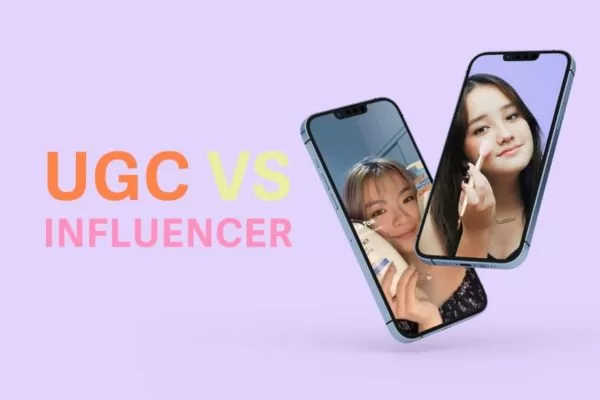
A clear overview of customer created content in practice
What does influencer marketing really mean for brands?
Influencer marketing works by partnering with creators who already have an established audience. Brands pay for access to that audience through posts published on the creator’s own social channels. These posts can include feed content, stories, livestreams, long-form reviews, or short-form video series.
Brands choose this channel for reach, discovery, and credibility from a trusted voice. In many campaign planning discussions, user generated content vs influencer marketing becomes a key comparison when deciding between performance and awareness goals. Influencer partnerships also create PR value and unlock access to highly specific communities.
Influencer content is created by nano influencers with under 10,000 followers. It also includes micro and mid-tier creators who focus on niche audiences. Macro creators and celebrities are often used for large-scale visibility and brand positioning.
How UGC and influencer marketing differ
Below is a simple comparison to help you quickly understand how UGC and influencer marketing differ across cost, reach, ownership, and funnel impact. It focuses on how each model supports performance and brand growth at different stages in content marketing vs influencer marketing strategies.
| Factor | UGC marketing | Influencer marketing |
| Cost | Usually cheaper per asset and paid per video or content batch. | Higher cost because you pay for audience reach, plus usage and whitelisting fees. |
| Reach | Needs paid media on your own channels to scale. | Can reach an existing audience organically, with optional boosting. |
| Authenticity | Feels more like a real customer or friend’s opinion. | Can feel more polished depending on the creator and briefing. |
| Content ownership | Brands often receive broad or full usage rights. | Usage windows and whitelisting terms vary by contract. |
| Audience type | Strong for lower-funnel moments like retargeting and product pages. | Works best for top-of-funnel awareness, launches, and buzz. |
When teams compare user generated content vs influencer marketing, the decision usually depends on whether the main goal is scalable performance or broad discovery. UGC supports testing, retargeting, and conversion-focused campaigns more efficiently. Influencer marketing is better suited for visibility, credibility, and rapid audience expansion.
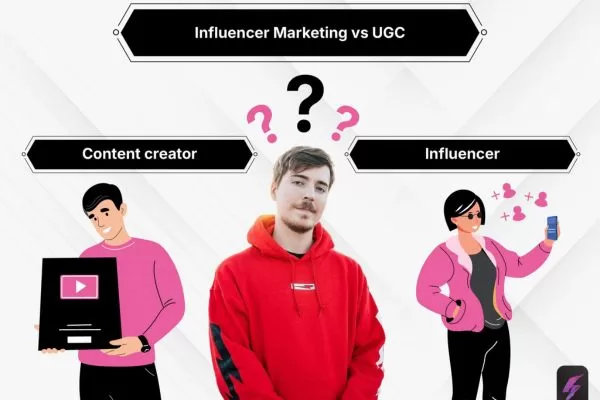
Key structural differences between creator channels and performance goals
When UGC or influencer marketing works best
This comparison helps you decide when each channel works best across performance, reach, and credibility. User generated content vs influencer marketing is most useful when teams must balance fast testing with scalable discovery.
| Area | When to use UGC | When influencer marketing is the right strategy for your brand |
| Primary goal | Fast creative testing and conversion lift in performance channels | Reach new audiences with credibility and social proof |
| Best use cases | DTC and eCommerce brands, clear demos, transformations, and subscriptions | Product launches, education-heavy categories, fashion and lifestyle |
| Content strengths | Believable demos, routines, proof on product pages and ads | Stories, opinions, and authority that spark conversation |
| Smart plays | Film multiple angles, native formats, caption-first edits, reuse in PDPs and emails | Match creator audience, agree on one message, secure usage and whitelisting early |
| Watchouts | Outreach and incentives still cost money, low-quality content hurts trust | Vanity metrics, delayed posting, expensive usage rights |
In practice, most growth teams combine both channels instead of choosing only one. UGC supports rapid optimization and lower-funnel results, while influencer marketing builds visibility and trust at scale. The strongest strategy connects awareness from creators to performance creatives that convert.
Ideal scenarios for each channel across different growth stages
Can you run UGC and influencer marketing at the same time?
In fact, the strongest brands in 2025 use a hybrid model to connect credibility, creative testing, and paid scale. This approach blends creator reach with performance content to support the full funnel.
Spark early content with small creators
Start by sending products to small creators and loyal customers to collect honest reactions and real usage moments. This stage is where user generated content vs influencer marketing becomes a practical comparison instead of a theoretical one. You identify which creator styles feel natural, which storytelling angles resonate, and which visual formats earn attention fastest.
At this stage, you should test multiple creator profiles, filming environments, and content tones. Repost the best organic clips with permission and clear usage rights. Save raw files for ads, landing pages, product detail pages, and email flows, and treat this phase as rapid discovery rather than a polished campaign launch.
Add credibility through top creators
Book a small number of well-matched influencers for your launch window to provide structure and credibility to the campaign. They bring reach, context, and storytelling that clearly explains what the product does, who it is for, and why it matters. Their audience also helps validate your brand publicly at a moment when attention is highest.
Use these creators to introduce your product story, category positioning, and key use cases. Clip their long posts into short, reusable assets and extract the strongest hooks, reactions, and soundbites. Adapt each clip for vertical formats and fast openings so the content can support both organic publishing and paid distribution.
Grow performance with paid distribution
Turn your best UGC and influencer cuts into multiple ad variations for testing hooks, offers, opening frames, and creative structures. This is where user generated content vs influencer marketing directly informs creative decisions and budget allocation. Performance data quickly shows which content type drives stronger engagement, higher click-through rates, and lower acquisition costs.
Build structured creative tests by rotating intros, creator faces, product shots, and calls to action. Run whitelisted ads through creator handles when it improves credibility and social proof. Split test formats, captions, and landing page connections, and optimize weekly to protect creative freshness and efficiency.
Keeping creative assets fresh to prevent performance decline
Commission monthly UGC batches to keep your creative library active and avoid performance decline caused by ad fatigue. Rotate angles such as problem, solution, proof, routines, unboxings, and lifestyle use cases. This helps maintain variety across platforms and supports continuous testing.
At the same time, keep one or two influencer partners each quarter for deeper storytelling and higher-impact moments. Use them for product updates, new launches, routines, or behind-the-scenes narratives. This balance allows you to sustain trust, refresh brand perception, and protect long-term scale.
A practical hybrid model for creators and customer content
Typical mistakes when running UGC and influencer programs
Many campaigns fail not because of creators, but because of weak strategy and execution. This section highlights the most common mistakes that quietly reduce ROI and long-term brand impact.
UGC
Many teams rush into UGC without a clear quality framework or performance goal. In user generated content vs influencer marketing, UGC often fails when brands treat it as cheap content instead of a strategic asset.
- Briefs are vague, so creators deliver content that cannot be used in paid ads.
- Creatives are not aligned to funnel stages, hooks, or conversion goals.
- No clear testing structure for angles, formats, or creators.
- Usage rights and releases are not collected properly.
- Content is published without learning from past performance.
These mistakes reduce the real impact of UGC and slow down optimization. Teams also struggle to scale because there is no repeatable production process. Over time, poor creative discipline leads to higher acquisition costs and faster ad fatigue.
Influencer marketing
Influencer campaigns often fail when brands focus on reach instead of relevance. In real planning decisions, influencer programs usually underperform when audience fit and business goals are not clearly defined.
- Choosing creators only by follower count instead of audience match and intent.
- Using user generated content vs influencer marketing as a shortcut decision without reviewing actual campaign objectives.
- Skipping clear messaging alignment and creative direction.
- Not negotiating usage and whitelisting rights upfront.
- Judging campaign performance only by likes and views
These mistakes lead to strong vanity metrics but weak commercial results. Sales attribution becomes unclear, and budget efficiency drops quickly. A well-structured creator selection and tracking setup is essential to make influencer marketing profitable.
Common pitfalls that quietly reduce creator program effectiveness
How to balance UGC and influencer marketing for your brand
Start by mapping your funnel goals and internal resources before choosing your mix. UGC vs influencer marketing should be evaluated based on whether your priority is fast creative testing, lower acquisition cost, or brand-led discovery. If your team already runs paid media and CRO well, UGC usually delivers faster learning and performance gains.
Next, look at your audience behavior and category dynamics. Products that require demonstration, routines, or visible results benefit more from short-form, creator-style content that can be tested and iterated quickly. Categories that depend on authority, taste, or storytelling usually need creator voices that already hold trust in that niche.
Finally, align your budget structure and timeline with realistic outcomes. User generated content vs influencer marketing becomes a budget decision when you compare repeatable production and testing versus one-off reach spikes. The right mix is the one that lets you sustain creative output, measure results clearly, and scale what consistently drives revenue.
FAQs about the user generated content vs influencer marketing
These are the most common questions brands ask when choosing between creator-led and customer-led content strategies. Each answer focuses on practical execution, real performance outcomes, and long-term, scalable growth.
Which channel is more effective for short-term sales?
For short-term performance goals, many teams compare user generated content vs influencer marketing to see which format converts faster in paid channels. UGC usually performs better in retargeting and lower-funnel campaigns because the content feels closer to real customer experiences. Influencer content can still support sales, but it often works indirectly by increasing awareness and trust first.
Can small businesses realistically run both UGC and influencer marketing together?
Yes, small brands can run both if they prioritize content reuse and simple workflows. Starting with a few UGC creators and one niche influencer is usually enough to test the model. The key is to focus on measurable results instead of trying to scale both channels at the same time.
What is the right budget mix for UGC and influencer campaigns?
When planning user generated content vs influencer marketing, budget allocation should follow your funnel goals and testing capacity. UGC normally requires a steady monthly budget for creative production and ad testing. Influencer marketing often needs higher upfront spend but delivers broader exposure and social validation.
How do brands evaluate impact across the two channels?
UGC performance is usually measured directly inside ad platforms through click-through rate, cost per acquisition, and conversion volume. Influencer campaigns need blended measurement, including tracking links, discount codes, and assisted conversions. Combining both data sources helps teams understand how awareness and performance support each other.
Is it better to switch fully to UGC in the long term?
Brands should not automatically replace one with the other when comparing user generated content vs influencer marketing. UGC is excellent for ongoing performance and creative testing, but influencers still play an important role in credibility and storytelling. The strongest brands treat them as complementary layers rather than competing channels.
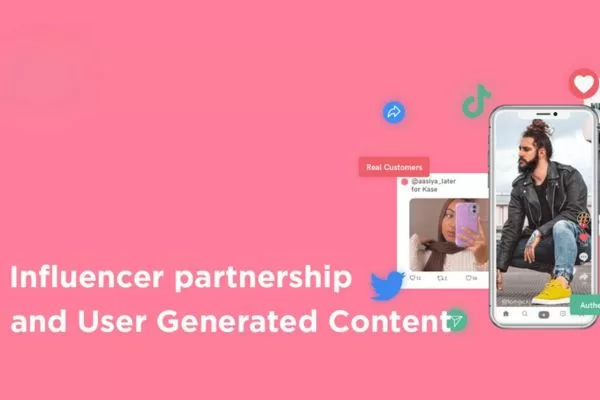
Practical answers for brands choosing modern creator strategies
Conclusion
User generated content vs influencer marketing ultimately comes down to how your brand balances performance-driven creative with scalable reach and credibility. The strongest teams win by aligning content formats to funnel stages, budget structure, and long-term growth goals. Ready to build a smarter creator strategy for your brand with On Digitals?
Read more