
Insights
Video script template: How to write powerful scripts for any video
On Digitals
12/01/2026
31
Video content appears everywhere today, from YouTube and social platforms to product pages and internal training materials, and engaging videos rarely happen by chance. Behind every effective video is a clear structure, a focused message, and a well-planned video script template that keeps everything aligned from start to finish.
For marketers, content creators, and business owners, a structured scripting approach helps organize ideas, guide visuals, and maintain audience attention. In this guide, you will learn what a video script template is, why it matters, and how different formats support different video goals without overcomplicating the process.
What is a video script template?
A video script template is a structured framework used to plan what happens throughout a video, including visuals, spoken content, and timing. Instead of improvising scene by scene, creators rely on this structure to control message flow and ensure viewers can follow the story effortlessly.
Rather than starting from a blank page, many teams use a script video template to connect storytelling, visuals, and narration in a single working document. This approach helps keep ideas aligned with the video’s purpose while reducing confusion during production.
In practice, a video script template can be simple or detailed. Some creators prefer lightweight outlines, while others use audio-visual layouts with scene descriptions and timing notes. Regardless of format, the core goal remains the same: clarity, consistency, and smoother execution.

What is a video script template?
Why use a video script template for different video types?
Not all videos serve the same purpose. A social clip, a product demo, and a training video require different pacing, tone, and storytelling approaches. Using one generic structure often results in content that feels awkward or unfocused, or simply doesn’t fit the intended use of the video.
For example, short-form videos on social media have a faster pace with more frequent cuts and a lot of bite-sized information for audiences to consume easily. Meanwhile, a guide or company tour needs to be way slower so that people can have time to digest what they’re seeing. Those differences should be depicted in the script templates.
A well-chosen video script template helps match the message to the platform and the audience. It ensures the video progresses logically from the opening hook to the final call-to-action without unnecessary distractions.
Templates also support consistency across teams. When everyone follows the same scripting structure, it becomes easier to maintain brand voice, align visuals with messaging, and streamline production workflows.

Why use a video script template for different video types
Types of video script templates by video format and goal
Different video formats require different storytelling approaches. Videos designed to educate, persuade, or entertain naturally follow different structures. Choosing the right format allows the message to feel natural rather than forced.
Educational videos
Educational videos focus on clarity and understanding. These scripts usually start with a short hook, followed by content broken into small, digestible sections. Visual aids such as examples, diagrams, or on-screen text help reinforce learning.
This format works particularly well for tutorials, training materials, and explainers where the goal is long-term understanding rather than quick persuasion.
Educational video script
Explainer videos
Explainer videos are designed to simplify complex ideas. They typically follow a problem-solution structure that helps viewers quickly understand what is wrong and how it can be fixed.
A strong explainer script aligns narration closely with visuals, ensuring the message feels intuitive rather than technical. This approach is commonly used for SaaS products and feature overviews.

Explainer videos
Product demos
Product demo videos show how a product works in real situations. Instead of listing features, they focus on use cases and benefits that matter to the audience.
In these cases, a sales video script template helps structure the story around value rather than functionality. Viewers can see how the product fits into their workflow, which builds trust and confidence.

Product demos
Promotional and marketing content
Promotional videos aim to persuade and drive action. These scripts focus on capturing attention quickly and delivering a concise, compelling message.
They emphasize emotional triggers, key benefits, and strong calls-to-action. This structure is commonly used in ads, product launches, and landing page videos.

Promotional and marketing
Onboarding and orientation videos
Onboarding videos help users or employees feel confident from the beginning. These scripts explain processes step by step in a friendly, supportive tone. Clear structure is essential here to reduce confusion and help viewers gain value quickly from a product or service.
Another aspect worth noting is the branding. These videos serve as both an introduction/greeting and in a way, an opportunity to portray your business as a welcoming environment with an eye for talent. Businesses can either go off the beaten path and do something truly unique or perfect the usual formula of an orientation video to make the onboarding process for their talents a truly unique experience. Some ways to do this include giving the new hire a tour of the workplace with tailored messages from their soon-to-be teammates or harnessing interactive technology to really give talents an immersive experience right on their first day on the job.

Onboarding and orientation videos
Short-form and 60-second videos
Short-form videos are built for speed and impact. On platforms like TikTok, Reels, or YouTube Shorts, attention must be captured immediately. A short video script template or 60 second video script template prioritizes a strong hook, one core idea, and a quick call to action. Language stays simple, pacing remains tight, and visuals carry most of the storytelling. Trends usually will also play a big role in these videos, so sometimes they will dictate the overall structure.
Read more: How to Master YouTube Growth Hacks in 2025?

Short-form and 60-second videos
Animated and story-based formats
Animated videos rely heavily on visual storytelling, which requires careful planning before production begins. Scripts for this format often describe scenes, motion, and transitions in detail. An animated video script template is commonly paired with a storyboard video script template so teams can visualize how each scene connects to the narration. This format works especially well for brand stories and abstract concepts.

Animated and storyboard-based formats
How to write a video script using a simple template
Once the right structure is chosen, the next step is filling it in clearly. A common and effective method is a two-column layout, with visuals on one side and audio on the other.
Start by defining your main idea, target audience, and video goal. Then outline what appears on screen and what is said at each moment. This approach helps control pacing and keeps production aligned from start to finish.
Step 1 – Identify a strong hook
The hook determines whether viewers stay or scroll away. It should appear within the first few seconds and immediately signal why the video is worth watching.
A strong hook might be a direct question, a bold statement, or a relatable problem. The goal is to make the value of the video clear right away.
Step 2 – Present the problem
After the hook, clearly describe the problem your audience is facing and why it matters. This helps viewers feel understood and encourages them to keep watching.
Use simple language and real-world examples. Keep this section concise and support it with visuals that make the problem easy to recognize.
Step 3 – Introduce the solution
Next, present your solution, idea, or product as the answer to the problem. Focus on how it improves the viewer’s situation rather than listing technical details.
Whenever possible, show the solution in action. Visual proof often communicates value more effectively than explanation alone.
Step 4 – Add a clear call-to-action (CTA)
Every video should guide viewers toward a clear next step. A strong call-to-action tells them exactly what to do after watching.
This could be visiting a website, signing up for a trial, or watching another related video. Keep the action simple and easy to follow.

Write a video script
Best practices for using a video script template
Using a structured script is not just about filling in sections – it’s about intention. Be clear about what you want viewers to do after watching.
Write in a conversational tone so the script sounds natural when spoken. Always adjust length and pacing to fit the platform and purpose.
Before finalizing, read the script out loud. This helps identify awkward phrasing and ensures visuals truly support the message rather than distract from it.

Best practices for using a video script template
Common mistakes to avoid when using a video script template
Even with a solid structure, a video script can still underperform if common mistakes are overlooked. Below are some issues creators often face when relying on a video script template without proper customization:
- Trying to include too many ideas in a single video, which overloads the message, confuses viewers, and reduces engagement-especially on short-form or fast-paced platforms.
- Ignoring pacing and platform context, leading to scripts that are too dense, scenes that drag on, or content that doesn’t match audience attention spans on platforms like YouTube, Reels, or Shorts.
- Writing scripts for reading instead of speaking, which results in stiff, unnatural dialogue that sounds scripted rather than conversational when delivered on camera or as a voiceover.
- Skipping the read-aloud and review step, causing awkward phrasing, poor rhythm, and transitions that feel abrupt or unclear once recorded.
- Forgetting the audience’s perspective or a clear call-to-action (CTA), which weakens the video’s purpose and leaves viewers unsure of what to do next after watching.

Common mistakes to avoid
Tools and platforms to create video scripts faster
The right tools can help streamline the video scripting process while keeping ideas organized and easy to refine. Depending on your workflow and content complexity, different tools serve different purposes:
- Basic drafting and collaboration: Platforms like Google Docs or Notion are often enough for outlining scripts, collecting feedback, and collaborating with teammates in real time.
- Professional script formatting: For longer or more complex projects, tools such as Celtx provide structured formatting that helps manage scenes, dialogue, and timing more efficiently.
- AI-powered ideation and early drafts: Tools like Juma, Ahrefs, or Writesonic support idea generation and first drafts for explainer or YouTube content, but still require human refinement for clarity and tone.
- Animation and visual-heavy scripting: When visuals play a major role, storyboarding tools like Kapwing or VEED.IO make it easier to align narration with scenes, motion, and transitions.
While the right tools can improve speed and organization, clear thinking and planning remain the foundation of an effective video script.
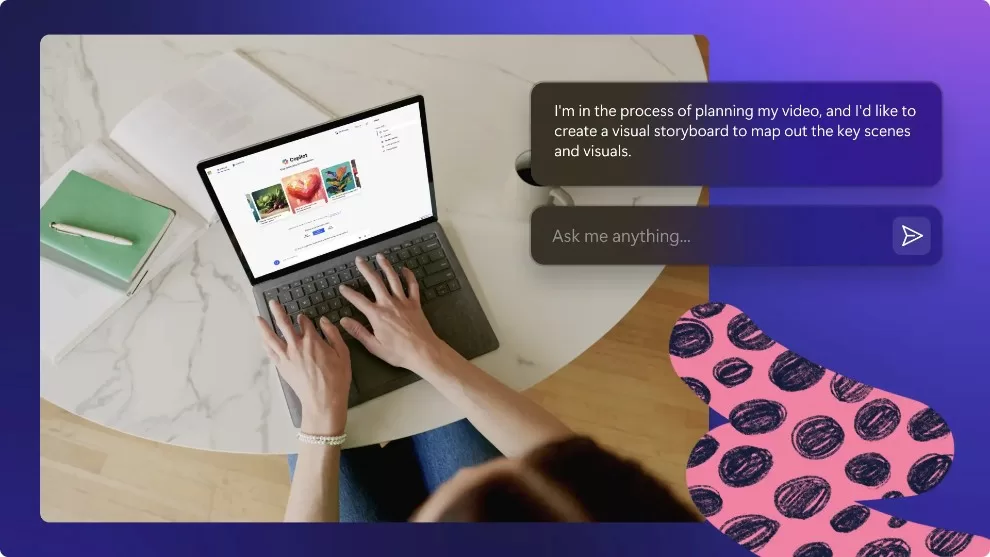
Tools and platforms to create video scripts faster
FAQ
What is a video script template used for?
It acts as a roadmap for production, organizing visuals, audio, and structure so teams can work more efficiently.
Can one template be reused for all videos?
You can reuse the same core framework, but each script should be customized to the specific goal, audience, and message to stay relevant and effective.
How long should a video script be?
Script length depends on video duration, with a common guideline of 125-150 words per minute, adjusted based on pacing, visuals, and content complexity.
Do short videos still need scripts?
Yes, even short videos benefit from scripts or outlines to deliver a strong hook, stay focused, and communicate value quickly to fast-scrolling audiences.
Conclusion
Video script templates may seem like a simple planning tool, but their influence on video quality, consistency, and audience engagement is often underestimated. Without a clear structure, even strong ideas can become scattered, hard to follow, and less effective at delivering value or driving action.
Through this guide, On Digitals hopes you now have a clearer understanding of how different video script templates work, why choosing the right structure matters, and how thoughtful scripting supports stronger storytelling across platforms. From short-form content to explainer and marketing videos, using the right script format helps creators communicate more clearly and produce videos with clear purpose. Contact us today and learn more about our video marketing services.
Related posts
NEWEST POSTS
Read more