
Facebook Ads Agency for Brands Growing in Vietnam
Vincent
23/02/2026
10
On Digitals is a Facebook ads agency that helps brands plan and improve Meta campaigns across Facebook and Instagram. Our work connects business goals, conversion tracking, creative testing and campaign optimisation so advertising can be assessed by qualified leads or revenue contribution rather than clicks alone.
Facebook ads agency services in 60 seconds
A Facebook ads agency manages more than ad delivery. The right partner helps a business:
- define the outcome that matters,
- build a measurement foundation,
- develop creative that fits the customer journey,
- improve campaigns through structured testing.
Facebook ads are managed through Meta Ads Manager, which can distribute campaigns across Facebook, Instagram, Messenger and other eligible Meta placements. These campaigns can support product discovery, lead generation, ecommerce sales and remarketing. Each goal needs a different message and campaign structure.
| If your business needs to… | A Facebook ads agency should help with… |
| Generate more qualified enquiries | Offer positioning, lead tracking, form or landing-page quality and sales feedback |
| Increase ecommerce sales | Product discovery, creative testing, product-led campaigns and margin-aware reporting |
| Build awareness for a new offer | Audience research, visual creative, reach strategy and follow-up conversion paths |
| Recover visitors who didn’t convert | Audience segmentation, exclusions and stage-specific remarketing messages |
| Enter or grow in Vietnam | Localised creative, market context, mobile-first journeys and reporting that reflects local sales processes |
The goal is to build a paid-social system that supports one clear customer action at each stage of the journey.
Is a Facebook ads agency right for your business?
A Facebook ads agency is most useful when paid social is important enough to need specialist strategy, creative testing, tracking and ongoing optimisation, but the business doesn’t want to build all of those capabilities in-house.
For some organisations, an agency adds capacity and a more structured operating process. For others, the first priority may be improving the product offer, sales follow-up or customer data before increasing media spend. Meta ads cannot resolve a weak conversion path on its own.
| You may be ready to work with agency when… | You may need to prepare when… |
| You have a clear product, service or offer | Your website, checkout or lead form makes the next step unclear |
| You can define a meaningful conversion | Your team cannot identify a qualified lead or profitable order |
| Your team can approve or produce fresh creative | You expect one ad to run unchanged for several months |
| You can respond to new leads quickly | Enquiries aren’t tracked or followed up consistently |
| You have budget for focused testing | You need a guaranteed result from a very small media test |
This distinction matters because agency performance and business readiness are connected. A productive campaign needs a viable offer, a conversion-ready destination and a way to recognise whether the results are useful.
What should a Facebook ads agency manage?
A Facebook ads agency should manage the operating system behind paid social, not only create campaigns or change budgets. The work should connect commercial planning, data, creative and media decisions.
Strategy and commercial goal setting
A campaign should start with a business question. This changes how the campaign is designed. The objective, landing page and reporting need to support the same outcome. A lead-generation campaign shouldn’t be called successful simply because it produces a high number of form submissions. The quality of those leads also matters.
For brands growing in Vietnam, the strategy also needs local context. The team should understand the language customers use, the channels they prefer and the points in the journey where they may hesitate.
Tracking and conversion data
Reliable data is essential because Meta can only optimize toward the signals it receives. A sound setup may include:
- Meta Pixel
- Conversions API
- CRM stages
- UTM conventions
- Defined conversion events
The purpose is to identify actions that show meaningful movement toward revenue. For an ecommerce brand, this may include purchases and the quality of new-customer acquisition. For a lead-generation business, it may include qualified leads, booked meetings or sales opportunities.
The agency and client should agree what counts as a valuable result before campaigns scale. This reduces the risk of chasing low-cost clicks or leads that don’t help the sales team.
Creative systems and ad formats
Creative is often where people first decide whether an ad is relevant. Strong paid-social creative doesn’t simply look polished. It makes one idea clear:
- a customer problem
- a product benefit
- a useful proof point
- a reason to take the next step
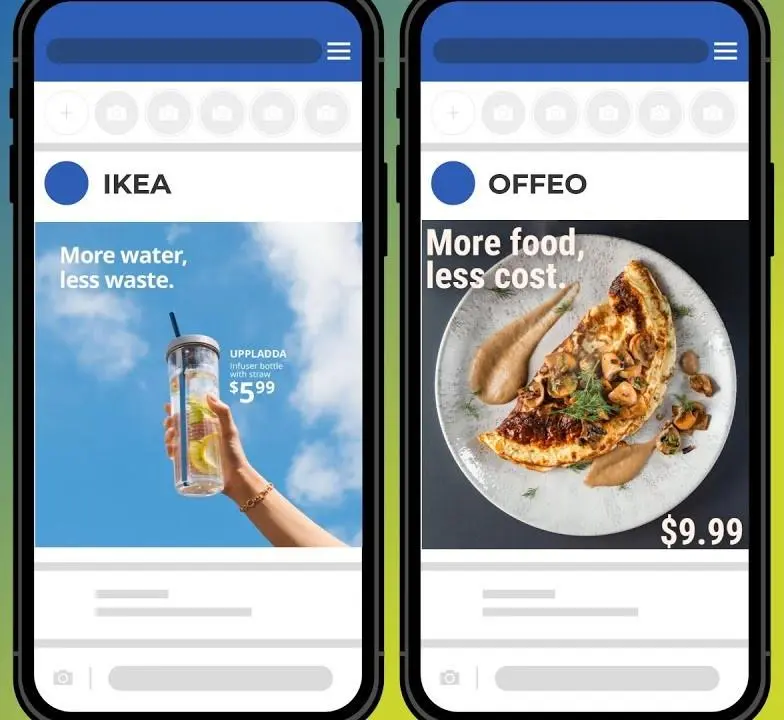
Different formats serve different jobs. A short video can demonstrate a product or show a service process, while a static image can make a simple offer easy to understand, and a carousel can help compare products or explain a sequence.
The important part is choosing the format that helps the audience understand the offer at that stage. The Meta ads resource library below includes a guide to Facebook ad formats and how they can support different campaign goals.
Audience and campaign architecture
Audience work involves more than creating a long list of interests. A useful structure combines:
- First-party data
- Relevant audience controls
- Exclusions
- Clear campaign roles
For example, prospecting campaigns can introduce a product to new people. Remarketing campaigns can speak to people who viewed a product or started a lead form. Retention campaigns can focus on existing customers who may be ready for an upgrade or related product.
Different groups shouldn’t receive the same message since a person seeing the brand for the first time needs a different explanation from a customer who has already purchased. This is why audience segmentation is closely linked to creative and offer strategy.
Testing, optimisation and scale
Good optimization isn’t random editing. It is a structured process of testing a clear hypothesis, reviewing the commercial outcome and deciding what to improve next.
A team might test whether customers respond more strongly to product demonstration or price transparency. Once a useful direction emerges, it can test the details like hook, format, or landing-page variation.
Changing every part of a campaign at once makes learning difficult.
Budget increases should follow evidence. A campaign may deserve more spend when the cost per qualified outcome is acceptable and the business can handle additional volume.
More spend isn’t a solution for a weak offer or low-quality lead flow.
Policy and account health
Ad delivery can be interrupted by policy issues in the ad, landing page or related business asset. A capable agency should recognise this risk during planning rather than treat disapprovals as an afterthought.
This includes reviewing claims, landing-page consistency and category-specific requirements. When an issue occurs, the response should begin with diagnosis rather than repeatedly duplicating the same ad.
The resource library below explains how Facebook ad disapprovals can stem from creative, destination or account-level issues.
How On Digitals approaches Meta campaigns
We approach Facebook and Instagram advertising as a connected growth system. The work begins before campaign launch and continues after media starts delivering.
1. Audit the business, offer and conversion path
The first step is to understand what the business sells, who it serves and what action matters most. This may involve reviewing the current:
- Offer
- Landing page
- Sales process
- Existing advertising data
- Local competitors
The goal is to identify the strongest starting hypothesis.
2. Build the measurement foundation
The next step is to define the conversion events, reporting rules and customer stages that will guide decision-making. This may include:
- checking Meta Pixel and Conversions API implementation,
- reviewing UTM tracking,
- mapping CRM status where available.
Measurement needs to reflect the real business model. A purchase isn’t measured in the same way as a booked consultation. A lead form isn’t the final result if the sales team hasn’t qualified the lead.
The more clearly the business defines value, the more useful the campaign data becomes.
3. Create a focused campaign and creative plan
The team then decides which campaign roles are needed. These may include:
- Prospecting
- Product discovery
- Lead generation
- Remarketing
- Retention
Each role needs a message that matches the audience stage.
Creative planning should make room for variation. A brand may need:
- product demonstration
- customer story
- comparison
- offer-led
- educational assets
Rather than relying on one “winning ad”, the aim is to build a repeatable library of useful concepts that can be tested and refreshed.
4. Launch tests and learn from qualified outcomes
Campaigns should start with defined hypotheses. Testing can focus on the offer, creative angle, audience signal or conversion path.
Early activity provides information, but it should be interpreted carefully. In fact, a low cost per click may not lead to useful sales, and a high volume of leads may not produce booked meetings.
We review the outcomes that matter to the business, then identify the part of the system that needs improvement.
5. Optimize and scale with commercial evidence
As campaigns collect evidence, budget and creative decisions can become more deliberate.
Therefore, stronger messages are developed further and weak landing-page steps are improved, while audience exclusions are refined and budget is moved toward campaign roles that support qualified outcomes.
This isn’t a promise of fixed ROAS or instant growth. The aim is to create a transparent process that makes the next investment decision more informed.
Meta ads strategies by business model
The right Meta ads strategy changes with the way customers buy. A campaign that works for a fast-moving ecommerce product may not suit a high-consideration B2B service.
| Business model | Common Meta ads role | What should be prioritised |
| Ecommerce | Product discovery, product-led campaigns, conversion activity and remarketing | Product feed quality, creative velocity, margin awareness and returning-customer logic |
| Lead generation | Generate and qualify enquiries | Conversion definition, lead form or landing page, speed to lead and CRM feedback |
| B2B | Support a longer consideration journey | Useful educational creative, lead quality, sales feedback and audience recency |
| Local services | Generate calls, bookings or quote requests | Local relevance, response process, clear service scope and mobile conversion flow |
| Brands entering Vietnam | Test local demand and build market relevance | Local language, creative adaptation, local proof and channel roles that match customer behaviour |
A business shouldn’t adopt a campaign structure merely because a competitor uses it. The first question should be whether the structure matches the offer, buying cycle and customer data available.
How On Digitals measures Meta advertising performance
Clicks, impressions and platform-reported conversions aren’t enough to judge an agency relationship. The measurement model should reflect the commercial outcome the business cares about.
For ecommerce, this may include purchases, new-customer acquisition cost, conversion value, margin context and repeat purchase behaviour where data is available. A campaign that creates revenue but leaves little contribution after variable costs should be reviewed differently from one that brings in profitable new customers.
For lead generation, the focus should move beyond form volume. Useful reporting can include qualified leads, booked meetings, sales-qualified opportunities and closed-won feedback. This helps distinguish between campaigns that create interest and campaigns that create sales potential.
For brand launches or earlier-stage discovery, direct conversion may not be the only signal. The business can review relevant reach, creative response, site behaviour, branded search growth or assisted outcomes where the measurement setup supports that view.
The reporting conversation should also explain what happened and what will happen next. A useful report doesn’t only list metrics. It identifies the learning, the risk, the decision and the next test.
How budget, fees and scope work
A Meta ads investment has more than one cost. Media spend is the amount paid directly to Meta for ad delivery. Agency fees cover the agreed strategy, campaign management, optimisation and reporting work. Additional costs may arise for creative production, landing-page work, tracking setup, product feeds, CRM integration or specialist tools.
| Cost area | What it may cover |
| Media spend | Budget paid to Meta for campaign delivery |
| Agency fee | Strategy, campaign operations, testing, optimisation and reporting |
| Creative production | Video, design, copywriting, creator content or photography |
| Conversion infrastructure | Landing pages, product feeds, tracking, CRM integration and analytics |
| Optional specialist work | Market research, translation, technical support or compliance review |
Agency pricing models can vary. Some engagements use a fixed monthly retainer. Others use a percentage of media spend, a project fee or a hybrid model. The right model should reflect the actual scope. A small media budget can still require significant work if creative or landing-page foundations need to be built.
Before starting, both sides should agree:
- what is included
- who is responsible for creative approvals
- how often reporting will be shared
- what business outcome the work is expected to support
What clients can expect in the first 90 days
The first 90 days are usually a learning period. The speed of learning depends on:
- Spend
- Conversion volume
- Sales cycle
- Demand
- Creative readiness
- Measurement quality
| Period | Main focus |
| First 30 days | Audit, tracking validation, offer and landing-page review, creative direction and initial campaign setup |
| Days 31-60 | Test creative angles, audience signals, offers and conversion-path hypotheses |
| Days 61-90 | Reallocate budget based on qualified outcomes, improve weak links and scale carefully where evidence supports it |
During the first month, the work should clarify the baseline. This may include identifying tracking gaps, fixing landing-page issues or aligning the definition of a qualified lead.
The second month usually produces more evidence about the creative, audience and offer combinations worth developing.
The third month is where the team can make more confident choices about what to continue, refine or pause.
A business with a long sales cycle may need more time to assess downstream revenue. A fast-moving ecommerce brand may receive purchase data sooner. In both cases, the priority is to avoid premature conclusions based on a few days of delivery.
How to choose a Facebook ads agency
The best agency isn’t simply the one that promises the lowest cost per lead or the fastest sales growth. A strong partner should be able to explain how it will work with your team, what it will measure and what it needs from you to succeed.
| Ask this question | A strong answer should include | A warning sign |
| What outcome will you optimize for? | A definition of qualified lead, purchase, revenue or another business result | A focus on clicks, reach or generic engagement alone |
| How will creative be tested? | A process for developing concepts, reviewing results and refreshing assets | “We will use the same assets until performance drops” |
| How will lead quality be measured? | CRM stages, sales feedback or agreed qualification criteria | Platform reporting is treated as the only source of truth |
| Who owns the data and account access? | Clear access, reporting and handover arrangements | Ownership or access is unclear |
| What will reporting show? | Results, learning, risks, decisions and next actions | A dashboard screenshot without interpretation |
| What happens if results weaken? | A structured audit across offer, tracking, creative, audience and landing page | Immediate budget cuts without diagnosis |
A clear agency relationship also depends on communication. The agency needs timely feedback on lead quality, inventory, sales capacity, creative approvals and commercial changes. The client needs clear explanations of performance and recommendations that connect with business decisions.
Explore our Meta ads resources
A Facebook ads agency should help clients understand the decisions behind paid social. These resources explain the main areas that shape Meta campaign performance.
- Which creative formats fit different campaign objectives?
- How to diagnose policy, destination and account-level rejection issues?
- How to plan a media budget around allowable cost and test requirements?
- Common issues in objectives, data, campaign structure, creative and landing pages?
- How audiences and customer data can support follow-up campaigns?
- How Meta and TikTok can play different roles in a paid-social mix?
Frequently asked questions (FAQs)
What does a Facebook ads agency do?
A Facebook ads agency plans, launches and improves advertising campaigns across Meta platforms. The work may include strategy, tracking, creative testing, campaign management, reporting and budget planning. The best agency relationships connect these tasks with a specific commercial outcome, such as qualified leads, purchases or bookings.
Is a Facebook ads agency the same as a Meta ads agency?
In most cases, yes. Facebook ads are managed through Meta ads Manager, which can run eligible campaigns across Facebook, Instagram, Messenger and other Meta placements. “Meta ads agency” is the broader term, while “Facebook ads agency” remains a common search term for businesses looking for paid-social support.
How much does it cost to hire a Facebook ads agency?
Costs vary based on media spend, campaign complexity, creative needs, tracking requirements and reporting scope. Some agencies charge a monthly retainer, while others use spend-based or project-based pricing. Businesses should separate the agency fee from media spend and from any additional creative or technical work.
Can an agency help with Meta Pixel, Conversions API and CRM tracking?
Yes. A capable agency can review whether website and CRM signals support the campaign goal. The exact scope depends on the engagement and the systems already in place. Tracking work should focus on meaningful conversions and a clear handoff between marketing and sales.
How long does it take to evaluate a Meta ads campaign?
The right evaluation period depends on budget, conversion volume and sales cycle. Early signals may appear soon after launch, but stable conclusions require enough data to assess quality.. A 90-day working framework often gives teams time to validate tracking, test creative and improve the conversion path.
Should we hire an agency or build an in-house paid social team?
An agency can be useful when a business needs specialist support without hiring a full internal team. An in-house team may be a better fit when paid social is already a large, continuous function and the business has the resources to manage strategy, creative, data and media operations internally. Some brands use a hybrid model, with internal ownership and external specialist support.
Build a Meta advertising system around business value
Meta ads can support product discovery, lead generation, ecommerce sales and customer retention. Results become more useful when business goals, campaign structure and sales follow-up support the same customer action.
On Digitals helps brands growing in Vietnam build that system. We combine paid-social planning, creative testing, conversion measurement and ongoing optimisation so campaign decisions are based on qualified commercial outcomes.
Talk with On Digitals about a Meta ads growth plan that fits your market and customer journey.

NEWEST POSTS
- Advertising Industry In Vietnam: The 2026 Trends, Channels and Market-Entry Strategy
- Best SEO Company in Vietnam: Latest Shortlist For Businesses
- How To Leverage Social Media For Customer Service Like A Pro?
- Social Media Post Tips – 8 Ways To Boost Engagement
- How To Use Social Media for Sales – In-depth Beginner Guide
Read more