
Insights
LinkedIn Ads vs Google Ads – Which Is Better For Lead Gen?
On Digitals
06/03/2026
36
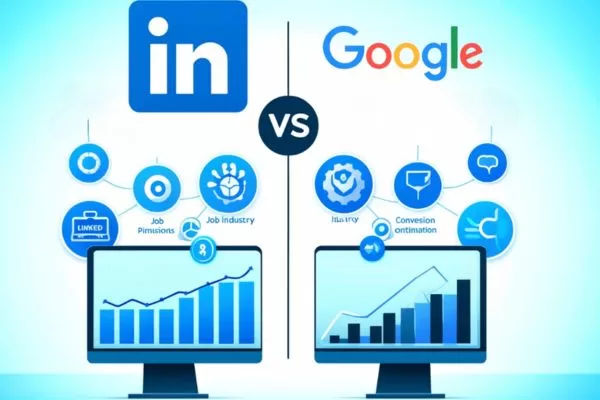
LinkedIn Ads vs Google Ads is a common debate for brands choosing between demand capture and demand creation. Each platform offers different strengths in targeting, intent, and cost efficiency for growth. Let’s explore which channel fits your goals, budget, and funnel strategy best!
Why should you choose between Google Ads and LinkedIn Ads?
Choosing the right paid channel depends on where your buyers are in the funnel and how they discover solutions. This comparison helps you decide whether search intent or professional targeting should drive your growth.
Google ads
When evaluating Linkedin ads vs Google ads, Google Ads stands out for brands that need fast demand capture and conversion-ready traffic. Powered by Google, the platform reaches users who are actively searching for products, services, and solutions. This makes it especially effective for performance-driven campaigns focused on leads and sales.
Google Ads also offers strong automation, bidding strategies, and cross-network reach across search, display, and video. Marketers can scale quickly while keeping close control over cost per acquisition and return on ad spend. This flexibility supports short-term growth goals and aggressive revenue targets.
Linkedin ads
LinkedIn Ads excels at connecting brands with professionals, job titles, and company-level audiences inside the network operated by LinkedIn, making it a strong choice in Google Ads vs Linkedin Ads for B2B planning. It enables precise targeting of decision-makers, industry leaders, and niche B2B segments. As a result, it is widely used for account-based marketing and long-cycle sales strategies.
For teams comparing Linkedin ads vs Google ads, LinkedIn becomes most valuable when brand authority and relationship building matter more than immediate clicks. Sponsored content, thought leadership, and retargeting help nurture demand over time. This approach strengthens credibility and supports complex B2B buying journeys.
Strategic reasons for choosing the right paid advertising channel
Intent-focused vs. professionally targeted reach
The core difference between Google Ads and LinkedIn Ads is how two platforms connect brands with potential buyers at different stages of the funnel. Google reaches users actively searching for solutions, while LinkedIn enables precise targeting of professionals based on roles, companies, and industry networks.
Google ads
Google Ads is built around user intent and shows ads to people actively searching for products, services, or answers. This makes it highly effective for capturing prospects who are already comparing options or preparing to buy. Brands can enter the funnel at the exact moment demand is expressed.
For example, a cloud storage provider can target queries such as “secure cloud storage for small businesses” or “best enterprise backup solutions.” Appearing at the top of search results allows the brand to intercept demand at the consideration or decision stage. As a result, campaigns often generate shorter sales cycles and faster conversions.
Linkedin Ads
LinkedIn Ads focuses on reaching audiences based on professional attributes such as job title, industry, seniority, and company size. This makes the platform especially powerful for B2B brands targeting decision-makers and niche professional segments. It supports highly refined audience selection that search-based platforms cannot easily replicate.
When comparing Linkedin ads vs Google ads, LinkedIn becomes the stronger choice for brands that need to educate, influence, and nurture professional buyers over time. For example, an enterprise software company can reach IT managers at large enterprises by targeting specific roles and industries. This approach helps build long-term authority, credibility, and relationships with key stakeholders.
Creative flexibility across campaign types
Google Ads delivers short, highly relevant messages aligned with user search intent and browsing behavior. Its ad formats prioritize clarity and speed to engage users who are actively looking or exploring.
Google ads
Google Ads focuses on speed, relevance, and intent-first delivery for performance-driven campaigns. Its formats are designed to match users’ actions across search, websites, and video.
- Search Ads: Appear at the top of results on Google, capturing users who are actively searching for specific solutions.
- Display Ads: Visual placements across partner sites to support retargeting and fast brand recall.
- Video Ads: Short, direct video formats delivered through YouTube to reinforce key messages quickly.
Overall, Google Ads prioritizes functional creatives over long-form storytelling to drive immediate action. Its intent-driven structure helps brands reach buyers at the moment of need. In the context of LinkedIn Ads vs Google Ads, this makes Google Ads especially ideal for lead generation and conversion-focused campaigns.
Linkedin ads
LinkedIn Ads focuses on professional engagement and content-led storytelling for B2B audiences. Its ad formats are designed to educate, nurture, and build credibility across the buyer journey.
- Sponsored Content: Promote blog posts, case studies, and reports directly in the feed on LinkedIn to support thought leadership.
- InMail Ads: Send personalized messages to users’ inboxes for event invitations or gated content offers.
- Video Ads: Present brand stories or product use cases in a professional, business-first format.
- Carousel Ads: Highlight multiple features, testimonials, or case studies within one ad unit.
When comparing LinkedIn Ads vs Google Ads, LinkedIn stands out for long-term B2B demand generation and professional relationship building. Its content-first approach helps brands educate decision-makers before they are ready to buy. This makes it especially effective for campaigns focused on trust, authority, and complex sales cycles.
Creative formats that support both education and conversion goals
Intent-based search targeting vs B2B demographic targeting
Precise targeting is the foundation of high-performing ad campaigns. Google and LinkedIn differ mainly in how they reach users through intent-based keywords and professional attributes.
Google ads
Google Ads is built around keyword-based targeting, allowing advertisers to match their ads with real-time search intent, which remains a key difference in Google adwords vs Linkedin ads comparisons. Brands bid on search terms closely related to their offers, so ads appear when users are actively looking for answers or solutions. For example, a cybersecurity company can target queries such as “best endpoint protection software” or “cybersecurity solutions for small businesses” to capture high-intent traffic.
This approach is strongest for businesses that solve a clearly defined problem and need fast, measurable actions. In practical channel planning, LinkedIn Ads vs Google Ads often highlights how keyword targeting drives immediate demand compared with professional audience targeting. Google also supports audience overlays such as demographics and custom intent segments, but these features mainly enhance the core keyword-driven model rather than replace it.
Linkedin ads
LinkedIn Ads delivers some of the most advanced professional targeting options in digital advertising. Advertisers can build audiences based on job title, seniority, company size, industry, skills, and even group membership. For example, a SaaS brand can focus only on HR Directors at technology companies with more than 500 employees.
This makes the platform especially powerful for B2B teams that need to reach decision-makers and niche professional segments. In practical channel planning, LinkedIn Ads vs Google Ads clearly shows how professional and industry-based targeting supports longer, relationship-driven buying journeys. As a result, LinkedIn Ads is best suited for brands focused on authority building, complex sales cycles, and high-value accounts.
Campaign budgeting and spend strategy
Both advertising platforms provide flexible budgeting tools for different campaign goals. However, their spend structures and optimization controls vary significantly.
Google ads
Google Ads simplifies budget management by letting advertisers set spend limits at the campaign level for consistent control. This centralized structure helps distribute budgets efficiently across ad groups while keeping overall investment predictable. It also supports daily budgets and automated Smart Bidding to optimize toward clicks or conversions.
With built-in automation from Google, Google Ads becomes highly effective at prioritizing high-intent placements within a fixed budget. For example, an e-commerce brand can focus spending on high-value keywords while Smart Bidding adjusts bids to maximize ROI. This setup is best for businesses that prefer simple, scalable budget control with minimal manual optimization.
Linkedin ads
With more advanced budget controls, advertisers can manage spend at the ad set level on LinkedIn. This structure makes it easier to run multiple audience segments with different goals, creatives, and messaging in parallel, especially when comparing LinkedIn Ads vs Google Ads for budget flexibility. Marketers can apply daily or lifetime budgets and choose between manual or automated bidding for clicks, impressions, or lead forms.
For teams running multi-segment B2B campaigns, this setup offers far greater flexibility in budget allocation. A consulting firm, for example, can assign higher budgets to C-suite audiences while testing smaller budgets for mid-level professionals in emerging industries. This approach is ideal for marketers who need precise budget control across distinct professional segments.
Assessing campaign results through metrics and reporting insights
Tracking and optimizing results depends on how deeply each platform explains what drives outcomes. Both platforms provide strong reporting tools, but their data focus and decision value differ.
Google ads
Google Ads delivers highly detailed performance data that helps advertisers optimize campaigns down to the keyword and conversion level. Its reporting is built for performance teams that need to connect spend directly to business results. This makes it especially suitable for ROI-driven growth strategies.
Core performance metrics and insights include:
- Keyword performance: Identify which queries generate clicks, conversions, and impressions.
- Audience insights: Evaluate how demographic layers and custom audiences perform.
- Attribution models: Understand how ads contribute across the full journey, from first touch to final conversion.
For example, a fitness app can track how keywords such as “best weight-loss apps” convert and reallocate budget to the highest-performing terms, especially when evaluating LinkedIn Ads vs Google Ads for performance-driven growth.
Best for: Brands that prioritize measurable performance, optimization, and return on ad spend.
Linkedin ads
LinkedIn Ads emphasizes engagement and audience-level insights that reflect how professional users interact with content. Its analytics are designed to help B2B marketers evaluate influence, relevance, and audience quality rather than only direct conversions. This makes it particularly valuable for long-term demand generation.
Primary measurement metrics and actionable insights include:
- Engagement metrics: Track likes, comments, shares, and other interaction signals.
- Audience breakdowns: Analyze performance by job title, industry, and seniority.
- Lead form analytics: Measure how effectively campaigns generate professional leads.
For example, a software company promoting a white paper can identify which industries and job roles engage most and refine future targeting accordingly.
Best for: brands focused on credibility, professional reach, and relationship-driven growth.
In the comparison of LinkedIn Ads vs Google Ads, Google Ads excels in granular performance and ROI optimization, while LinkedIn Ads provides deeper insight into professional engagement and audience quality for B2B relationship building.
Performance measurement frameworks for smarter optimization and decision making
Using automation and AI tools to drive better marketing results
Automation helps marketers reduce manual work while improving performance across modern ad platforms. Both Google and LinkedIn apply AI differently, depending on campaign goals and audience behavior.
Google ads
Google Ads provides automation tools designed to maximize conversion performance and operational efficiency. Smart Bidding automatically adjusts bids in real time using signals such as device, location, and time of day. This allows advertisers to stay aligned with cost and performance goals without constant manual optimization.
Another key capability is Responsive Search Ads, which dynamically combine headlines and descriptions to match user intent. These variations are continuously tested to identify the best-performing message combinations. As a result, advertisers can scale campaigns faster while maintaining consistent performance.
Linkedin ads
LinkedIn Ads applies automation to improve professional targeting and expand qualified reach across business audiences. Audience Expansion automatically broadens targeting to include users with similar professional attributes and behaviors. Automated bidding also helps optimize delivery based on engagement and lead-generation objectives.
When evaluating LinkedIn Ads vs Google Ads, LinkedIn’s automation is best suited for expanding visibility within professional networks and account-based audiences. For example, a consulting firm can use Audience Expansion to reach professionals similar to its existing high-performing segments. This approach simplifies targeting while supporting scalable B2B growth.
Ad placement channels and audience engagement context
Ad placement directly influences how users discover, interact with, and respond to your campaigns. Google Ads and LinkedIn Ads approach placements differently based on user behavior and content context.
Google ads
Google Ads gives advertisers access to a wide ecosystem of placements that cover multiple stages of the customer journey. Brands can appear in search results for high-intent queries and extend visibility through display environments for remarketing and awareness. Video placements on YouTube further support engagement during content consumption.
This multi-channel coverage allows advertisers to combine demand capture with demand creation. For example, a travel agency can use search placements to reach users looking for “last-minute vacation deals” and then retarget visitors through display ads. As a result, Google Ads supports both immediate conversions and ongoing brand exposure.
Linkedin ads
LinkedIn Ads focuses on placements that blend naturally into professional browsing experiences. Sponsored content appears directly in users’ feeds, while message-based formats deliver personalized outreach to inboxes. These placements are designed to feel contextual and relevant within business-oriented environments.
LinkedIn placements are especially effective for reaching professionals in career and industry contexts. For instance, an event management company can promote an industry conference directly inside users’ feeds to capture attention from decision-makers. This placement strategy becomes even clearer when comparing LinkedIn Ads vs Google Ads for professional audience targeting.
Placement environments that influence attention context and engagement quality
Finding the right platform to support your marketing goals
Both platforms bring distinct strengths to modern performance and B2B marketing. Your final choice should reflect your objectives, funnel stage, and audience behavior.
When Google Ads becomes the top channel for performance growth
Built on the ecosystem of Google, this platform is designed to capture demand at the exact moment users express intent.
- If your main goal is to capture high-intent leads and drive fast conversions.
- When your buyers are already searching for the solutions you sell.
- If your campaigns require measurable ROI and granular performance optimization.
For performance-driven teams, LinkedIn Ads vs Google Ads often comes down to speed and purchase intent. Google Ads fits best when immediate demand and lower-funnel impact are your top priorities. This makes it ideal for brands focused on scalable conversions and revenue growth.
When Linkedin Ads fits your strategy best
Powered by the professional network of LinkedIn, this platform is purpose-built for reaching business decision-makers.
- To reach decision-makers and highly specific professional segments.
- If your strategy focuses on B2B marketing, thought leadership, or long sales cycles.
- When engagement and credibility-building are key campaign objectives.
For B2B and relationship-led growth, the value of professional reach becomes clear in a LinkedIn Ads vs Google Ads comparison. LinkedIn Ads supports brand authority, trust, and multi-touch nurturing across complex buying journeys. This makes it especially effective for high-consideration and enterprise-focused strategies.
Guidance for selecting platforms aligned with business growth objectives
FAQs about the Linkedin ads vs Google ads
Marketers often struggle to decide between intent-driven search advertising and professional network targeting. The following FAQs clarify strategic differences, performance expectations, and real-world use cases:
Which channel delivers higher-quality B2B leads?
For most B2B teams, the right choice in LinkedIn Ads vs Google Ads depends on how complex your buying journey is. LinkedIn performs better when you need to reach specific job titles, decision-makers, and niche industries. Google Ads is usually stronger when your prospects already know what they want and are actively searching for solutions.
Which platform is best for short-term conversion results?
If speed is your main objective, Google Ads usually delivers faster results because it captures users with immediate intent. Search-driven campaigns allow advertisers to reach people who are already comparing products or services. This shortens the path from click to conversion and improves short-term performance.
Does LinkedIn Ads have higher CPC than Google Ads?
Cost differences in LinkedIn Ads vs Google Ads are largely driven by audience type and competition. LinkedIn often has higher cost per click because advertisers compete for limited, high-value professional audiences. However, for B2B campaigns with high deal value, the higher cost can still be justified by lead quality.
Which channel helps build stronger brand credibility?
For brand positioning and thought leadership, LinkedIn Ads is typically more effective. Its feed-based and content-focused formats allow brands to educate and nurture professional audiences. This helps build trust and long-term visibility within specific industries.
Is it better to combine both platforms for growth?
Many teams achieve better results by combining both channels in a single strategy rather than choosing only one in LinkedIn Ads vs Google Ads. Google Ads can capture demand at the bottom of the funnel, while LinkedIn Ads supports awareness and consideration among professional audiences. Together, they create a more balanced full-funnel acquisition model.
Common questions guiding smarter platform selection and planning decisions
Conclusion
LinkedIn Ads vs Google Ads each serve different roles in a high-performing marketing funnel, with Google capturing demand and LinkedIn building professional influence. The right choice depends on your goals, buying cycle, and the type of audience you need to reach. Contact On Digitals today to build a smarter, full-funnel strategy that turns both platforms into measurable growth for your brand!
Read more