
Insights
SERP Analysis Guide: How to Analyze Google SERPs for Higher Rankings
On Digitals
22/01/2026
45
To rank on Google today, high-volume keywords alone are not enough. Understanding search intent through SERP analysis is essential to know what Google truly wants to show users. This guide introduces practical Google SERP analysis methods and explains how to do SERP analysis effectively, helping you identify real ranking opportunities and avoid wasting effort on keywords you cannot win.
What is SERP analysis and why it matters for SEO?
Understanding what is SERP analysis is the essential starting point for any high-performing digital strategy. Rather than relying solely on theoretical data, this process focuses on the reality of what Google is currently rewarding in its search results.
The Nature of Search Result Examination
At its core, SERP analysis is the systematic process of examining and interpreting search engine results pages for target keywords. This practice allows marketers to identify the specific types of content favored by Google, the features dominating the screen, and the specific entry points where a website can realistically rank.
SERP analysis studies search results to identify real ranking opportunities
A comprehensive what is a SERP analysis goes far beyond checking the top ten blue links. It involves a meticulous evaluation of every element on the page—ranging from featured snippets and “People Also Ask” boxes to image packs and video carousels—to understand how they influence user behavior.
Distinguishing Position from True Visibility
To execute an effective strategy, it is crucial to differentiate between three often-confused concepts:
- Position: The numerical spot where a page appears relative to other organic results (1st, 2nd, 3rd, etc.).
- Ranking: The specific standing of a URL within the search results for a query, typically tracked within the top 100 positions (distinct from ‘Indexing’, which is simply being present in Google’s database).
- Visibility: The actual prominence of a result on the user’s screen, which varies significantly depending on the device (Mobile vs. Desktop) and the presence of SERP features.

Visibility matters more than position when SERP features push results below the fold
High visibility is often more important than a high position; a top-ranked organic result may have poor visibility if it is pushed “below the fold” by heavy advertising or AI-generated overviews.
The Critical Role of SERP Feature Evaluation
Traditional SEO focused heavily on search volume, assuming that high numbers automatically equaled high traffic. However, SERP features analysis reveals that volume alone can be misleading. A keyword might attract 10,000 searches a month, but if Google answers the query directly via a Knowledge Panel or Featured Snippet, the “click potential” drops significantly.
Modern analysis exposes the reality behind the data:
- High-volume keywords are often crowded with ads and shopping results, leaving very little “organic real estate.”
- Lower-volume keywords may offer a “cleaner” SERP with fewer distractions, leading to a much higher click-through rate (CTR).
Strategic Keyword Selection Through Ranking Gaps
The ultimate goal of SERP ranking analysis is to identify “ranking gaps”—specific opportunities where a website can realistically compete and win. This prevents the costly mistake of targeting keywords dominated by untouchable authority sites or queries where Google’s own features have eliminated the need for a user to click.
By prioritizing actual SERP conditions over raw search volume, SEO professionals can move beyond impressive-looking spreadsheets and focus on strategies that deliver tangible business results.
Decoding SERP features and user intent
The modern Google search result page has evolved from a simple list of links into a complex ecosystem. Conducting a thorough SERP features analysis is no longer optional; it is the only way to determine if a keyword will actually drive traffic to your site.
The Impact of Visual and Interactive Features
Google uses specific features to answer user queries as quickly as possible. These features fundamentally change the “click-through rate” (CTR) of the page:
- Featured Snippets (Position Zero): These answer boxes appear at the very top. While prestigious, they can significantly reduce the CTR of the organic results below them, as many users find the answer without needing to click through.
- People Also Ask (PAA): These expandable questions keep users on Google’s platform. In your SERP position analysis, view these as both a threat (reducing clicks) and an opportunity to appear multiple times if you provide concise, direct answers.
- Knowledge Panels: These pull data from various sources to provide a factual overview. When an online SERP analysis shows a large knowledge panel, it is a strong signal that organic click potential for that query is low.
- AI Overviews: This generative AI feature is the most significant shift in search history. Current industry estimates suggest these summaries can occupy massive screen space and potentially reduce organic clicks by 40% or more for certain informational queries.
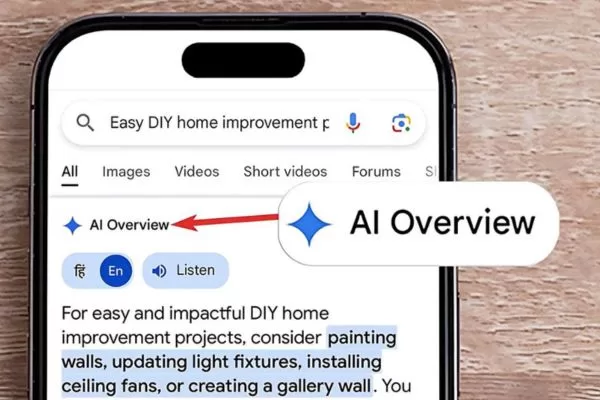
Visual SERP features often lower organic CTR by answering queries directly
Aligning Content Format with Search Intent
A common reason quality content fails to rank is a “format mismatch.” Your SERP analysis reveals exactly what Google thinks the user wants to see:
- Visual Intent: If image packs and video carousels dominate the page, Google believes the user wants visual content. Trying to rank a long text article here is a losing battle.
- Transactional & Commercial Intent: If the page is filled with Shopping results and product carousels, the query is Transactional. If it features mostly comparison sites and “top 10” lists, it is Commercial Investigation intent. SERP position spread analysis will show that simple blog posts are often pushed too far down to be effective for these queries.
Mapping SERP Composition to Intent Types
Google categorizes every search into a specific intent, and the layout of the page changes to match:
| Intent Type | Common SERP Features | Content Strategy |
| Informational | Featured Snippets, PAA, Blog Posts | Guides, How-to articles, Definitions |
| Navigational | Site Links, Brand Knowledge Panel | Optimized Homepage, Brand Bios |
| Commercial | Review sites, Comparison tables | Listicles, “Best of” reviews |
| Transactional | Shopping ads, Product pages, Local Pack | Product descriptions, E-commerce pages |
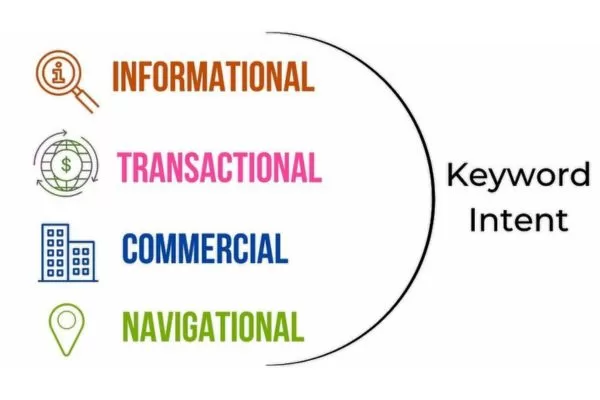
SERP layouts clearly reveal the search intent behind each keyword
The Strategic Value of Intent Mapping
Performing a Google SERP analysis allows you to map features to intent before you start writing. If you create a blog post for a keyword that Google has labeled as “Transactional” (showing only product pages), no amount of optimization will help you rank.
Through SERP features analysis, you ensure that your content format aligns with Google’s expectations, saving time and resources while focusing only on keywords where you can realistically win.
5 strategic steps to perform a professional SERP analysis
Conducting effective SERP analysis requires a systematic approach that goes beyond simply looking at the top ten results. This five-step framework will help you extract actionable insights and make data-driven decisions about which keywords to target and how to approach them.
Step 1: Evaluate click potential and traffic reality
The first step in learning how to do SERP analysis is distinguishing between search volume and actual click opportunity.
- The “Above the Fold” Test: Open an incognito window and search for your keyword on both desktop and mobile devices. Measure how much screen space is taken up by ads, AI overviews, and featured snippets before the first organic result appears. On mobile, organic results are often pushed even further down, significantly affecting traffic.
- Zero-Click Reality: Over 50% of searches now end without a click because Google provides the answer directly on the page. In your SERP ranking analysis, identify if your keyword is “satisfied” by a snippet; if so, your actual traffic will be much lower than the volume suggests.
- Targeting High-Opportunity Keywords: Look for “clean” SERPs where at least three organic results are visible without scrolling. These are the keywords that drive real revenue, not just vanity metrics.

Evaluating click potential reveals whether a keyword can drive real traffic
Step 2: Analyze competitor authority (domain and URL)
Once you confirm the traffic is real, use Google SERP analysis to see if you can realistically compete with the current winners.
- Domain vs. URL Strength: Tools like Ahrefs or Moz give you a Domain Authority (DA) or Domain Rating (DR) score. If the top five results are all DR 80+ (like Wikipedia or Forbes) and your site is DR 30, you face an uphill battle.
- The Link Gap: Perform a SERP position analysis on specific URLs. If the #1 page has 500 high-quality backlinks and you have zero, you need to know that on-page SEO won’t be enough—you’ll need a dedicated link-building plan.
- Niche Relevance vs. Authority: Check if the ranking sites are broad authorities or niche experts. A smaller site with high “Topical Authority” (specializing only in your subject) can often outrank a massive site that only covers the topic broadly.
Step 3: Audit content type and on-page structure
You must match the “format” that Google already prefers. Use your online SERP analysis to categorize the top results:
| Format Type | Characteristics | Best For… |
| Ultimate Guides | 2,000+ words, deep coverage | “How to…”, “Complete guide” |
| Listicles | Scannable, numbered lists | “Best…”, “Top 10…” |
| Comparison | Pros/cons, side-by-side tables | “X vs Y”, “Alternatives” |
| Product Review | Personal experience, specs | “X review”, “Is X worth it” |
Don’t try to rank a short blog post for a keyword where Google is only showing 3,000-word comprehensive guides. Match the heading structures (H2s and H3s), media types (images/videos), and the overall User Experience (UX) flow of the top performers.
Step 4: Manually assess content depth and quality (E-E-A-T)
While tools give you numbers, free SERP analysis requires a human eye to find “content gaps.”
- Identify Information Gaps: Read the top five articles. What did they miss? If every article on “starting a podcast” talks about microphones but ignores “monetization,” that is your gap to fill.
- The E-E-A-T Framework: Google prioritizes Experience, Expertise, Authoritativeness, and Trustworthiness. Check for “Information Gain”—does your content provide something new that the top 10 results don’t have? Look for real author bios and first-hand experience (original photos/data). If they look like “copycat” content, you can beat them by adding original research.
Step 5: Monitor SERP volatility and stability
The final stage of SERP position spread analysis is checking how much the rankings “shuffle” over time.
- High Volatility: If the top ten results change every week, Google hasn’t decided what the “best” answer is. This is an opportunity to break in, but your ranking may be unstable.
- Stable SERPs: If the same three sites have held the top spots for a year, the competition is entrenched. Cracking the top ten will require a superior content piece and a stronger backlink profile, but once you arrive, your traffic will be more predictable and long-lasting.
Top free and online SERP analysis tools
Effective SERP analysis doesn’t necessarily require expensive tools. While premium platforms offer advantages, you can conduct thorough free SERP analysis using a combination of manual methods and free browser extensions.
Manual Review (The No-Cost Foundation)
The most accurate way to understand the search landscape is through direct observation. This method is the core of any online SERP analysis.
- Incognito Mode & Local Search: Always search in private browsing to avoid personalized results. However, since Google still uses IP-based tracking, use a tool like “GS Location Changer” (extension) or a VPN to simulate searching from different cities or countries accurately.
- Search Operators: Use Google’s “secret” commands to filter results for free SERP analysis:
- site:example.com: See how many pages from a specific site rank.
- intitle:”keyword”: Find how many competitors used the exact keyword in their title.
- allintitle:”keyword”: Shows how many pages have the entire phrase in the title—a key metric for measuring keyword difficulty.
- related:example.com: Identify sites that Google considers similar to a specific competitor.
- Geographic Testing: Manually check results from different locations (e.g., searching from different cities) to see how local intent changes the SERP layout.

Manual SERP review reveals real search behavior without tools
Browser Extensions (Instant Data Overlays)
Free browser extensions allow you to perform a SERP ranking analysis without leaving the Google search page.
- SEOquake: This tool overlays a “data bar” on every search result. It shows you the domain’s age, Google index count, and basic SEO parameters instantly.
- MozBar: This is the industry standard for checking Domain Authority (DA) and Page Authority (PA). Note: These are third-party metrics, not official Google ranking factors, but they serve as excellent proxies for relative strength.
- Keyword Surfer: A free alternative to show estimated search volume and keyword ideas directly in the Google search bar.
- Data Export: Tools like Thruuu (Awesome SERP Analyzer) allow you to download a comprehensive breakdown of the top 100 results, including word counts and image usage, into a spreadsheet for free.
Premium Platforms (For Professional Scale)
When you need to perform a comprehensive Google SERP analysis for hundreds of keywords, professional tools are worth the investment.
| Tool | Best For… | Key Features |
| Ahrefs | Backlink & Volatility Analysis | Shows historical ranking patterns and identifies “Content Gaps” (keywords your competitors have that you don’t). |
| Semrush | Feature Tracking | Excellent for SERP features analysis; it tracks exactly how snippets and PAA boxes impact your visibility. |
| Surfer SEO | Content Optimization | Analyzes the top-ranking pages to provide a specific “recipe” of keywords, word count, and structure needed to rank. |
| Mangools | Ease of Use & Budget | A user-friendly middle ground. Their SERPChecker provides detailed metrics and estimated visits at a lower price point. |
Turning insights into rankings: How to apply your findings
Conducting thorough SERP analysis is only valuable if you translate those insights into actionable improvements. This section bridges the gap between analysis and implementation, showing you how to apply your findings to achieve better rankings.
Content Alignment: Meeting and Exceeding Standards
The most fundamental step is ensuring your content matches what Google is already rewarding.
- Format Matching: If the top results for a keyword are all “Top 20” listicles, a short descriptive blog post will likely fail. You must match the expected format first, then aim to exceed it in quality.
- Structural Mirroring & Entity Coverage: Identify the “non-negotiable” topics and entities (key concepts, people, or things). If every top-ranking article on “content strategy” covers “audience research” and “distribution,” your content must include those sections to be considered topically authoritative by Google’s algorithm.
- The Unique Value Layer (Information Gain): Once you’ve met the baseline, use the “content gaps” you found to differentiate yourself. Add original research, first-hand expert quotes, or a unique perspective that competitors missed. Google increasingly rewards “Information Gain”—content that adds new information to the existing index.

Match SERP standards first, then add unique value to stand out
Snippet Optimization: Capturing “Position Zero”
If your Google SERP analysis reveals a Featured Snippet, you have a direct template for how to “steal” that spot.
- For Paragraph Snippets: Write a clear, 40–60 word answer directly below an H2 or H3 heading that uses the target question.
- For List Snippets: Use proper HTML bullet points or numbered lists. Ensure your list is either more comprehensive or more scannable than the current one.
- For Table Snippets: Create a clear comparison table. This is highly effective for “Best vs. X” or price-comparison keywords.
- PAA (People Also Ask) & AI Overview Strategy: Note every question in the PAA box and use them as subheadings. Answering these questions clearly also increases your chances of being cited as a source in Google’s AI Overviews.
Strategic Keyword Filtering
The most strategic result of SERP features analysis is knowing which keywords to ignore. Even a high-volume keyword can be a waste of time if the SERP is too crowded.
The Opportunity Tier System
Organize your keyword list into tiers based on your findings:
| Tier | Opportunity Level | Action Plan |
| Tier 1 | High | Focus here. Realistic authority match + high organic real estate. |
| Tier 2 | Medium | Needs more resources. Might require heavy link building or highly specialized expert content. |
| Tier 3 | Aspirational | Target these in the future once your site authority grows. |
| Avoid | Zero/Low | Red Flags: AI Overviews fully satisfy the intent, or results are dominated by untouchable brands. |
The “Avoid” List (Red Flags)
Based on your SERP position spread analysis, you should skip keywords if:
- The organic results are pushed so far down by ads and AI that there is no “click potential.”
- The SERP is exclusively dominated by household brand names or major publications.
- An AI Overview provides a complete answer, resulting in a “zero-click” search.
Frequently asked questions
Here are quick answers to the most common questions about SERP analysis and its importance in SEO.
What is the difference between SEO and SERP analysis?
SEO is the overall process of improving a website’s visibility in search engines, covering technical optimization, content, and link building, while SERP analysis is a focused research step that examines the actual search results for specific keywords. By analyzing what Google already shows and why, SERP analysis helps align your SEO strategy with real search intent, ensuring your optimization efforts target achievable opportunities instead of guessing what might work.
Why do high-volume keywords sometimes get very low clicks?
The frequency depends on volatility: stable keywords usually need quarterly reviews, while highly competitive or news-driven topics benefit from monthly or even weekly checks. You should always run a fresh analysis after major Google algorithm updates or if you notice a sudden drop in your rankings.
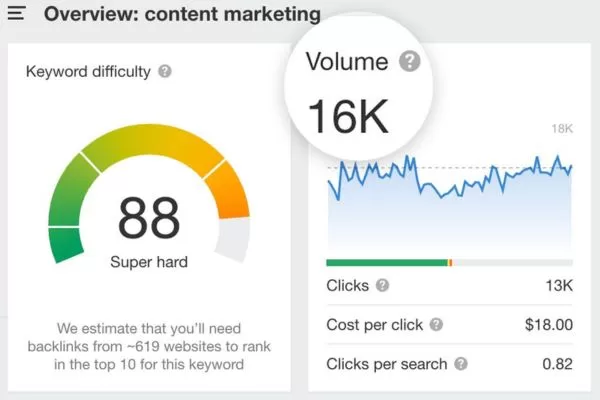
High-volume keywords can deliver low clicks, so regular analysis is essential
How often should I re-analyze the SERP for my target keywords?
The frequency of SERP analysis depends on how volatile the SERP is: stable keywords usually need quarterly reviews, while moderate-volatility keywords benefit from monthly SERP ranking analysis to track feature and competitor changes. Highly volatile or fast-moving topics may require weekly or even daily checks. In addition, you should always run a fresh Google SERP analysis after major algorithm updates, sudden ranking drops, or before launching new or updated content to ensure your strategy remains aligned with current SERP conditions.
Conclusion
SERP analysis is not a one-time task but a core mindset that should guide every SEO decision. Successful SEO professionals know that keyword data alone is meaningless unless it is grounded in a real understanding of what Google actually displays and prioritizes for each search query.
By making SERP analysis a consistent habit, you can base content creation, ranking recovery, and long-term strategy on real opportunities rather than assumptions. Regularly reviewing the search results helps you understand user intent, competitive shifts, and Google’s evolving preferences, leading to more accurate decisions and stronger SEO performance over time.
In an ever-evolving digital landscape, possessing the right knowledge is your greatest competitive advantage. Visit On Digitals to stay updated with sharp marketing strategies and the latest trends for 2025. If you are ready to break through revenue ceilings and elevate your brand, our team of experts is dedicated to providing the most optimized solutions tailored to your needs.
Read more