
Google Ads vs Facebook Ads: How to Choose by Budget and Customer Journey
Vincent
16/10/2025
47
Google ads is often the stronger first channel when people already search for the product, service or solution you sell. Facebook ads, managed through Meta Ads Manager, can be more useful when people need to discover an offer, see how it works or return after an earlier visit. The better choice depends on demand maturity, creative readiness, sales cycle and the customer action your business needs next.
Google ads vs Facebook ads in 60 seconds
Google ads and Facebook ads do not solve the same problem in the same way. Google Search campaigns respond when a person expresses a need through a query. Facebook and Instagram campaigns reach people while they are consuming content or exploring products in a social environment.
Start with Google ads when customers already know what to look for.
Start with Facebook ads when your offer needs to be introduced or remembered before people begin searching.
Use both only when each channel has a distinct role and the business can measure the journey between them.
| If your business needs to… | Better first move | Why |
| Reach people looking for urgent help | Google ads | The customer is already searching for a solution |
| Generate local bookings or quote requests | Google ads | Search queries can reveal service and location intent |
| Introduce a visual consumer product | Facebook ads | Video and imagery can make the offer easier to understand |
| Create interest in a new category | Facebook ads | Customers may not yet know what to search for |
| Compare products with clear existing demand | Google ads, then Meta remarketing | Search captures comparison intent while Meta supports follow-up |
| Test one clear offer with a limited budget | One channel first | Splitting a small budget can produce too little learning on both platforms |
The goal is to choose the channel that best matches how your customer moves from interest to action.
What is the real difference between Google ads and Facebook ads?
The core difference is whether the campaign responds to demand that already exists or helps create interest before a customer actively searches.
Google ads includes:
- Search
- Shopping
- YouTube
- Display
- Demand Gen
- Performance Max
In this comparison, Google ads mainly refers to Search-led and Shopping-led demand capture. These formats are especially useful when a buyer is looking for a product or answer immediately.
Facebook ads is commonly used as shorthand for Meta advertising across Facebook and Instagram. Meta campaigns can also appear in other eligible placements. They are often useful when a brand needs to:
- create attention through visual content
- develop consideration over time
- reconnect with people who already interacted with the business
A customer journey may include both environments. Someone may see a product demonstration on Instagram, search Google for reviews later and then return through a remarketing ad.
This is why platform choice should begin with customer behaviour rather than a universal funnel diagram.
Google ads vs Facebook ads
| Criterion | Google ads | Facebook ads |
| Main customer signal | Search query, product research or known Google demand | Creative response, engagement, first-party data and conversion signals |
| Strongest role | Capture existing demand | Create demand, develop consideration and support remarketing |
| Typical user state | Often active and problem-aware | Often browsing, discovering or returning |
| Creative requirement | Clear relevance between search, ad and landing page | Strong visual concept, clear offer and regular creative variation |
| Common path to conversion | Search → relevant page → call, form or purchase | Discovery → product or landing page → follow-up → conversion |
| Good fit | Local services, B2B research, high-intent products and comparison-led ecommerce | Visual products, launches, lifestyle offers and creator-led commerce |
| Main risk | Paying for irrelevant queries or sending intent to a weak page | Broad delivery without enough creative depth or a clear conversion signal |
| Measurement priority | Qualified intent, bookings, purchases, conversion value and revenue | New-customer cost, qualified leads, creative learning and assisted demand |
As you can see search campaigns can attract poor-fit traffic when keywords are broad, while Meta can create sales when the product and remarketing journey are strong.
The point is to understand what each platform can do well before assigning it a job.
When should you start with Google ads?
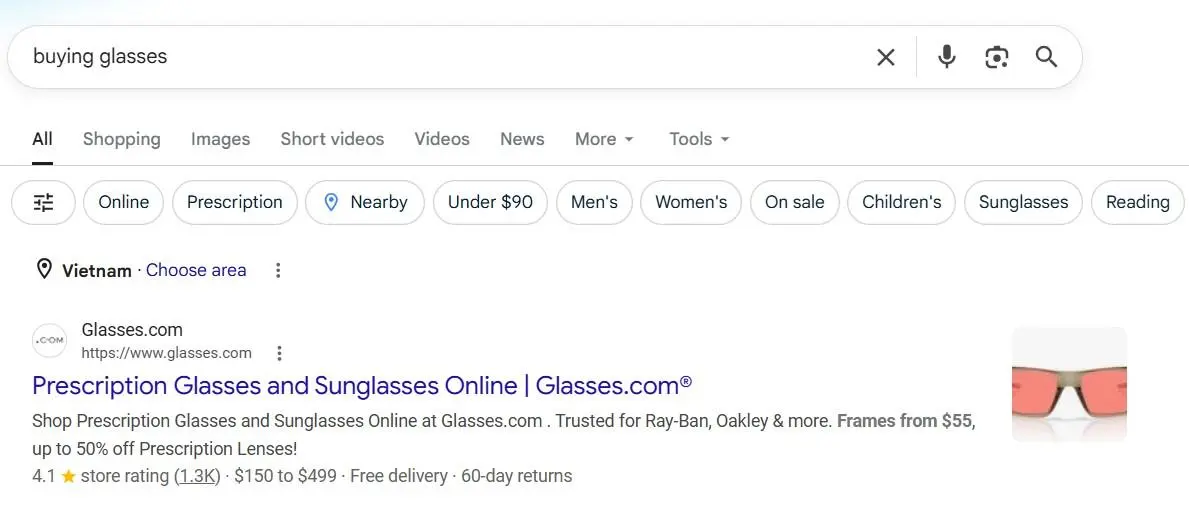
Start with Google ads when people already use search to find the kind of product or service you offer. The campaign should match the query with a relevant page and a clear next step.
When customers have visible search demand
Search demand can take different forms. A person may search for various information formats, and each query offers a clue about what they need.
For example, someone searching for “commercial air conditioning maintenance” already understands the service category. They may be comparing providers, checking availability or looking for a quote. A Search campaign can address this need directly with a specific service message, location detail and conversion path.
Google ads is especially useful when the customer’s question is clear. It is less effective when a business hasn’t defined the offer or when people don’t know that the product category exists.
When the need is urgent or location-based
Google ads can be a strong starting point for urgent services because the buyer is already trying to solve a problem. Repair services, appointment-based care, legal support, technical assistance and local bookings often fit this pattern.
The campaign should be precise. It needs relevant keywords, realistic service areas and a landing page or call process that makes contact easy. A business shouldn’t buy clicks from locations it cannot serve or from searches unrelated to its actual service.
Fast response also matters. If an enquiry arrives but no one follows up promptly, the advantage of search intent can disappear.
When buyers research before making a high-consideration decision
Google ads isn’t limited to quick purchases. B2B services, software, professional consulting, industrial equipment and financial products can all benefit from Search because buyers often research actively before deciding.
A person may compare providers, read case studies or evaluate technical requirements. Search can still be valuable because it helps the business enter the consideration set at the moment research begins.
The landing page should respect that stage. A high-consideration buyer may need evidence, process details or a useful guide before they are ready to book a consultation.
When Search shouldn’t be your first move
Google ads is less suitable as a first channel when search demand is limited or unclear. This can happen:
- when a product is new
- when customers use vague language
- when the offer needs visual education before it makes sense
It can also be a poor starting point when the website cannot explain the offer, the sales process is slow or the business measures only clicks. Search intent is valuable, but it cannot rescue a weak conversion path.
Businesses that want help with keyword strategy, Search campaigns and conversion measurement can explore our Google ads services.
When should you start with Facebook ads?
Start with Facebook ads when people need to understand or remember the offer before they are likely to search for it. Meta can also be useful when a business has strong customer data and wants to create stage-specific follow-up campaigns.
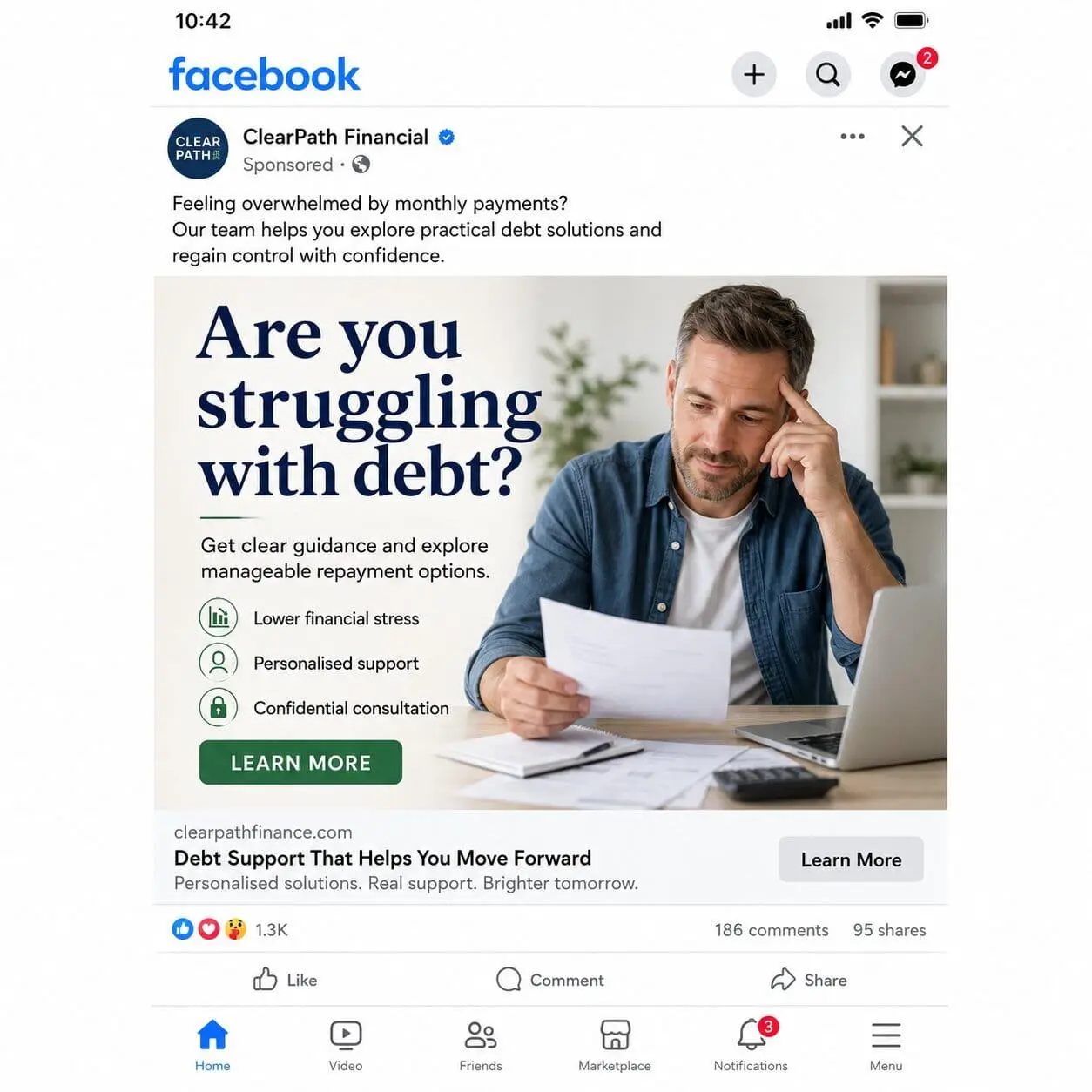
When the product benefits from visual discovery
Many offers are easier to understand through video and imagery. Fashion, beauty, home products, food, travel, fitness and lifestyle categories often benefit from visual-first creative because customers can quickly see the product in context.
The visual should do more than make the ad attractive by clarifying the use case, product benefit or reason to care. A good product demonstration can answer a question that a text-only ad would leave unresolved.
This doesn’t mean visual products should ignore Google. A customer may discover a product on Instagram and later search for the brand, product type or reviews. Meta helps create the initial interest, while Google may capture the next step.
When the category is unfamiliar or search demand is still forming
If customers don’t yet know what to search for, Google Search cannot capture demand that hasn’t been expressed. A new consumer product or unfamiliar category may need discovery activity first.
Facebook ads can test different messages, hooks and product angles to learn what people respond to. This is useful when the business needs to find the language that creates interest before investing heavily in search terms that may have little volume.
The test still needs a clear conversion path. Awareness isn’t a final business outcome. The campaign should lead customers toward a product page, lead form, email capture or another action that allows the business to learn what happens next.
When repeated exposure and follow-up matter
Many customers don’t act after one visit. Meta can support a longer consideration journey by showing different messages to people who watched a video, viewed a product, opened a lead form or visited a service page.
This is where first-party data becomes useful. A prospect who saw a short video may need more education. Meanwhile, a person who viewed a pricing page may need proof or a consultation invitation.
Remarketing messages should reflect the customer’s previous action and exclude people who have already completed the original goal.
When Facebook ads shouldn’t be your first move
Meta may not be the right first move when the business has no usable creative assets, no clear offer or no way to identify a valuable conversion. It may also be difficult to generate immediate results for complex services when the landing page cannot explain the value clearly.
A business shouldn’t expect cold social traffic to behave like a high-intent Search visitor. Meta can create demand, but it often needs a stronger creative system, a clear follow-up path and time to learn which message resonates.
Brands that need help with paid social strategy, Meta tracking and creative testing can learn more about our Facebook ads agency services.
Cost isn’t the same as business value
Google and Meta are both auction-based platforms. The cost of a click, impression or conversion can change with:
- Competition
- Location
- Audience
- Seasonality
- Creative quality
- Campaign goal
Google may cost more per click because advertisers compete for visible search intent. Facebook may generate lower click costs or broader reach because it reaches people before they actively search.
Neither number tells you whether the campaign creates profitable growth.
A lower Meta CPC can still produce weak leads, while a higher Google CPC can still be worthwhile when the searcher becomes a qualified customer. This is why platform choice shouldn’t begin with a benchmark table.
Therefore, use business economics instead. Start with the maximum cost your business can accept for a new customer or qualified lead.
For ecommerce, the calculation should consider contribution margin rather than revenue alone. Product cost, shipping, payment fees, returns and other variable costs affect how much can be spent to acquire an order.
For lead generation, work backwards from the value of a customer and the rate at which qualified leads become customers.
Allowable qualified CPL = allowable customer acquisition cost × qualified-lead-to-customer close rate
The formula helps a business decide whether a campaign deserves more budget after it produces enough qualified outcomes to evaluate.
How Google and Facebook find customers today
Older comparisons often describe Google as a keyword platform and Facebook as an interest-targeting platform. That explanation is incomplete.
Google Search still relies on queries as a powerful signal of active demand. But Google ads also uses:
- Automation
- Conversion data
- Creative assets
- Audience signals across campaign types
Performance Max, for example, is a goal-based campaign that can access several Google surfaces and use conversion goals, creative assets and audience inputs to look for additional opportunities.
Meta also uses more than demographics and interests. Strong Meta campaigns increasingly depend on clear first-party customer data, audience controls, exclusions and creative that gives the system useful signals about who is likely to respond.
For both platforms, the human work isn’t simply choosing a target audience. It is defining the commercial goal, creating a credible offer, sending traffic to a useful landing page and feeding the platform reliable conversion data.
This is why a campaign can underperform even when targeting settings look reasonable. If the offer is weak, the creative is unclear or the conversion event isn’t meaningful, automation will optimise toward the wrong signal.
How should you measure Google ads and Facebook ads fairly?
Don’t compare Google-reported ROAS with Meta-reported ROAS as if both dashboards tell exactly the same story. Each platform has its own attribution rules and may claim credit for the same customer journey.
A person may see a Meta ad, search on Google later and then convert after clicking a Search ad. Both platforms may report some influence on the outcome. That doesn’t mean either platform is wrong. It means the business needs a shared way to assess results.
Use one conversion dictionary
Agree on what each term means before campaigns scale.
| Business term | Example definition |
| Lead | A completed form or phone enquiry |
| Qualified lead | A lead that fits agreed budget, need, location or service criteria |
| Booked meeting | A confirmed consultation or sales call |
| New customer | A first-time buyer or signed client |
| Revenue contribution | Sales value linked to an agreed source or reporting model |
Without shared definitions, one team may celebrate low-cost leads while the sales team sees no useful opportunities.
Connect platform data with business data
Platform dashboards are useful, but they should be checked against other sources. This can include GA4, CRM records, ecommerce data, call tracking or sales feedback.
For Google lead generation, enhanced conversions for leads can help connect offline lead outcomes with Google ads when the setup is appropriate. For Meta, Pixel and Conversions API can provide stronger event signals when they are configured correctly. When browser and server events represent the same action, the setup should avoid duplicate reporting.
Try to create a measurement model strong enough to make better budget decisions.
Compare campaigns, not platform stereotypes
A statement such as “Meta has lower CAC” or “Google leads are higher quality” is rarely useful. Compare specific campaigns with a shared definition of success.
For example, compare a Google Search campaign for non-brand service queries with a Meta campaign targeting a specific prospecting audience and offer. Look at the result after the lead has been qualified or after order margin is known.
This approach shows what is working in your business rather than what a broad industry stereotype suggests.
When should you use Google ads and Facebook ads together?
Use both platforms when each performs a different job in a measurable customer journey. Don’t run both simply because a full-funnel diagram appears complete.
| Business situation | Google ads role | Facebook ads role |
| Ecommerce with clear category demand | Capture product, brand and Shopping searches | Introduce products, test creative and remarket viewers |
| B2B service with a long sales cycle | Capture solution and competitor-category searches | Reconnect with service-page visitors using proof or case studies |
| New consumer product | Capture emerging category and branded searches | Build discovery with product demonstrations and creator-style content |
| Local service expansion | Capture active location-based demand | Build local awareness and bring past visitors back |
| Established brand with customer data | Capture high-intent demand and product research | Retain customers and support customer-data-led prospecting |
A small business should usually prove one channel before splitting its budget. If the budget is too small to collect meaningful results on either platform, running both often creates confusion rather than insight.
Once one channel has a clear conversion hypothesis, the second channel can be added with a defined role. This might be Meta prospecting to create demand before Search, or Google Search to capture customers who begin researching after seeing social creative.
Which platform fits different business models?
| Business model | Better first move | Why | Useful second role |
| Emergency or local service | Google ads | Customers often search with urgent, location-based intent | Meta for local awareness or remarketing after traffic grows |
| B2B professional service | Google ads | Buyers often research categories, providers and solutions | Meta for case-study remarketing and educational content |
| Visual ecommerce brand | Facebook ads or both | Product discovery and demonstration can create initial interest | Google Shopping and Search for comparison-stage demand |
| Research-heavy ecommerce | Google ads or both | Buyers compare models, features, price and reviews | Meta for product discovery and cart recovery |
| New product category | Facebook ads | Customers may not know the category or search language yet | Google captures branded and category demand as awareness grows |
| Existing brand with rich customer data | Both | Acquisition, retention and customer-value activity can work together | Shared reporting connects the channel roles |
This framework isn’t a rigid industry rule. A fashion brand with strong branded search may need Google Shopping from day one. A B2B company may use Meta video to make a technical topic easier to understand.
The better question is how customers currently discover, research and choose.
Common mistakes when comparing Google ads vs Facebook ads
Choosing based on CPC alone
Click costs are only part of the picture. A cheaper click may produce low-quality leads. A more expensive click may produce profitable customers.
Assuming all Google traffic is high intent
Broad keywords, weak match types and vague landing pages can attract irrelevant traffic. Search needs query control and message relevance.
Treating Facebook ads as awareness-only
Meta can support leads, purchases, retention and remarketing. It becomes more useful when the business has strong creative and clear conversion signals.
Splitting a small budget before proving one channel
Two campaigns with limited budget may generate too little evidence to improve either platform. Start with the channel most aligned with current demand.
Sending every visitor to the homepage
A Search visitor may need a page that directly answers the query. A Meta visitor may need a page that continues the visual story or offer from the ad. One generic homepage rarely handles both jobs well.
Using platform-reported ROAS as the only truth
Platform reporting is part of the decision, not the full decision. Validate sales quality, customer value and business outcomes outside the ad dashboard.
Running the same message on both platforms
Google and Meta users often arrive with different levels of awareness. A Search ad can be direct and query-led. A Meta ad may need to introduce the problem, product or proof before asking for action.
For a more detailed comparison of Meta’s role against another discovery platform, see Facebook ads vs TikTok ads.
Frequently asked questions (FAQs)
Is Google ads better than Facebook ads?
Google ads is often stronger when customers actively search for the solution you sell. Facebook ads can be stronger when a product needs visual discovery, explanation or repeated exposure. The better choice depends on the customer journey and the outcome your business can measure.
Which is cheaper: Google ads or Facebook ads?
Facebook often delivers lower impression or click costs, while Google can cost more per click because searchers may show clearer intent. The cheaper platform is the one that produces an acceptable customer acquisition cost or qualified lead cost for your business.
Should a small business run Google ads and Facebook ads at the same time?
Not always. A small business should usually begin with the channel that best fits its current demand. Split budget only when each platform can run a clear test and the business can measure the result.
Is Facebook ads useful for B2B?
Yes. Facebook and Instagram can support awareness, remarketing and lead nurturing for B2B. Google may still be the stronger first acquisition channel when decision-makers actively search for the product or service category.
Can Google ads and Facebook ads use the same landing page?
They can, but they shouldn’t automatically do so. A Google landing page should closely answer the search query. A Meta landing page should continue the creative message and help the customer take the next logical step.
Does Performance Max replace Search ads?
No. Performance Max is designed to complement keyword-based Search and can access broader Google inventory. Businesses still need keyword strategy, conversion tracking and landing-page relevance to capture high-intent demand.
Choose channel roles before choosing a platform
Google ads and Facebook ads aren’t competing answers to the same problem. Google is often strongest when demand is already visible through search. Facebook is often strongest when a brand needs to create interest, demonstrate value or bring people back after an earlier interaction.
The right channel mix is built around customer behaviour, conversion readiness and measurement. Start with the platform that can do the most useful job now. Add the second platform when it can support a different part of the same customer journey.
On Digitals helps businesses build paid-media strategies around demand capture, creative testing, conversion tracking and qualified commercial outcomes. Explore our Google ads services and Facebook ads agency support to plan a channel mix that fits your offer, market and growth goals.

NEWEST POSTS
- Advertising Industry In Vietnam: The 2026 Trends, Channels and Market-Entry Strategy
- Best SEO Company in Vietnam: Latest Shortlist For Businesses
- How To Leverage Social Media For Customer Service Like A Pro?
- Social Media Post Tips – 8 Ways To Boost Engagement
- How To Use Social Media for Sales – In-depth Beginner Guide
Read more