
When to Use Google Ads: Is Your Business Ready to Generate Leads?
Vincent
17/10/2025
21
When to use Google Ads depends on more than a need for faster traffic. A clear Google Ads strategy begins with demand worth capturing. The destination page also needs to support the next step. Before budget is committed, the business should know which conversion action represents real commercial value.
This guide helps you decide whether Google Ads is worth launching now, whether key conditions need attention first, and how to test a campaign without treating clicks as the final result.
Should your business use Google Ads now?
Google Ads can be a strong fit when customers already search for the product, service, or problem your business solves. It can also support a launch, a seasonal promotion, or a controlled demand test when there is a clear path from click to business outcome.
A paid campaign needs a practical operating foundation. Pricing should be settled. The service area or delivery availability should be clear. The destination page must give users a relevant next step.
|
Situation |
Google Ads may fit now |
Resolve before launch |
|
Demand |
Customers search for the offer or problem |
Search demand remains unclear |
|
Offer |
Price, availability, location, and next action are defined |
The offer changes too often |
|
Destination page |
A relevant page supports the intended action |
Traffic would reach a generic homepage |
|
Measurement |
Calls, forms, purchases, or qualified leads can be tracked |
No meaningful conversion action exists |
|
Operations |
A commercial owner can approve changes promptly |
Pricing, assets, or page edits have no clear owner |
|
Capacity |
Sales or customer service can respond to likely demand |
Enquiries cannot be handled quickly |
Urgent local services often have a clear reason to advertise because people search during the moment of need. A new ecommerce product may need stronger product proof before paid traffic becomes efficient. For B2B, lead quality usually matters more than the total number of completed forms.
Quick overview of Google Ads for beginners
Google Ads is a paid advertising platform that can reach people through Search, Shopping results, YouTube, Maps, Gmail, Discover, websites, and apps. Search campaigns are especially useful when a person is already looking for a solution, provider, or product category.
PPC stands for pay-per-click. Search campaigns commonly follow this model because advertisers pay when users click an ad. The wider Google Ads platform can also optimise towards leads, purchases, video engagement, app actions, or another defined business objective.
Some businesses need search demand. Others need to build interest before a buyer begins researching. Comparing Google Ads vs Facebook Ads can help clarify whether the campaign should capture an existing need or create earlier product discovery.
What Google Ads can help a business do
Google Ads can support several moments in the buyer journey. The campaign role should match the type of demand available.
|
Business need |
Google Ads role |
Example |
|
Capture active demand |
Search campaigns reach people already researching a solution |
Someone searches for an emergency plumber nearby |
|
Support ecommerce sales |
Shopping or Performance Max can connect product data with purchase intent |
A shopper compares a specific product type |
|
Build visual interest |
Demand Gen or Video can introduce an offer before search begins |
A new product needs a simple visual explanation |
|
Drive app activity |
App campaigns can support installs or valuable in-app actions |
A mobile service wants more registrations |
|
Re-engage warm visitors |
Display activity can support follow-up after important site behaviour |
A visitor viewed a service page but did not enquire |
Google recommends choosing campaign types based on marketing goals, brand strategy, and the time available to manage the work. Review Google’s campaign-type guidance before deciding which format fits the campaign.
Google Ads campaign types: choose by business situation
Campaign types should follow the buyer journey rather than a default “beginner” sequence.
|
Business situation |
Campaign direction |
What needs to be ready |
|
Existing search demand |
Search |
Keyword themes, relevant landing pages, conversion tracking |
|
Ecommerce catalogue |
Shopping or Performance Max |
Approved product feed, stock availability, margin visibility |
|
Visual discovery |
Demand Gen or Video |
Image or video assets, clear offer, mobile-ready page |
|
App growth |
App campaigns |
Store listing, event tracking, retention signal |
|
Mature acquisition activity |
Performance Max |
Reliable conversion data, useful creative assets, defined goals |
|
Retargeting or wider reach |
Display |
Audience data, visual assets, controlled frequency |
Search campaigns tend to suit active demand, while visual formats can build awareness before a buyer is ready to search. The difference between Search Ads vs Display Ads helps clarify whether a campaign needs intent capture or broader visual reach.
Demand Gen can support visual campaign delivery across YouTube, Discover, Gmail, and the Google Display Network. It is more useful when the business has enough creative capacity to test images, video, messaging, or product-focused assets.
When to use Google Ads
Google Ads delivers the most value when an identifiable demand opportunity can connect with a measurable action. The right timing depends on customer behaviour, offer readiness, and whether the team can respond when campaign data exposes a weakness.
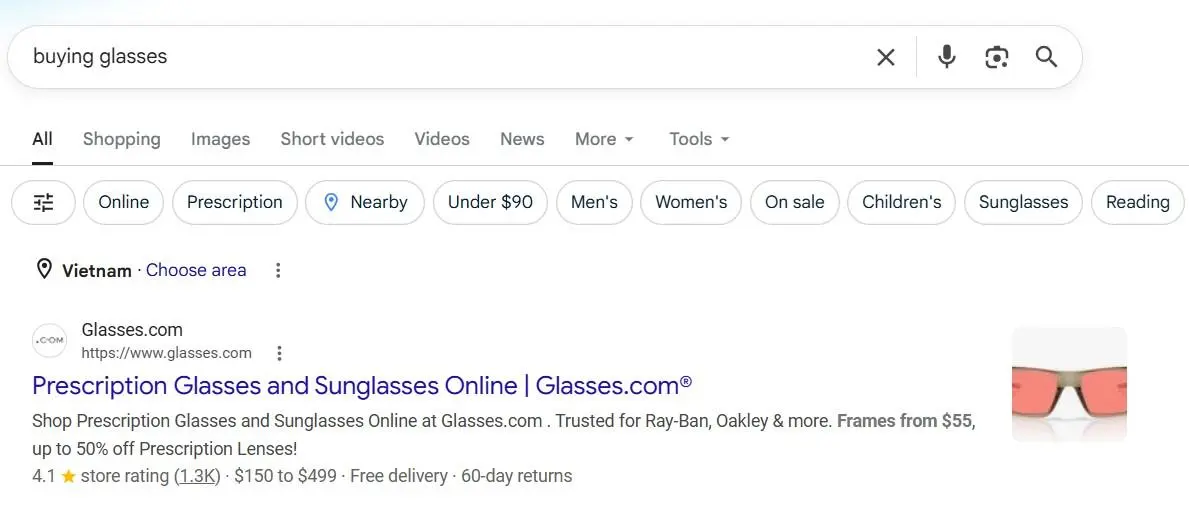 Search campaigns make sense when buyers use Google to compare providers and products.
When customers already search for a solution
Search campaigns often make sense when buyers use Google to compare providers, check pricing, solve an urgent issue, or research a product category. Local appointments, emergency services, specialist B2B solutions, and ecommerce categories can all have visible search intent.
A search term still needs commercial relevance. General research queries may bring traffic without creating enquiries or sales. Terms related to prices, product models, service areas, comparisons, or immediate problems usually deserve closer attention.
For a service campaign, the highest-priority template is usually the relevant service page. Someone searching for “commercial cleaning service in Melbourne” expects coverage details, proof, contact options, and a clear next step. A broad homepage rarely gives that user enough context.
For a launch that needs measurable evidence
Google Ads can help test whether a new service, product, or offer attracts meaningful interest. The campaign should focus on one defined question. That might be whether users search for the category, whether pricing is viable, or whether the landing page encourages an enquiry.
Start with a controlled version of the offer. Use one primary page. Choose one conversion action that reflects the test. This approach makes it easier to identify whether weak performance comes from demand, messaging, page friction, or measurement.
For example, a treatment provider may receive clicks from relevant searches but few bookings. The next issue to investigate could be unclear pricing context, missing trust information, or friction in the booking process. Raising budget before resolving that gap would create more of the same weak outcome.
During seasonal demand shifts
Seasonal campaigns can work well when demand changes around recognised buying periods. Retail promotions, travel bookings, event services, and annual B2B planning cycles can each create a temporary opportunity for paid search.
The campaign should reflect the moment rather than merely receive a larger budget. Search terms may shift. Landing-page copy may need a deadline. Stock, staffing, and customer-response capacity also need review before traffic increases.
A retailer running a sale should avoid judging that period against a quiet-month baseline. The analysis should account for promotion timing, demand lift, margin impact, and the true cost of acquiring each customer during that window.
For local demand within a defined service area
Google Ads can help local businesses reach people searching near a service area or physical location. This works especially well when an enquiry has meaningful value and the team can respond without delay.
Location targeting deserves deliberate review. The geographic setting, ad copy, page content, and call-handling process should all reflect the real service boundary. A café may only need customers within a short radius. A home-service provider may serve several suburbs. Each situation needs a different location approach.
When ecommerce is ready to convert demand
Ecommerce activity can use Google Ads effectively when product information is accurate, stock is available, and checkout works reliably. Shopping or Performance Max campaigns can create visibility, while the product page still needs to earn the sale.
Before spend increases, review product titles, imagery, pricing, delivery details, returns information, and conversion tracking. High traffic cannot compensate for a product page that leaves basic purchase questions unanswered.
Margin should shape the decision too. Strong revenue may still create limited contribution after product cost, shipping, discounting, returns, and acquisition spend are considered.
When B2B teams can validate lead quality
Google Ads can support B2B demand generation when the company knows which enquiries are commercially useful. Raw form volume can be misleading. A sales or CRM owner needs to confirm whether contacts become meetings, opportunities, or viable pipeline.
Specialist software campaigns may attract students, job seekers, businesses outside the target market, or prospects with unsuitable budgets. Search terms, qualification questions, and landing-page messaging can reduce that waste. Sales feedback then helps the PPC owner refine the account around stronger outcomes.
Calculate a viable first Google Ads test
A sensible test budget comes from commercial economics rather than a universal daily-spend recommendation. Before launch, the business should have a rough view of what it can afford to pay for a qualified lead, completed order, or booked job.
|
Business model |
Starting question |
|
Lead generation |
What gross profit comes from a new customer, and what proportion of qualified leads become customers? |
|
Ecommerce |
What contribution margin remains after product cost, delivery, discounting, and returns? |
|
B2B |
What share of leads become sales-accepted leads, opportunities, and customers? |
|
Local service |
What is the value of a booked job within the available service area? |
Consider a service company that earns $600 gross profit from a completed job. Around 20% of qualified leads become jobs. If the company allows 25% of gross profit for acquisition, its starting maximum cost per lead is $30.
That figure is an operating guardrail. It does not promise that every lead will cost $30. Instead, it gives the business a way to judge whether the campaign is moving toward a viable outcome.
How to get started with Google Ads
Account creation is straightforward. The more valuable work happens before launch, when the team agrees on what success looks like and who will act when campaign data reveals a problem.
Step 1: Define the primary conversion action
Choose an action that reflects commercial value. For ecommerce, a completed purchase will usually provide the clearest primary conversion. Service businesses often need a stronger qualification signal, such as a booked consultation, a verified phone enquiry, or a lead accepted by sales.
Google Ads conversion goals group meaningful actions around advertising objectives. The campaign should bid toward the actions that best reflect business value. Review Google’s conversion-goal guidance before treating every form, page view, or phone click as equally valuable.
Step 2: Build the keyword, ad, and landing-page connection
A keyword theme should lead to an ad that makes a relevant promise. The landing page then needs to continue that promise with useful information, proof, and a clear next step.
For a local service campaign, “same-day electrician” should not direct visitors to a general page about every electrical service. The destination page should explain availability, service coverage, phone access, and the route to request help.
Search-term review becomes essential after launch. It shows which queries triggered ads and whether those searches match the commercial problem the business can solve. Search term filters can help identify patterns that deserve exclusion or deeper review.
Step 3: Confirm tracking, location settings, and ownership
Tracking should be validated before budget increases. The team also needs a clear owner for page changes, pricing updates, tracking fixes, and sales feedback.
|
Area |
What to review |
Owner |
|
Conversion tracking |
Relevant actions record correctly |
PPC owner with technical support |
|
Landing page |
The page matches the ad promise |
Page owner |
|
Location |
Targeted areas match real service coverage |
Commercial owner |
|
Search terms |
Irrelevant queries can be excluded |
PPC owner |
|
Lead quality |
Sales can confirm useful enquiries |
Sales or CRM owner |
|
Budget changes |
Scale decisions follow commercial evidence |
Commercial owner |
A lead-generation campaign may rely on a service-page template with a short enquiry form. The technical owner needs to confirm that submissions are recorded correctly. The commercial owner defines which enquiries matter. The PPC owner then uses those signals to guide optimisation.
Step 4: Launch a controlled test
Early delivery should focus on accuracy before scale. Review disapprovals, search terms, location mismatch, conversion tracking, and landing-page behaviour. The first meaningful assessment should show whether the campaign reaches suitable users and whether those users can complete the intended action.
A fixed 30-day rule does not fit every account. Search volume, sales-cycle length, and conversion rate affect how quickly useful evidence appears. Use a review threshold based on meaningful signals rather than calendar time alone.
Review campaign quality before scaling budget
Campaign quality should be assessed through the full path from search to sale.
|
Review area |
Useful question |
|
Search quality |
Are relevant queries driving traffic? |
|
Ad message |
Does the promise match the user’s intent? |
|
Page experience |
Can visitors understand the offer and complete the next step? |
|
Conversion data |
Does the tracked action represent commercial value? |
|
Lead quality |
Does sales accept the enquiries? |
|
Economics |
Does the outcome fit margin, capacity, and acquisition limits? |
Clicks and impressions help diagnose delivery. Commercial outcomes decide whether the campaign deserves further investment. Strong click-through rate can still sit alongside a weak landing page. Low-cost leads can still create little value when sales rejects them.
The next action should follow the bottleneck. Improve the page when visitors abandon a relevant offer. Tighten search coverage when weak queries consume budget. Refine qualification when lead volume rises without pipeline quality.
FAQ: When to use Google Ads
Should a small business use Google Ads?
A small business can use Google Ads when it has a clear offer, a relevant landing page, and capacity to respond to enquiries or orders. One campaign with one primary conversion action usually creates a clearer learning path than a small budget spread across several formats.
Should I use Google Ads or SEO first?
SEO can build long-term visibility, while Google Ads can capture demand sooner. A business with urgent search demand may run Google Ads while SEO work develops. Paid-search data can also reveal useful commercial keyword themes and page questions.
When should I choose Search, Shopping, Demand Gen, or Performance Max?
Search fits active demand. Shopping or Performance Max can support ecommerce when product feeds, stock, and conversion data are ready. Demand Gen can build visual discovery before search begins. Performance Max becomes more useful when the business has meaningful goals and can evaluate performance beyond basic traffic metrics.
Can I run Google Ads without conversion tracking?
A campaign can technically run without conversion tracking, yet the business will have limited evidence about what the spend achieves. Tracking should be configured before budget increases so the team can assess leads, purchases, calls, or another valuable action.
How do I know whether Google Ads produces qualified leads?
Connect form submissions or calls with sales feedback. Review whether leads fit the target market, meet qualification criteria, attend meetings, or enter the pipeline. That feedback allows the campaign to move beyond raw lead volume.
Use Google Ads when the business is ready to learn
Google Ads earns its place when demand connects with a clear offer, a relevant page, and a meaningful conversion action. Campaign data becomes valuable when the team can identify what changed, who needs to respond, and whether the result supports a viable commercial outcome.
For businesses that need help turning search demand into measurable campaign activity, explore Google Ads services from On Digitals.

NEWEST POSTS
- Advertising Industry In Vietnam: The 2026 Trends, Channels and Market-Entry Strategy
- Best SEO Company in Vietnam: Latest Shortlist For Businesses
- How To Leverage Social Media For Customer Service Like A Pro?
- Social Media Post Tips – 8 Ways To Boost Engagement
- How To Use Social Media for Sales – In-depth Beginner Guide
Read more